Engagement summary - Cart transition survey
Why we engaged
The purpose of this engagement was to better understand how the initial transition to cart-based waste collection was received by Kingston residents. Staff are looking to learn more about what elements of collection are working, what can be improved upon, and where there are opportunities for further education.
The results of this survey will inform future rollouts as the program moves across Kingston and be used to develop educational campaigns for current cart users to improve resident satisfaction.
How we engaged
An online survey was open for 30 days on Get Involved Kingston. We promoted the engagement on social media, through the Get Involved Kingston newsletter and on Inside Kingston. Staff also hand-delivered postcards in neighbourhoods to promote participation in the survey. The neighbourhoods selected to participate represented a variety of locations to ensure the transition experience could be adequately evaluated.
Respondents also had the option to submit their feedback by calling the City through Customer Experience or by submitting comments via email.
Who we heard from
- 275 participants completed the survey
- 1,534 users visited the project page
Location of respondents by postal code:
55% Southwest Kingston (K7M)
2% Central-East Kingston (K7K)
20% Kingston (K7P)
10% Central-South Kingston (K7L)
7% Rural Kingston and Frontenac County (K0H)
6% Other – Some responses did not include a postal code as participants provided their feedback directly by phone or email
What we heard
We asked residents to take a short survey to provide feedback on how the transition to cart collection has worked for their household. Three questions asked residents to rate their experience from “Strongly Agree” to “Strongly Disagree.” One question asked what, if anything, could be improved. One question asked to rate how their overall experience with garbage and organic pickup has changed, from “Improved Greatly” to “Much Worse.” Finally, respondents were asked what the City could do to make cart collection easier.
The feedback from this engagement is predominantly positive, with many residents reporting that automated collection is cleaner, easier, and more reliable than the previous system. Additional educational opportunities emerged and will inform future campaigns and rollouts across Kingston.
Question 1 – Since the introduction of the automated cart collection system in my area, waste disposal has become easier for me.
- 105 respondents selected Strongly Agree
- 72 respondents selected Agree
- 19 respondents selected Strongly Disagree
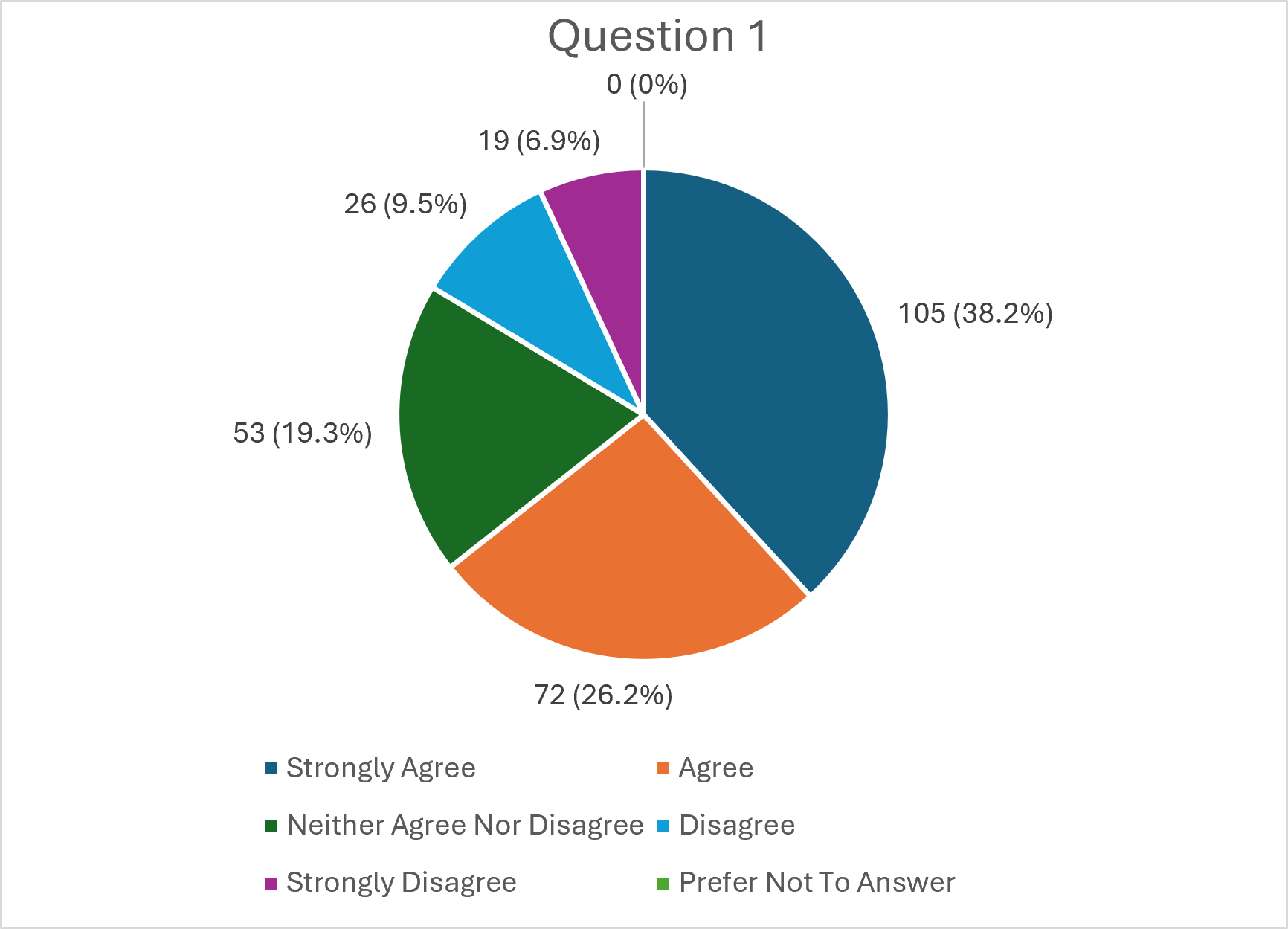
Figure 1: Results from Question 1 ("Since the introduction of automated cart collection, waste disposal has become easier for me.")
Question 2 – The 120L carts provided for garbage and organics provided me with sufficient space to dispose of my weekly waste.
- 148 respondents selected Strongly Agree
- 71 respondents selected Agree
- 27 respondents selected Strongly Disagree
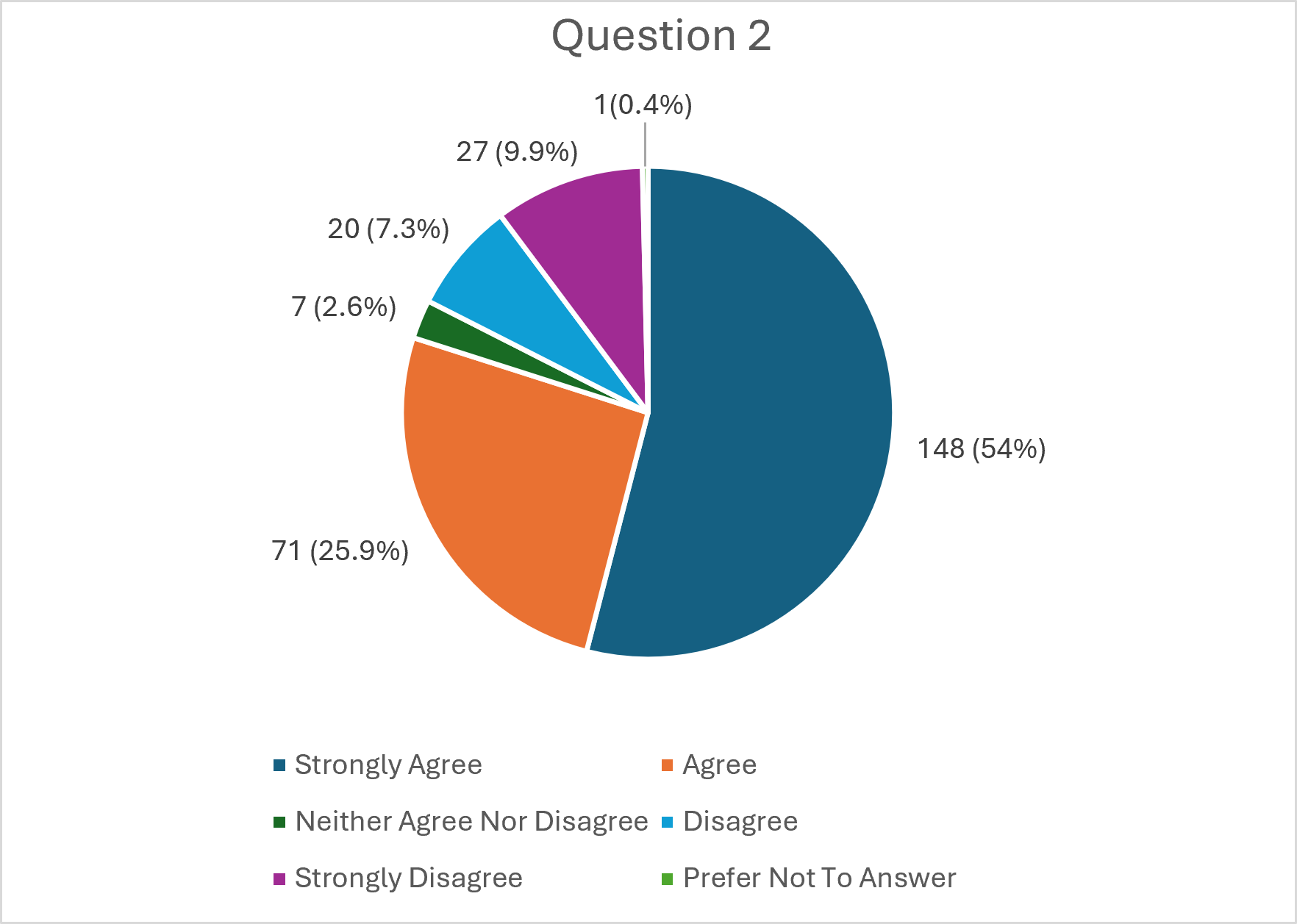
Figure 2: Results from Question 2 ("The 120L carts provided for garbage and organics provided me with sufficient space to dispose of my weekly waste.")
Question 3 – The information available about the automated cart collection program helped make the transition to the new service smooth and easy for my household.
- 104 respondents selected Strongly Agree
- 99 respondents selected Agree
- 6 respondents selected Strongly Disagree
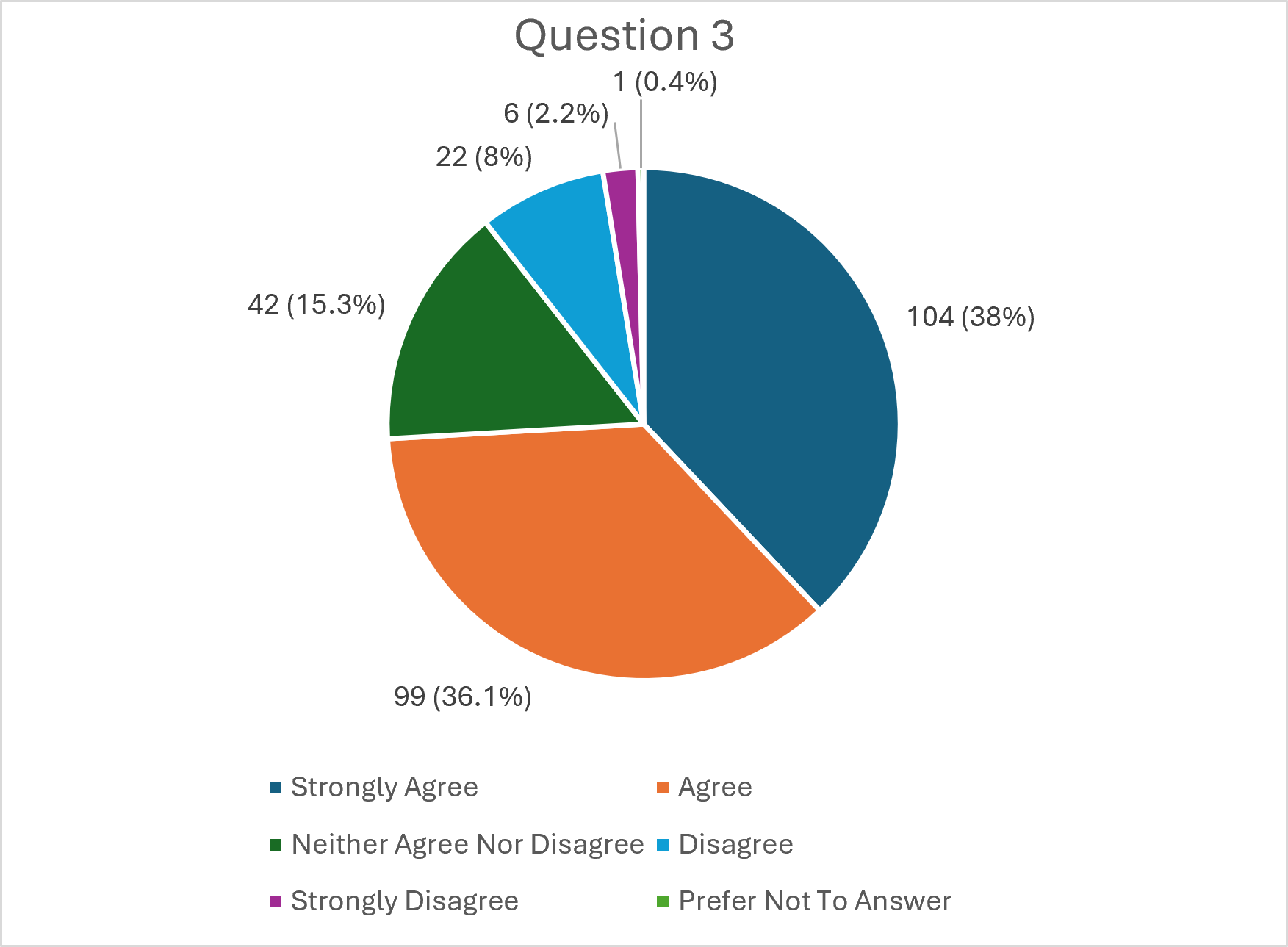
Figure 3: Results from Question 3 ("The information available about the automated cart collection program helped make the transition to the new service smooth and easy for my household.")
Question 4 – What, if anything, would make the carts even more convenient for your day-to-day use? Select all that apply.
Respondents could choose from the following options:
- Easier movement to the curb on collection day – 33 selections
- Clearer guidance on how to place carts for collection – 23 selections
- Cart size options that better fit my household – 72 selections
- Nothing - everything is working great for me – 152 selections
- Prefer not to answer – 3 selections
- Other (please specify) – 41 selections
For those who selected “Other” as an option, the following themes emerged:
- Cart placement and spacing
- Accessibility concerns for seniors
- Durability of the carts and locks
- Service collection issues
- Pest and wildlife concerns
- Issues with winter collection
- Cart capacity too small
- Parking and bylaw
Question 5 – With the introduction of automated cart collection, how would you describe your overall experience with garbage and organics pickup?
- 93 respondents selected Improved Greatly
- 62 respondents selected No Change
- 19 respondents selected Much Worse
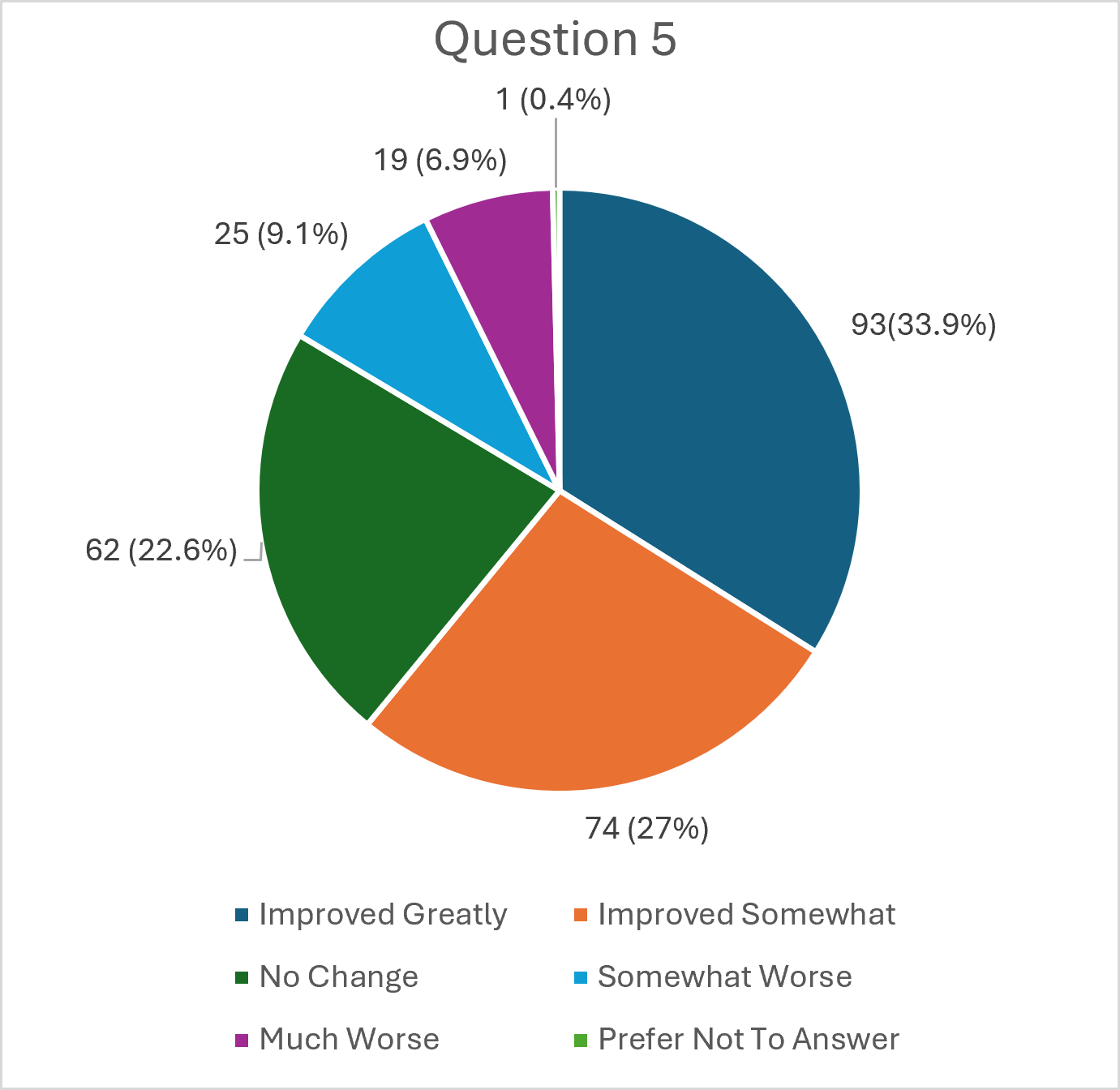
Figure 4: Results from Question 5 ("With the introduction of automated cart collection, how would you describe your overall experience with garbage and organics pickup?")
Question 6: What could we do to make automated cart collection easier?
Based on the 205 responses to this question, several clear themes emerged.
Overall satisfaction and support
The most common theme was strong satisfaction with the new automated collection system. Many residents described it as easier, cleaner, safer, quieter, and more efficient than the previous approach. Several respondents explicitly stated that no changes were needed and that they felt the transition was highly successful.
Cart durability and maintenance
A significant number of comments focused on cart quality and durability, particularly broken or detached wheels and carts being damaged during collection.
Residents requested sturdier carts, heavier-duty wheels, and easier replacement processes.
Carts are owned and maintained by the City, not the property owner, and we repair and replace carts as needed. Residents with questions or maintenance requests should contact the City directly. This feedback presents an opportunity to further educate residents about how to request repairs to damaged carts.
Cart sizes
Many respondents commented on cart sizing. Some felt the carts were too small for large families, while others felt the carts were too large for their households, particularly for older residents.
Winter challenges
Some residents noted challenges with collection in the winter, including difficulty rolling carts through the snow and extra shovelling required to create access paths.
Placement and clearance requirements
Many respondents found the spacing requirements difficult to manage. Parked vehicles can interfere with collection and the 1-metre separation requirement takes up much of a driveway.
Some residents requested more flexibility in placement or parking restrictions on collection days.
Collection performance and missed pickups
Respondents reported issues with missed collections, bags becoming stuck inside carts, and collection staff leaving carts knocked over or in unsafe locations. Windy days can result in carts being in the road and garbage blown around.
Several residents requested improved operator care and equipment performance.
Accessibility considerations
Some respondents noted the new carts had an impact on seniors and those with mobility challenges. This includes difficulty moving heavy carts to the curb and increased physical effort compared to the previous system. Moving carts down long rural driveways was also noted as an issue.
Respondents suggested special accommodations or alternate disposal options for seniors.
The City takes accessibility concerns seriously. Those with questions or concerns are asked to contact the City directly to determine a solution that meets their needs.
Wildlife
Residents requested adding locking lids on garbage carts, similar to the locking lids on organics carts, to prevent animal access.
There is an option for locking 120L garbage carts, available for a fee, on the City website.
Information gaps
Feedback noted a concern with the rollout and information provided, including unclear instructions on placement and use and confusion about replacement procedures.
Respondents asked for clearer guidance and more proactive communication. This feedback will be utilized for future program expansion.
Cost and fairness concerns
Some respondents viewed the program as increasing costs. There were objections to paying extra for larger carts, a perception that automation should reduce property taxes, and concerns that service levels decreased for households that previously used larger containers or extra tagged bags.
The smallest size of cart available through the system, 120L, is close to the maximum size of 135L under the manual system. Additionally, the automated cart collection eliminates the manual system’s weight limit of 44lbs.
The additional cost to upsize to a 240L cart is equivalent to the cost of 49 bag tags for the year. Households on cart collection are also able to purchase bag tags for extra bags as required if they do not wish to upsize their cart.
Desire for automated recycling collection
Many residents expressed interest in expanding automation to recycling.
The City is no longer responsible for collecting recycling. This feedback represents an opportunity for education about the change in responsibility, while also signifying that many residents have positive experiences with the cart transition and wish to see it expanded.
Next steps
Results from this survey have been shared with the project team and opportunities will be identified to inform future messaging campaigns and cart rollouts across Kingston.

Thank you for your contribution!
Help us reach out to more people in the community
Share this with family and friends