Reporting Out – Palmerston Crescent Meetings Feb. 9 and 11
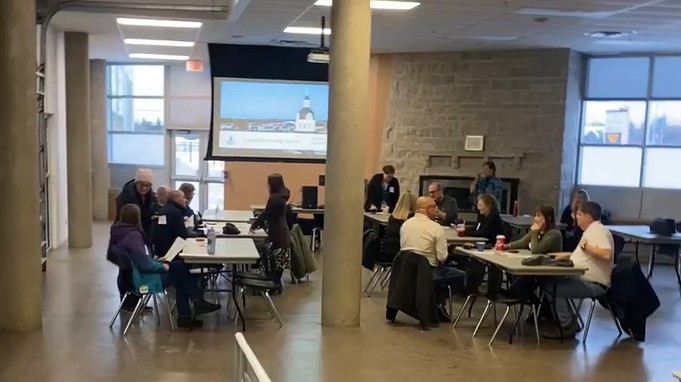
On Feb. 9 and 11, 2026, City staff, with Ryandale staff present, led two community meetings to discuss the new supportive housing site on Palmerston Crescent. Approximately 20 near neighbours attended.
City staff and site operator, Ryandale, shared information on the supportive housing model, explained the property selection process, described site operations, addressed concerns and outlined next steps. Following a short presentation and video, staff answered questions and heard feedback from attendees.
Topics Covered
Understanding the supportive housing model
- Clarity on the difference between transitional and supportive housing
- Review of housing continuum
- Supportive housing is intended for people already stabilized, sober and working toward independence
- Selection
- Residents are selected through coordinated access, use of municipal “by-name list”
- Most individuals moving in have already lived successfully in housing, and many have participated in Ryandale programming
- No individuals with serious offences are admitted
- Abstinence is strictly enforced
- Property selection
- Criteria for choosing this location: diversity of neighbourhoods, properties suitable for 7-8 individuals, budget constraints and need for renovations.
- Length of stay and operations
- Supportive housing does not have a fixed length of stay. Each resident has individual goals.
- 24/7 staffing on site
- Gradual move in, beginning in March
Concerns and Feedback
- Residents expressed frustration about how the property purchase and announcement were handled
- City staff acknowledged these concerns and explained that the property purchase could not be publicly announced until the property had closed for privacy of the seller and the protection of the City’s bargaining position.
- Many expressed that notice came too late, before holidays, unclear format
- Concern about lack of meaningful community engagement prior to purchase, leading to mistrust
- Repeated calls for greater transparency, earlier communications and better outreach (ex: mailouts to community mailboxes rather than door flyers)
Safety concerns
-
Families worried about proximity to parks, schools and walking routes. Some feared increased crime or disorder.
- Operator emphasized a track record of no safety incidents, strong vetting and ongoing staff presence
-
Some neighbours expressed discomfort with eight unrelated adults living in one home, but others noted that residents cannot choose neighbours and that large families already exist int he area.
- City highlighted the City of Kingston - Good Neighbour Guide which is a useful resource for neighbourly behaviour.
- The operator committed to being the best neighbour, citing testimonies and their high property standards
Day-to-day activities, transit access and services
- Ryandale programming: life skills, volunteering, responsibilities
-
Concerns about people congregating outdoors, noise and smoking
- Operator committed to backyard smoking only, and exploring privacy options (i.e. gazebo) and being responsive to complaints
- Recent policy change: elimination of smoking medical cannabis. Residents with a valid medical prescription can only use cannabis through prescribed edibles.
-
Request for fencing or screening for privacy
- Human Rights Considerations, prevent restrictions beyond normal property rules, but operator indicated interest for resident privacy.
-
Residents questioned whether the location had adequate transit access, travel time to services, appointments, employment
- Bus connections exist, residents already navigate transit independently
- Residents in supportive housing need fewer intensive services than shelter or transitional housing residents
- Taxi vouchers, volunteer drivers, bus passes are available as travel options
Property standards and neighbourhood impact
-
Resident concerns about renovations not matching the neighbourhood (doors, windows)
- This has been actively followed up on by City staff
- Feedback has been communicated to the renovation operations coordinator
- Cladding and trim work has yet to be done and they are working to have it match the community look and feel.
-
Commitment to maintain the property to neighbourhood standards
- General upkeep (garbage, landscaping, snow removal) to be managed by City and contracted services.
- Residents take part in household chores.
-
Decline in property values and resale concerns
- Evidence that supportive housing does not decrease property values
Accountability and reporting
- City-Operator agreement includes clear expectations and oversight
-
Contact information for concerns or incidents
- The house will have a landline phone, neighbours will be provided the number to contact
- City can be contacted for property standards issues if operator does not respond and any other issues if neighbours find Ryandale has not responded to an issue
- Police are to be contacted first for serious issues as one would with any serious issue
- Ryandale will create a Community Liaison Committee (CLC) to support ongoing communication
Zoning and Legal/Human Rights considerations
-
Many residents asked why:
- There was no public planning notice
- Supportive housing is allowed in low-density residential areas
- Residents can’t have a say in specific locations
-
City staff clarified:
- The home’s use is permitted under current residential zoning, planning notices and public meetings are specific to zoning bylaws or amendments
- Ontario Human Rights Commission prevents community input that could amount to screening based on assumptions about residents
- The City will review the process for earlier district-level engagement but cannot legally consult neighbourhoods on who moves into residential zones
Broader concerns about homelessness, cost and policy
-
Concerns about municipal debt and spending on homelessness
- Response: Confirmation that City’s debt is below and not near allowable limit, and that the cost of not supporting people (e.g. shelters, emergency response) is higher
-
Belief that homelessness in Kingston is rising due to migration from other areas, reference to other municipalities’ strategies
- Response: Local homelessness figures are part of a national trend, not unique to Kingston, there is not a residency requirement for accessing municipal services
- Confirmation that City staff participate in broader homelessness strategy planning with other cities
-
Doubts about the effectiveness of supportive housing, desire for more focus on prevention
- Response: Different parts of the housing continuum play different roles, and clarification that preventative strategies are already in place (i.e. helping secure funding, rental support, working alongside private rental operators)
- Discussion about when decision was made to purchase supportive housing units in multiple districts (Sept. 2 report)
Building trust and moving forward
- Acknowledgement from staff that the process caused fear and frustration
- Apologies for communication gaps
-
Commitment to improving engagement ahead of future projects
- Report to go to Council in July
- Next steps: FAQ updates, reporting out, continued dialogue
- Recognition that trust will take time to rebuild and that the City intends to stay involved and responsive
