What We Learned public engagement summary
Why we engaged
Between 2024 and 2026, residents shared feedback on new emergency, transitional and supportive housing solutions through in-person meetings, online information sessions, surveys, service requests and correspondence. Six concerns were raised consistently:
- Timing of notification: near neighbours learned of new sites only after the property had been acquired, and the December 2025 announcements coincided with the holiday period.
- Communication methods: residents did not regularly use Get Involved Kingston and indicated that mailed notices, social media and signage would have been more effective.
- Awareness of Council direction: many residents were not aware of Council’s strategic direction on the distribution of housing solutions or of the related Council decisions.
- Influence over location: residents wanted an opportunity to provide input on site selection and on the criteria used to identify properties.
- Confidentiality of the acquisition process: some residents disagreed with the consideration of property acquisitions in closed session.
- Neighbourhood integration and safety: residents raised questions about safety, property standards, exterior appearance, noise, litter and property values.
In response, on Feb. 3, 2026, Council approved a motion that directed staff as follows:
Therefore Be It Resolved That Council direct staff to review current public consultation and engagement practices related to both new and existing supportive and emergency housing solutions, including shelters currently in operation and those undergoing transition or wind-down, with a specific focus on communications and engagement with near neighbours; and
That staff be directed to bring forward recommendations to Council by July 2026 on improvements to these processes that are consistent with a human rights based approach to housing and related services for vulnerable residents, including but not limited to consideration of the timing and methods of information sharing with near neighbours; the scale and format of engagement meetings; confirmation of the role of the site operators in these engagements, and the processes for receiving, responding to, and reporting back on community concerns.
How we engaged
Through August and September, we engaged across multiple mediums to consult near neighbours of recently opened housing solutions, service providers operating housing services, residents of housing services and all interested members of the community. Information as shared across multiple communications channels to ensure all interested groups were aware of the opportunities to provide feedback. Communications methods include:
- Get Involved Kingston project page (804 web visits)
- Get Involved Kingston newsletters (to 14,000 subscribers)
- Curbside signage (in 3 electoral districts with transitional housing)
- Emails to housing project subscribers (to 113 subscribers who previously offered feedback on housing solutions)
- News release (to 1,400 subscribers)
- A social media campaign (15,000 views on social media content)
- Survey (135 responses)
- In-person drop in session on Sept. 16 from 6 to 7:30 p.m. at the INVISTA Centre (10 attendees)
- Focus groups with service providers and individuals with lived experience
The survey featured a combination of Likert questions, checkbox questions and open-ended questions to provide residents with a variety of ways to provide feedback. The survey focused on communication methods given the direction to align practices with a human-rights based approach to housing. Open ended questions provided the opportunity for broader feedback around levels of engagement tied to Council decision-making processes.
On Aug. 26, we hosted a feedback session with patrons from across the shelter system. Twelve individuals participated, with two patrons from Dawn House, Doors of Compassion, the Integrated Care Hub (now the HART Hub) and In From The Cold. Feedback was also collected through focus-groups with staff of local service providers and with individuals connected to City-funded emergency shelters.
What happens with your feedback
Feedback is included in the report to Council with recommendations for how we engage on housing solutions and taken into consideration for future enhancements to these processes (see "Next steps" below). Where possible and with available and approved operating budget and staffing resources, suggestions will be incorporated into enhancing communications on housing solutions.
Who we heard from
- 135 participants completed the survey
- 10 community members participated in the drop-in session
- 795 aware participants visited the project page to learn more
- 12 individuals with lived experience accessing emergency housing services participated in a feedback session with questions about how they are engaged on new housing solutions
- 8 local service providers operating emergency shelter and transitional housing offered feedback during system check-in meetings.
- Locations of survey participants
- 47 Southwest Kingston (K7M)
- 36 Central-East Kingston (K7K)
- 23 Northwest Kingston (K7P)
- 19 Central-South Kingston (K7L)
- 3 Rural Kingston (K0H)
- 2 Other (A1C)
Individuals with Lived Experience Feedback
During the focus group, patrons from each of the City-funded shelters offered feedback on how information about new housing solutions is communicated. Participants shared that they do not receive enough information about new services and programming. Their suggestions included regularly updated bulletin boards with visual components, regular house meetings and housing workers who stay with clients if they move to a new service.
Participants with lived experience also suggested City staff come to shelters to provide information on how to navigate the housing system, and suggested City staff meet with landlords to explain funding programs. Lastly, participants expressed appreciation for the feedback session and emphasized the need for more lived-experience voices in decision-making.
Service Provider Feedback
Service providers shared their community engagement for new housing solutions consists of canvassing the neighbourhood to provide information handouts and contacts. Community Liaison/Consultation/Engagement Committees are also used for regular meetings focused on collaborative solutions to any issues that are brought forward. Service provider staff noted that these processes are often enhanced by incorporating clients as messengers who can speak to their lived experience and dispel stigma. Providers also noted the importance of helping community understand human rights and confidentiality while sharing as much information as they can.
When asked how the City can best support communication with community, service providers highlighted: the value of the City’s printed brochures with contact information for homelessness services, support with initiating Community Liaison Committee and the need for a coordinated response to incidents that happen in the same vicinity of services that do not involve clients.
Survey results
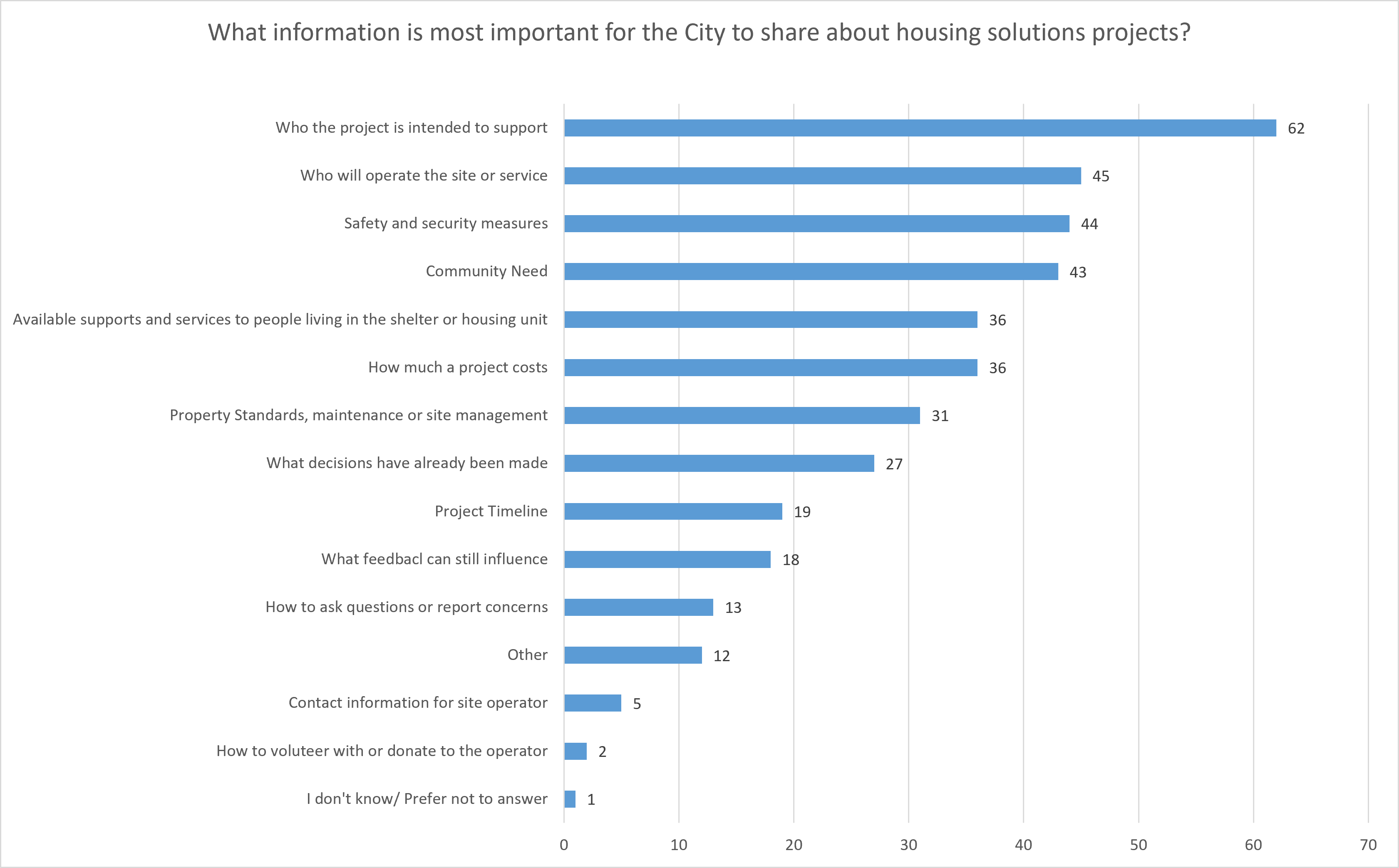
Question 1: What information is most important for the City to share about housing solutions projects?
Most respondents want to know more about who is supported by City-led housing solutions, followed by who will operate the site, safety and security on the project, community need, supports and services and property standards. Lower priority for respondents was how to contact the site operator, how to volunteer and how to ask questions or report concerns.
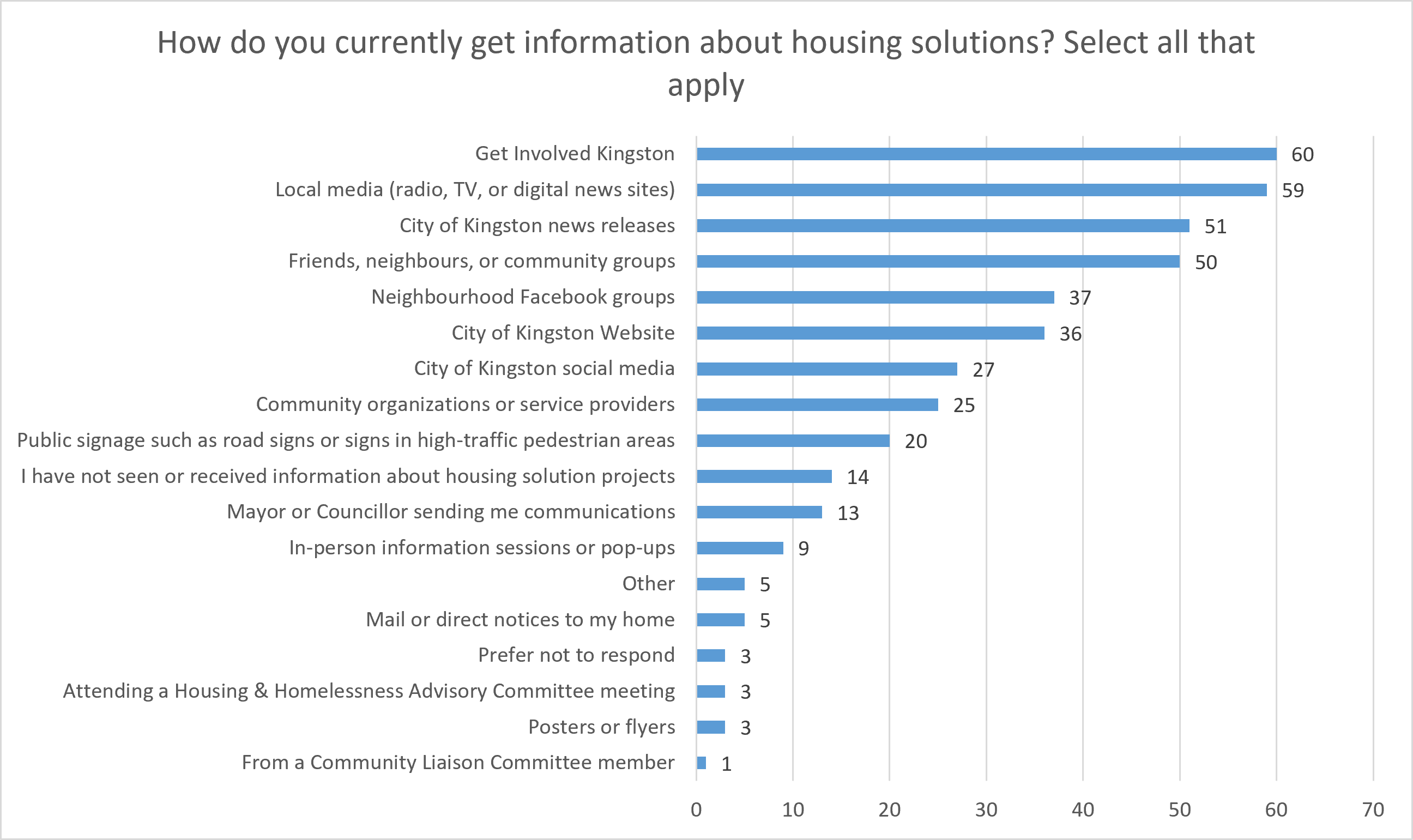
Question 2: How do you currently get information about housing solutions?
Most respondents currently get their information about housing solutions on the City’s public engagement platform, followed by local media. Community-led information sources are among the most popular way people learn about housing solutions, including from friends and neighbours, neighbourhood Facebook groups. Posters, committees and direct mail are the least common information methods.
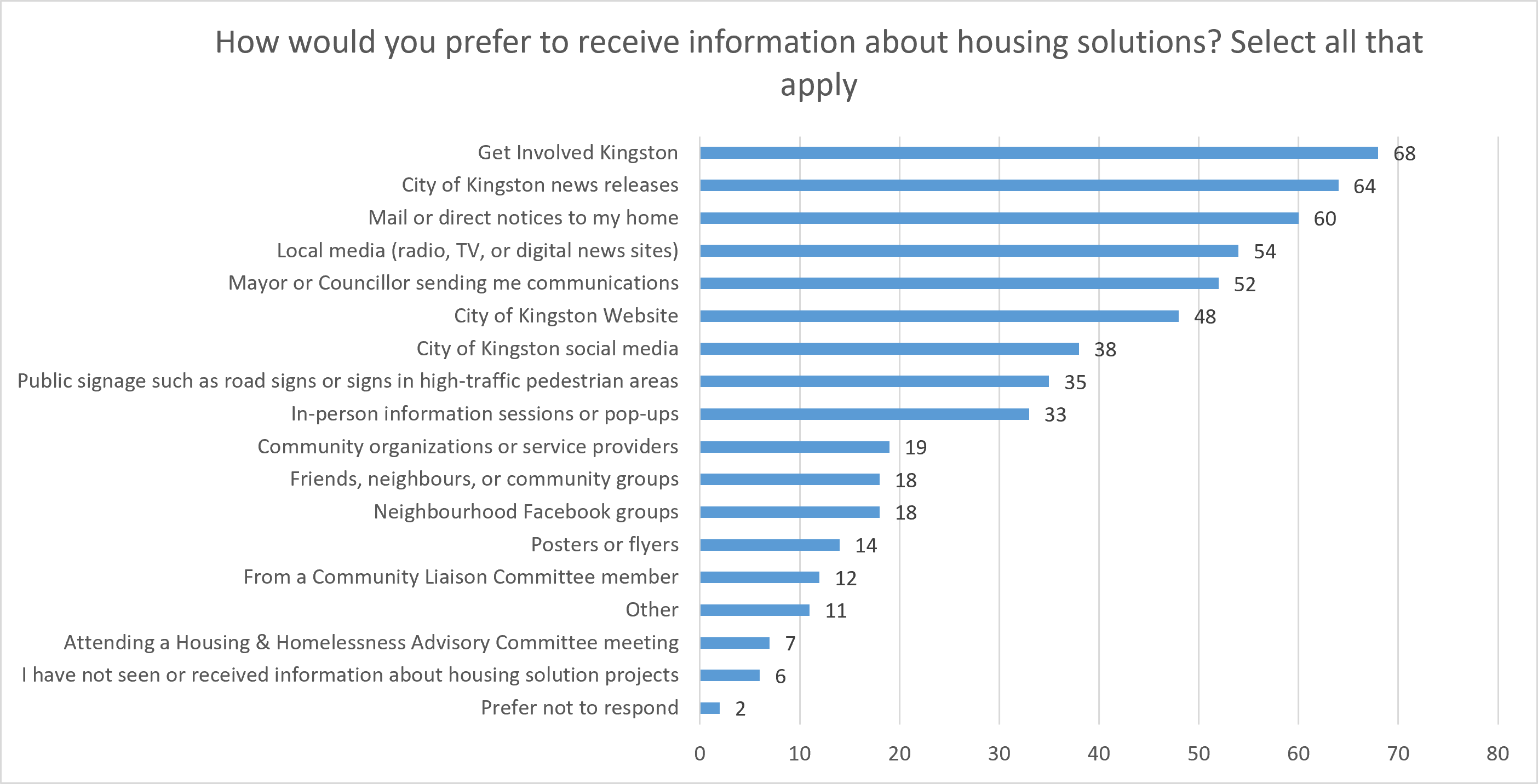
Question 3: How would you prefer to receive information about housing solutions?
While the City’s engagement platform was the top preferred way to receive information, respondents shared they would like to have direct mail, signage and information sent to them directly from the Mayor and members of Council. Lower priority information sources were committee meetings, neighbourhood Facebook groups and posters.
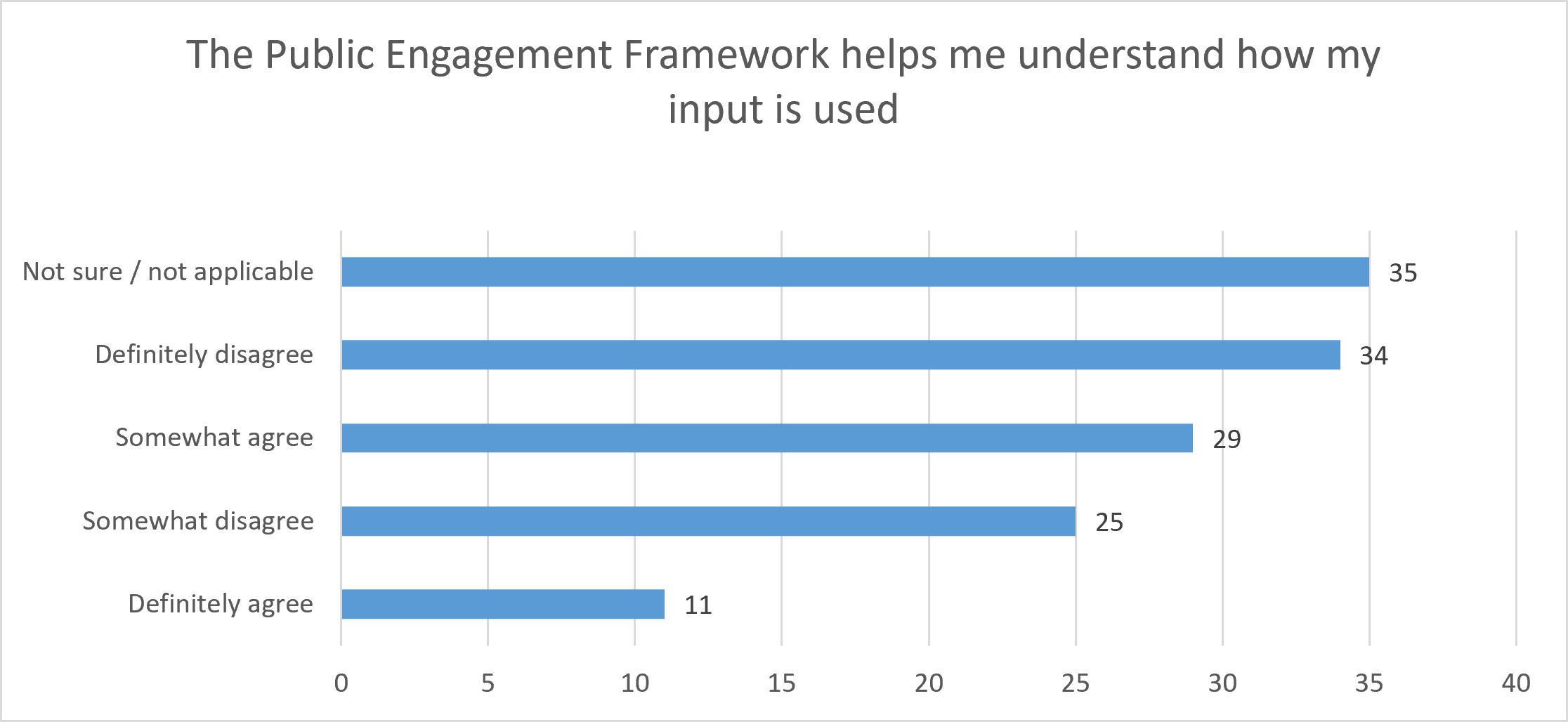
Question 4: The Public Engagement Framework helps me understand how my input is used (Agree/Disagree)
Most respondents shared they do not find the Public Engagement Framework helpful when trying to understand how collected input would be used in decision making.
Question 5: Do you have recent experience with communications or engagement related to a City housing solutions project in your area?
- Yes: 36%
- No: 57%
- Not sure/can’t remember: 7%
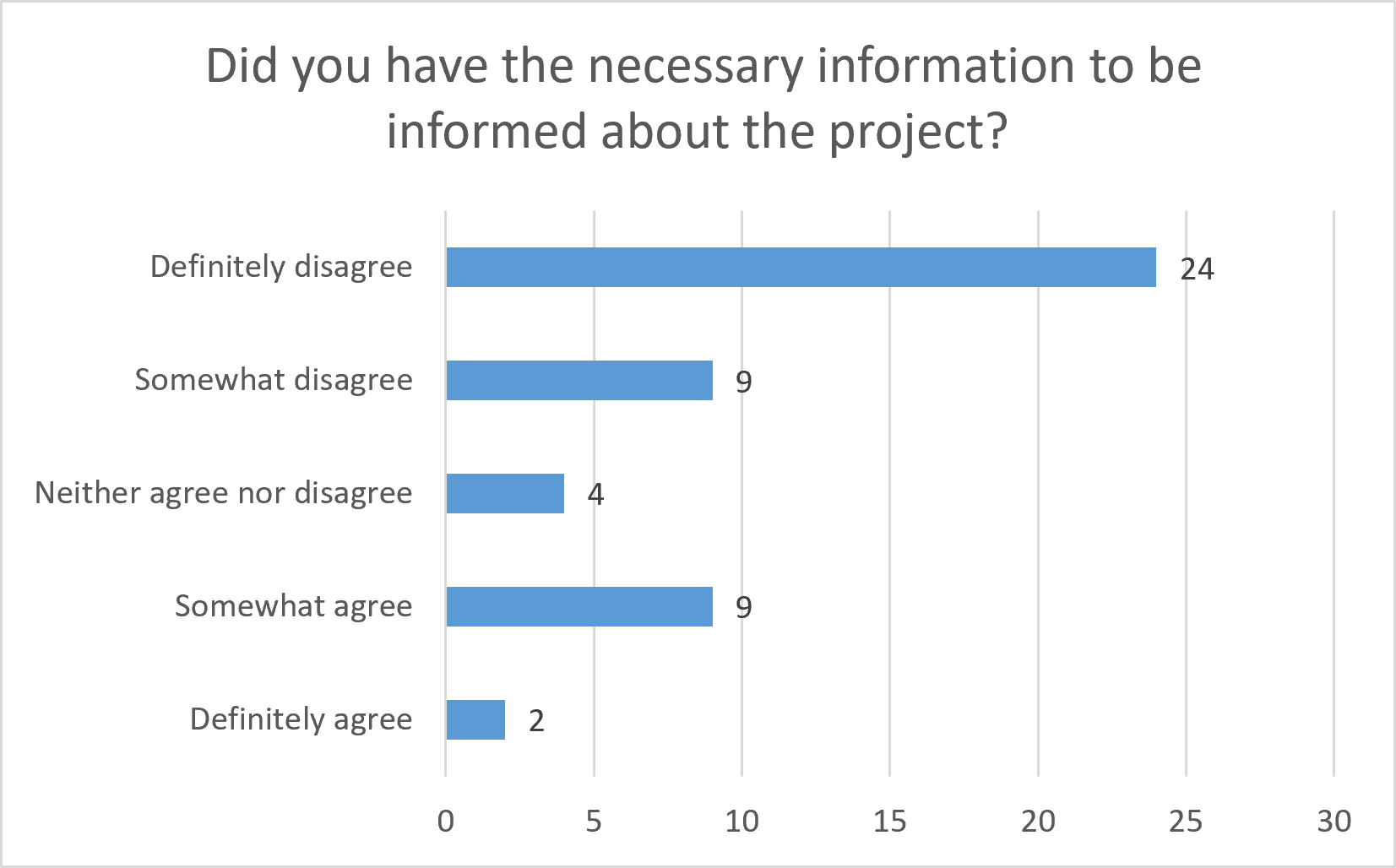
Question 6: Did you have the necessary information to be informed about the project?
This question was only for people who had recent experience with communications on housing solutions. Most participants felt they didn’t have all of the information they needed to be informed and engaged on the project.
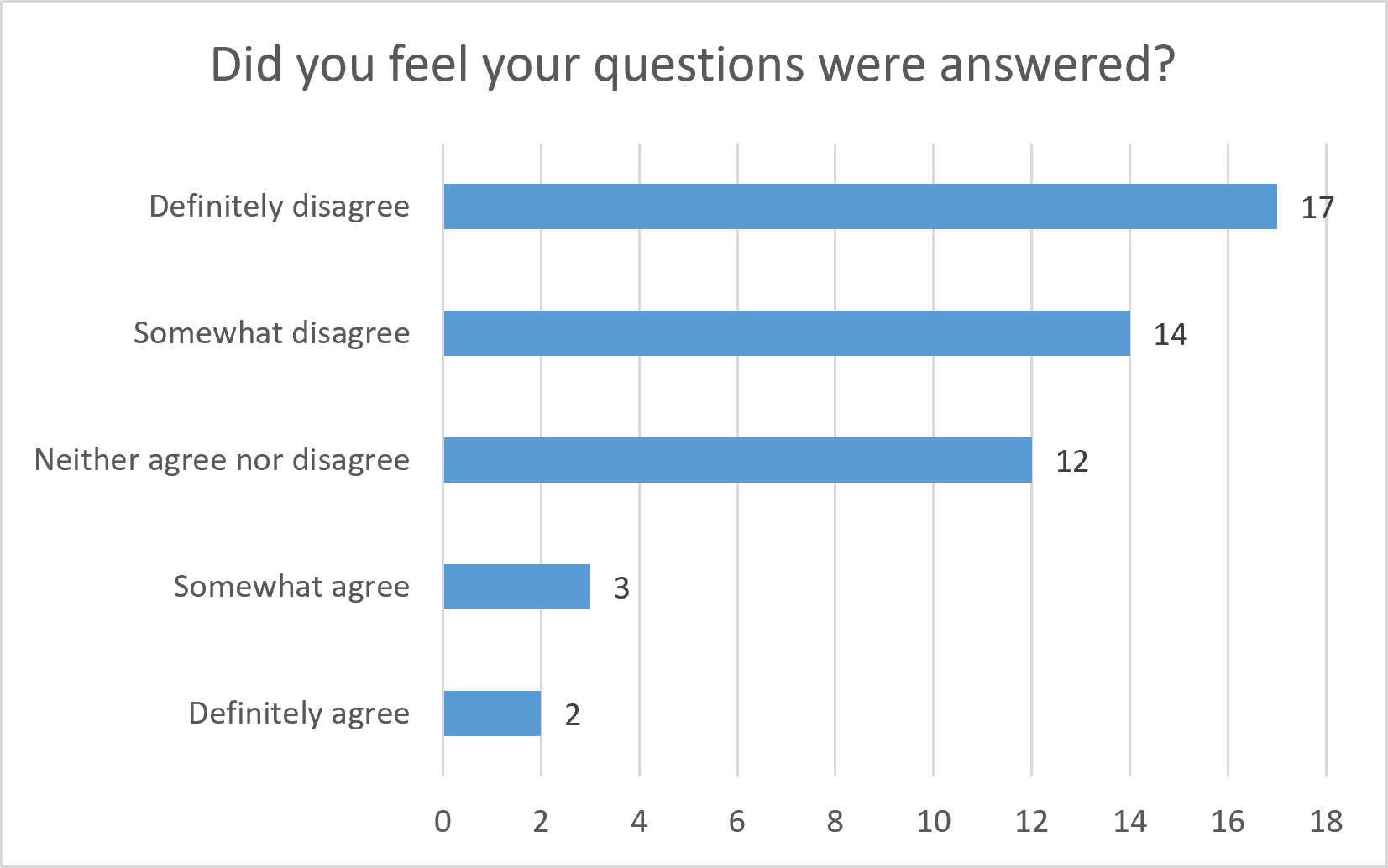
Question 7: Did you feel your questions were answered?
This question was only for people who had recent experience with communications on housing solutions. Most participants felt they didn’t have their questions answered by the City when they engaged with us.
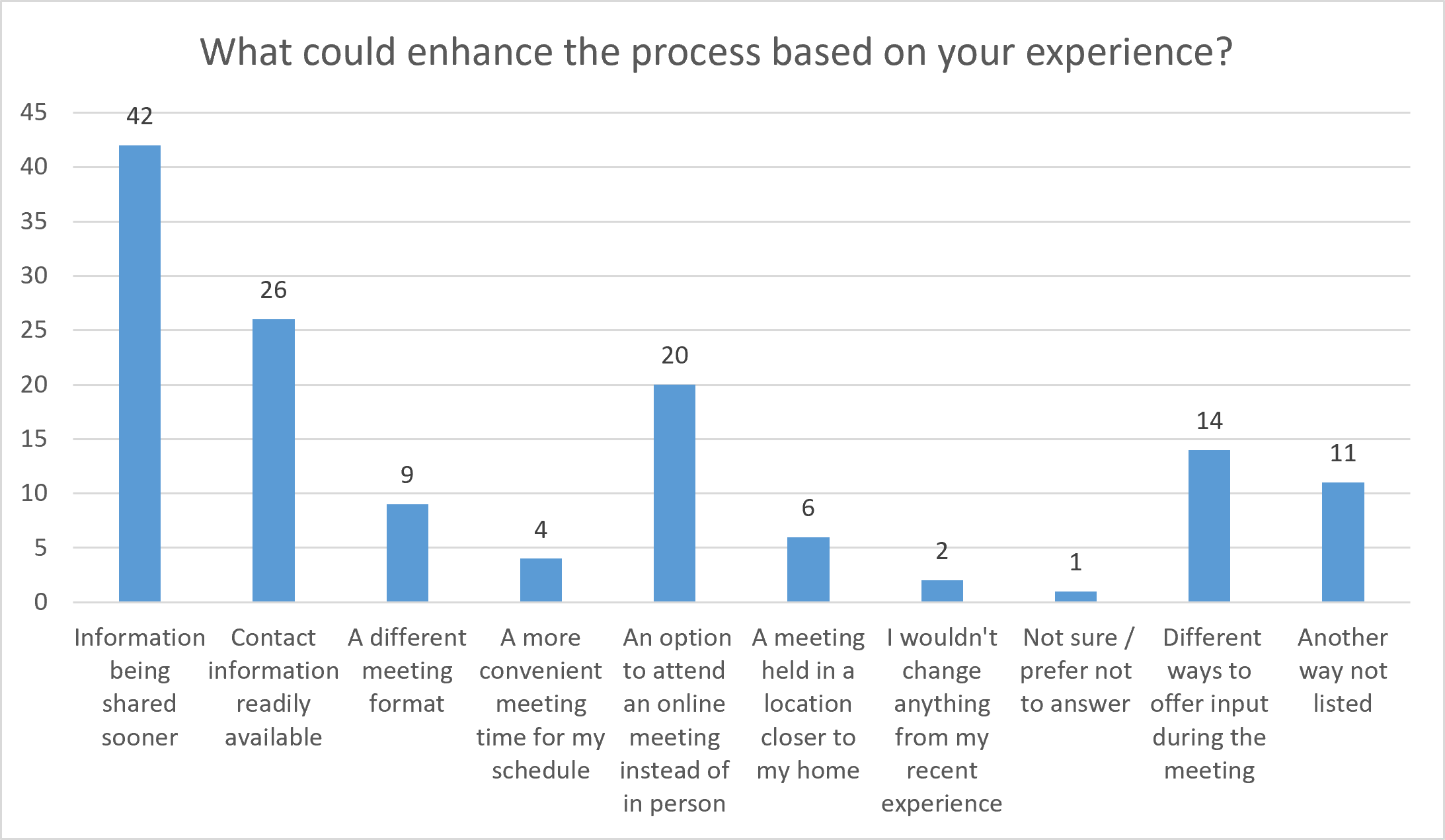
Question 8: What could enhance the process based on your experience?
This question was only for people who had recent experience with communications on housing solutions. Participants wanted to have information shared sooner, have contact information available and an option to attend meetings online.
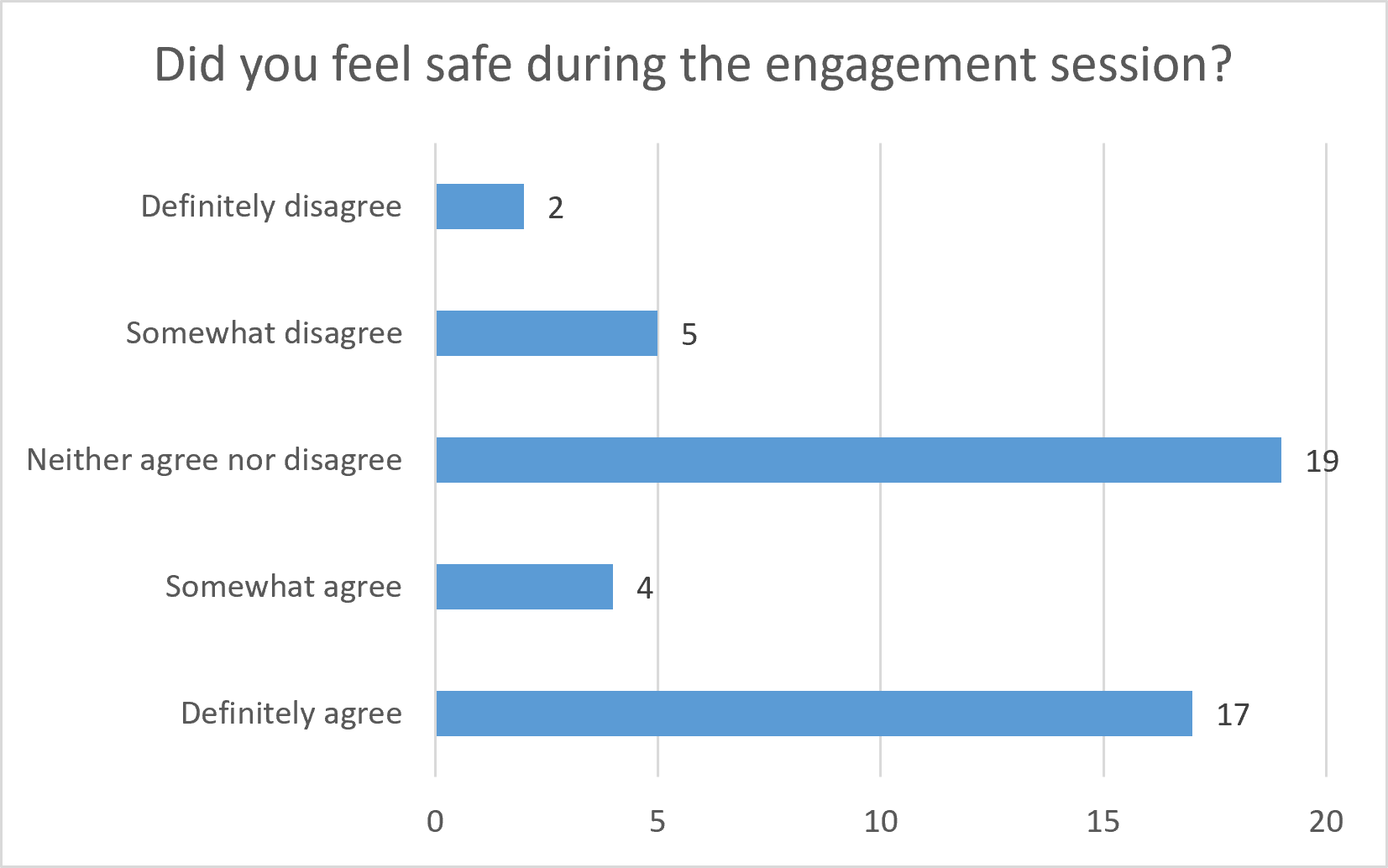
Question 9: Did you feel safe during the engagement session?
This question was only for people who had recent experience with communications on housing solutions. Most people shared they felt safe during the session.
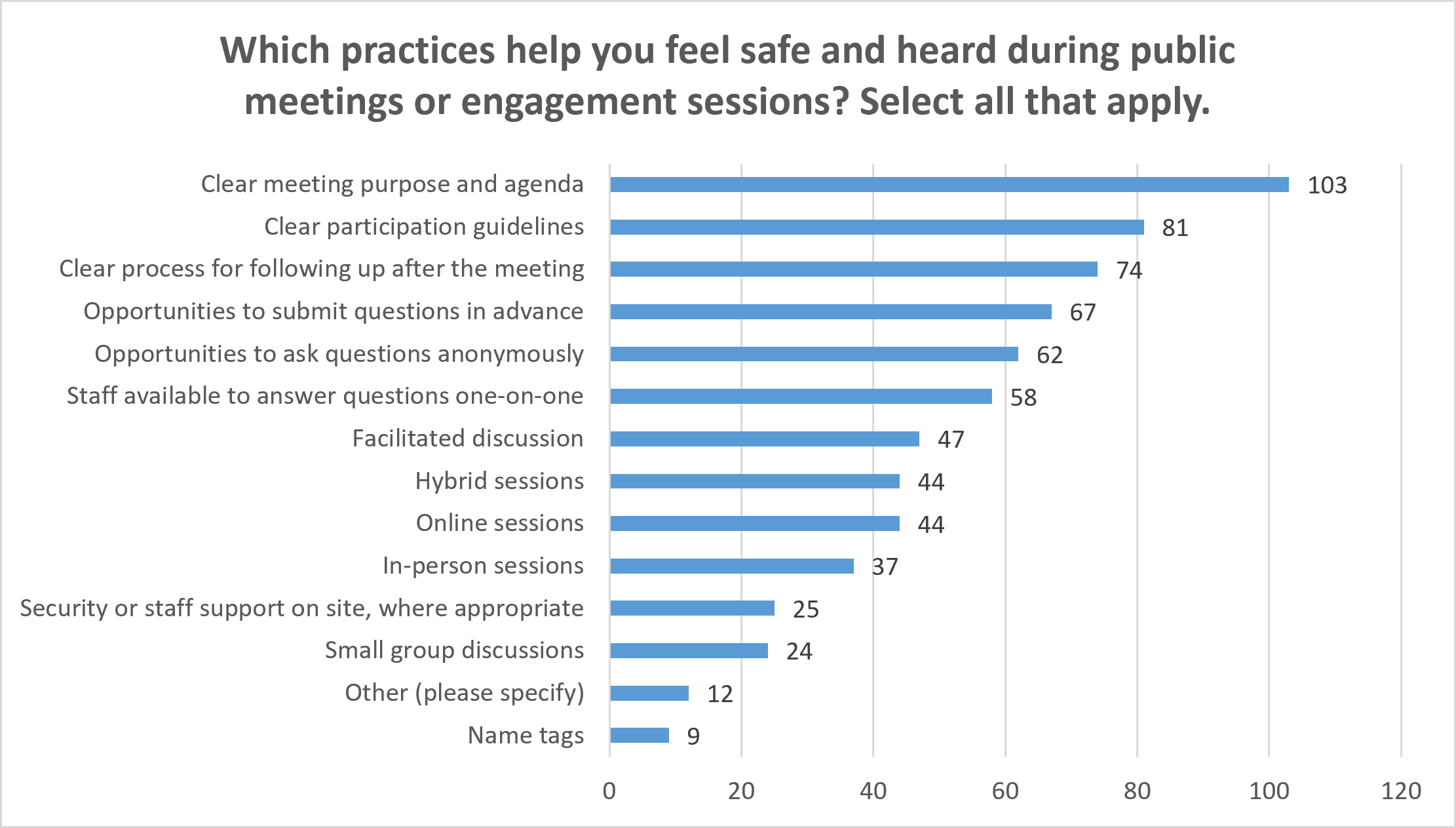
Question 10: Which practices help you feel safe and heard during public meetings or engagement sessions? Select all that apply.
This question was only for people who had recent experience with communications on housing solutions. Most respondents shared that clear meeting purpose, participation guidelines and processes for follow up contributed to feeling safe and heard.
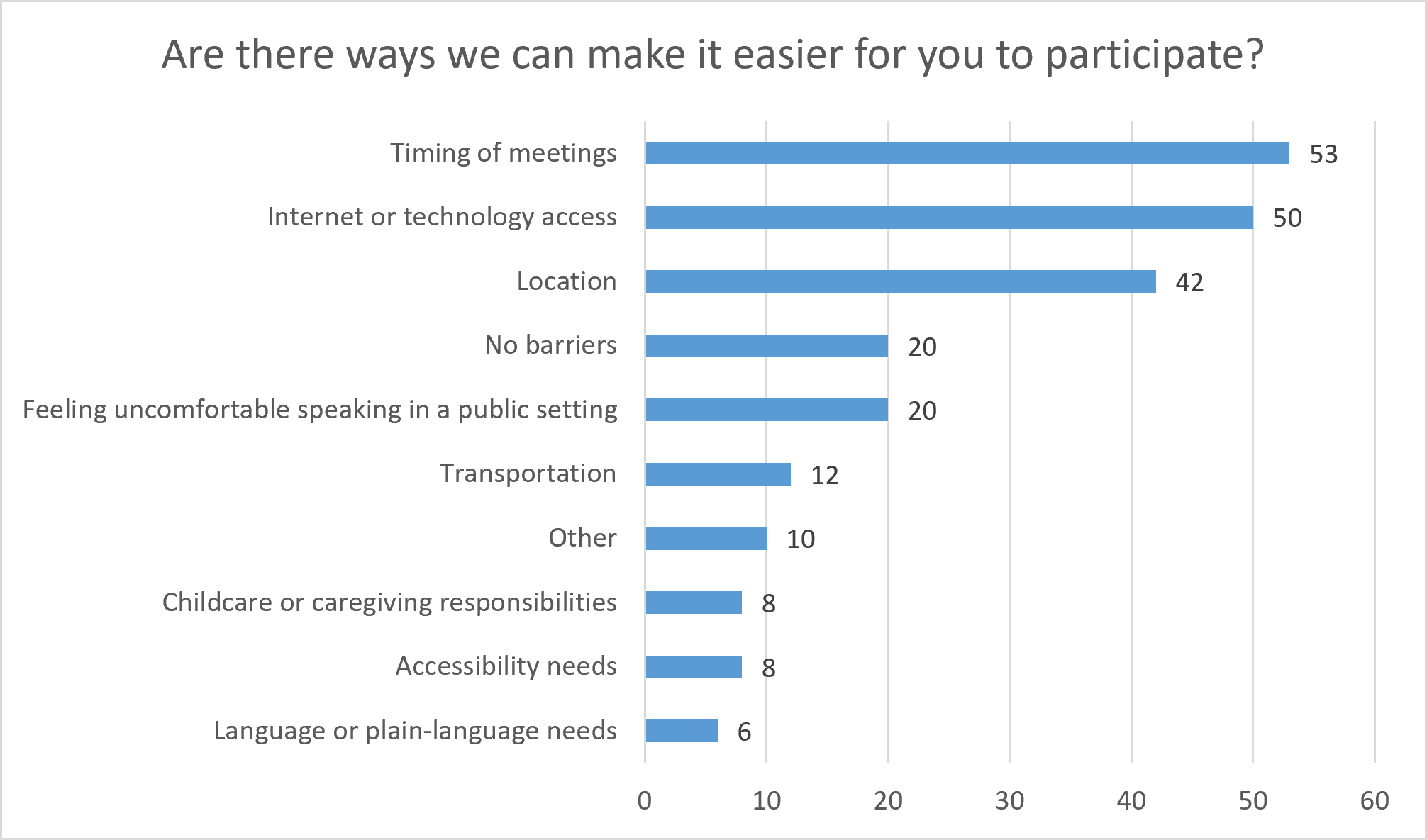
Question 11: Are there ways we can make it easier for you to participate?
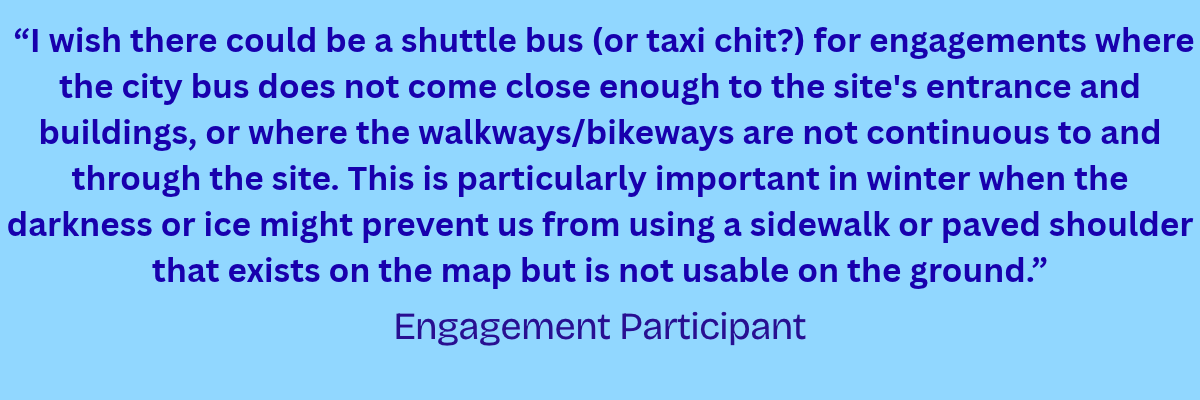
Most respondents shared timing, internet/technology access and location would make it easier to participate.
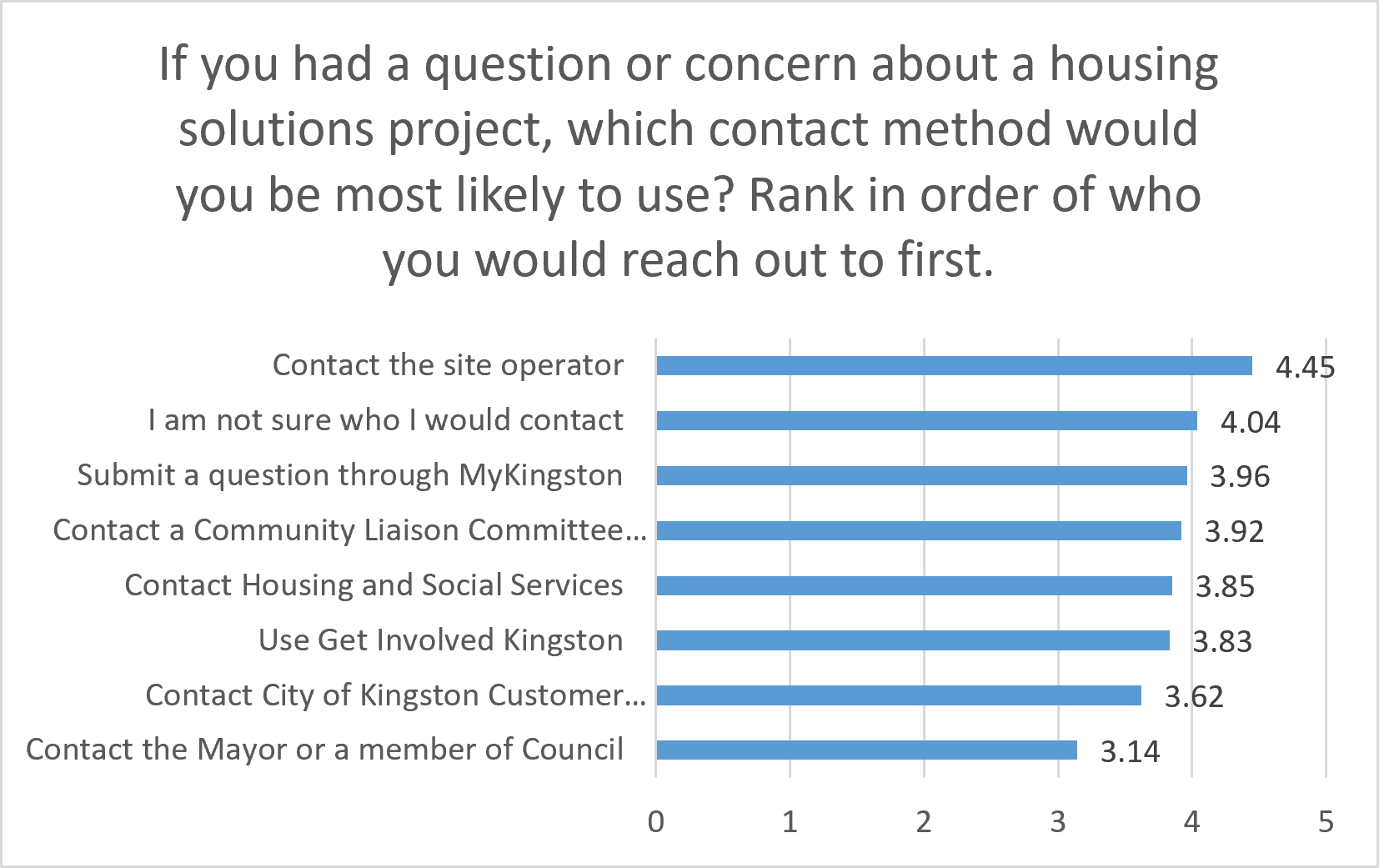
Question 13: If you had a question or concern about a housing solutions project, which contact method would you be most likely to use?
Most participants said they would contact the site operator first, and the Mayor or member of Council last. Several participants shared they would not know who to contact if they had questions or concerns.
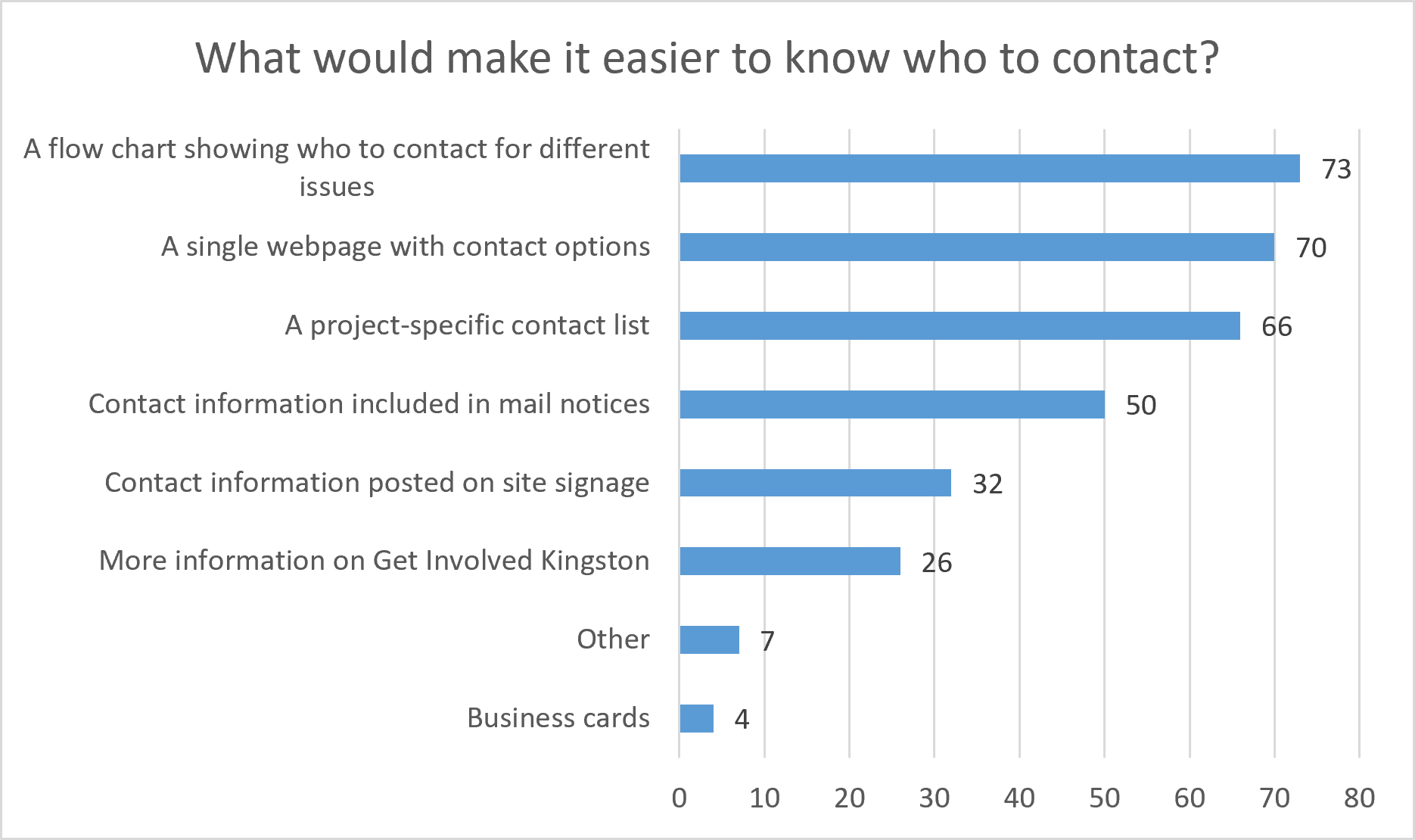
Question 14: What would make it easier to know who to contact?
Most respondents felt a flow chart, webpage and project specific contact lists would make it easier to know who to contact.
Written Comments (from Questions 12 & 15 of the survey)
118 written comments were provided across the two questions in the survey which invited additional comments on how the city engages and how the city can make it easier to participate. Feedback was mostly critical of existing processes which many respondents perceive as occurring too late and offering limited opportunity to influence decisions.
A break down of the top 5 requests from written comments are
-Engage earlier, before decisions are made (35 unique mentions)
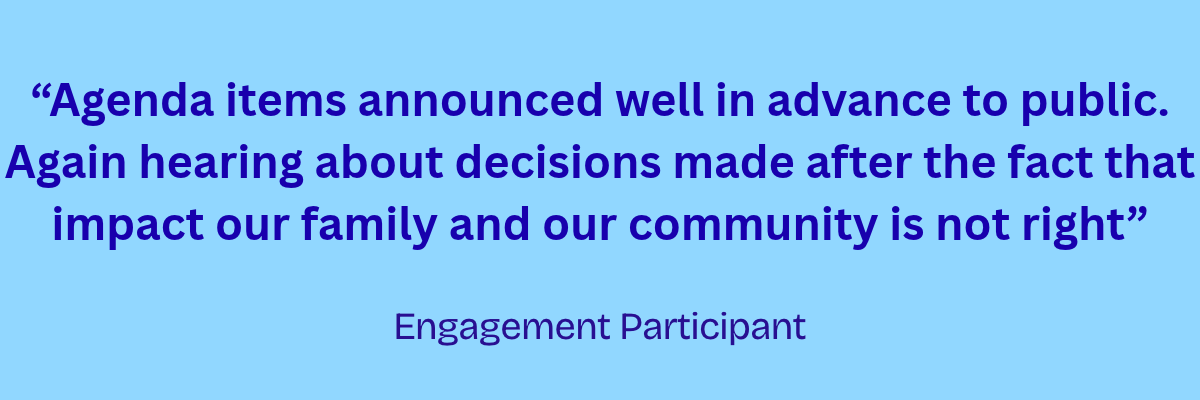
“One of my biggest issues is not having input of any sort about the location and cost of new housing. Council chooses a location and locks in a purchase and budget for it and then sends out a communication about what is going to happen - NOT about what is proposed to happen. Dissenting opinions can then only be voiced after the fact and are then totally disregarded.”
-Improve transparency around decisions and site selection (17 unique mentions)
“Communication about decision need to be made public. I was shocked when the city purchased homes in residential areas without information to residents until after the fact.”
-Make engagement meaningful and demonstrate impact of feedback (15 unique mentions)
“the most important thing the City can do is ensure that meaningful engagement happens. This means developing policies and processes that require meaningful engagement on all matters that impact service users and neighbours.”
-Provide more direct communication (13 unique mentions)
“I would like to see more direct engagement for populations who cannot access technology, such as flyers in apartment buildings. Direct communication to ALL groups, agencies working toward housing solutions - not just City stakeholders.”
-Increase accessibility and outreach to affected populations, including people most affected by housing insecurity (11 unique mentions)
“Train city staff to talk to unhoused people and get their feedback. Have unhoused gatherings around a coffee to get their input -using a safe site. -like a coffee shop.”
A small portion of public feedback (6 unique mentions) expressed that public engagement on housing projects should be limited.
“I believe public input should be limited and these decisions should be left to city staff, similar to how it is being done in Toronto. Public engagement often derails or delays necessary supportive housing projects which causes the homelessness problem to worsen.”
Community Drop-in Session Comments
Participant feedback from the community drop-in session focused on transparency and clarity of criteria for new housing solutions along with input on communications methods.
Transparency & Clarity
Community members indicated a need for a standardized process for planning emergency housing solutions. Attendees also identified the difficulty of finding information from Council reports as a barrier to transparency with a need for clarity about when decisions were made about dispersing services across a broader geography. One participant requested a balance between the rights and needs of people requiring housing and the legitimate interests of surrounding residents. Possible ideas included community involvement in drafting clear processes and criteria for planning housing solutions that reflect the various interests.
Participants also noted a need for public information about the zoning of various housing types (shelters, transitional housing, supportive housing, group homes).
Communications Methods
Participants at the in-person session reported a range of preferences for communications methods, reinforcing recommendations to use multiple approaches. One third of participants indicated that they learned about the engagement opportunity from the public sign displayed in high pedestrian traffic areas of their neighbourhood.
Some participants noted the drop-in session and survey focused mostly on communications rather than selection process. These participants expressed a desire for recommendations that also address how the community is engaged during the planning/locating of housing solutions.
Next Steps
Feedback has informed the staff recommendations for how the City engages on housing solutions. The recommendation report is now available, and staff will bring these recommendations to Council on Tuesday December 1, 2026.

Thank you for your contribution!
Help us reach out to more people in the community
Share this with family and friends