2025 Transit Accessibility Engagement
Consultation has concluded. The engagement summary is available to read.
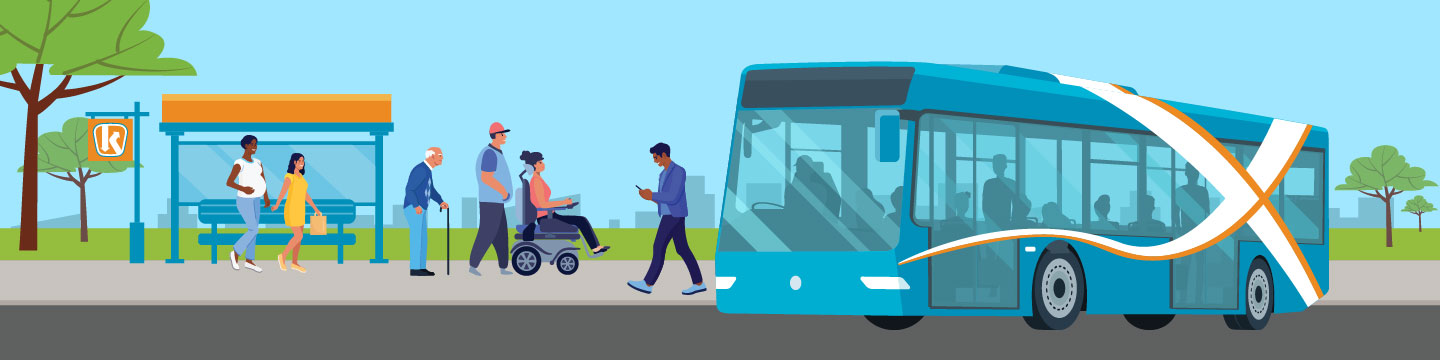
Each year Kingston Transit engages with residents and customers to improve the accessibility of its services. This information is used to plan and deploy improvements. Our goal is to build a conventional transit service that is accessible to our customers. We acknowledge that barriers exist in accessing our service and this process helps us to prioritize barriers that need to be addressed.
Stay Informed
- Subscribe to news and updates for this project.
Each year Kingston Transit engages with residents and customers to improve the accessibility of its services. This information is used to plan and deploy improvements. Our goal is to build a conventional transit service that is accessible to our customers. We acknowledge that barriers exist in accessing our service and this process helps us to prioritize barriers that need to be addressed.
Stay Informed
- Subscribe to news and updates for this project.
Consultation has concluded. The engagement summary is available to read.
-
What We Heard
Why we engaged
Kingston Transit is committed to continuously improving its service including accessibility for people with disabilities. Under the Accessibility for Ontarians with Disabilities Act (AODA), transit systems in Ontario are required to consult about accessibility. Kingston Transit uses the feedback from this annual consultation to inform on developments and future planning for the transit system.
How we engaged
An online survey was made available on the City’s Get Involved platform from Oct. 8 to Nov. 9, 2025, and Kingston Transit staff hosted an open house on Oct. 15, 2025, to answer questions and hear feedback.
Who we heard
Continue readingWhy we engaged
Kingston Transit is committed to continuously improving its service including accessibility for people with disabilities. Under the Accessibility for Ontarians with Disabilities Act (AODA), transit systems in Ontario are required to consult about accessibility. Kingston Transit uses the feedback from this annual consultation to inform on developments and future planning for the transit system.
How we engaged
An online survey was made available on the City’s Get Involved platform from Oct. 8 to Nov. 9, 2025, and Kingston Transit staff hosted an open house on Oct. 15, 2025, to answer questions and hear feedback.
Who we heard from
- 107 engaged participants completed the survey
- 15 spoke with transit staff at the open house.
- 428 aware participants visited the project page to learn more about the Transit Accessibility Engagement
Next steps
The feedback will be used to inform future improvements at Kingston Transit and the evaluation of Kingston Transit’s accessibility plan.
What we heard
Survey results are summarized below.
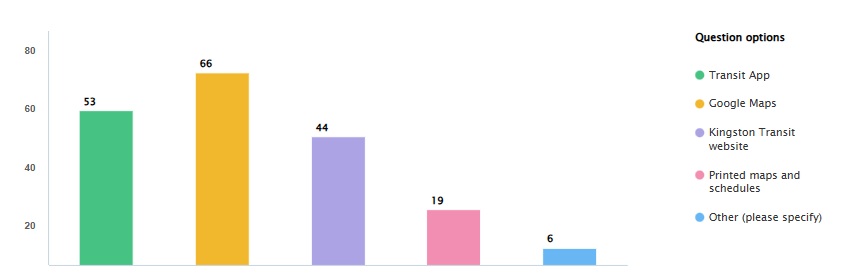
1. Which trip planning tools do you use? Select all that apply.
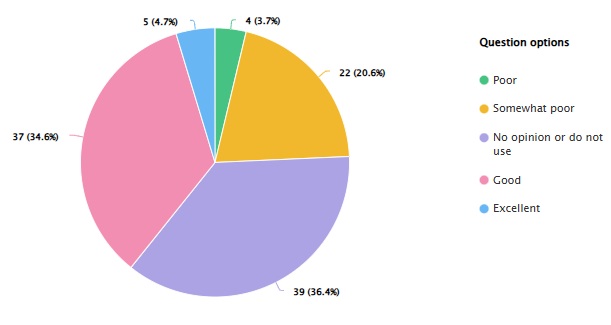
2. How would you rate the accessibility of the Kingston Transit website? Select one.
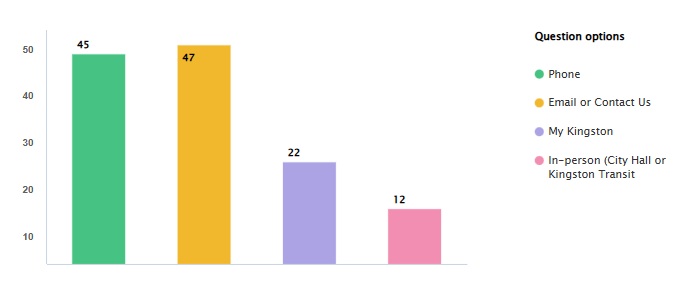
3. What methods do you use to connect with Kingston Transit customer service? Select all that apply.
4. Is there anything you would like to add about accessibility of trip planning tools or customer service?
- Accuracy: Lack of clear cancellation notices and slow app updates have left some unprepared and frustrated. Riders value digital signs but report frequent inaccuracies, phantom buses, and missed trips. Website maps and route planners sometimes conflict with actual bus routes. A desire for extended service hours.
- Communication and Information Sharing: Offline information like printed maps, schedules, and real-time signage at major hubs for those without smartphones or mobile data. Improved stop signage and arrival boards at transfer points would help newcomers and tourists navigate the system. Overall riders want faster, clearer communication about cancellations, route changes, and destination shifts. Better awareness of accessible alternatives from Transit Staff when stops are cancelled, and customer service hours should extend beyond weekdays to support riders when issues arise.
- User Experience: Real-time updates on the transit website and GPS integration with the Transit App are very much appreciated. However, sometimes there are issues with the interface through the apps or the accuracy of the information. Lack of platform details makes transfers harder and less efficient for riders at transit stop. Online bus pass loading and balance tracking are complemented as easy and user-friendly.
- Other: Some comments on other topics outside the scope of the question were received and are summarized including concerns about recent route changes, a desire for seniors to ride free. Concerns about late buses and perceived misuse of the priority seating area.
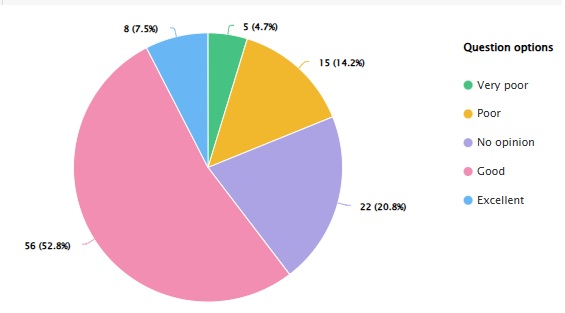
5. How would you rate the accessibility of the fare system?
6. Is there anything you would like to add about accessibility of the fare system?
- Cost: Some commenters felt fares were too high. Others that seniors (65+) should have free or reduced fares, similar to other cities as well as students. A desire for a monthly pass for accessibility buses, like regular bus services. Some advocate for free transit to reduce congestion, emissions, and improve safety.
- Fare Box: Responses showed a strong demand for tap-to-pay options (debit/credit, Apple Pay, Google Wallet, phone-based passes). As well as a desire for universal reloadable cards (like Presto) and easier online top-ups. Current reload locations are too few and inconvenient, requiring travel during limited hours. Handling coins and passes is difficult, especially for riders with mobility challenges. Preference for large, clear tap readers with visual confirmation. Flexible payment methods would increase accessibility and ridership.
- Space: Comments focused on making payment infrastructure (reload points, fare slots), more accessible and user-friendly, especially for people with vision or mobility challenges. Concerns were expressed around the total space available for those using mobility devices, and ensuring priority seating areas are available for those who need them.
- Transfers: Some challenges noted with paper transfers, specifically that the farebox doesn’t always read them. It also sometimes does not register a pass properly.
- Other: Some commenters indicated satisfaction with the accessibility of the farebox, indicating it works well; others liked the ability to pay online. There was a desire to have more audible announcements, including what route you’re travelling on, as well as improved communication from drivers.
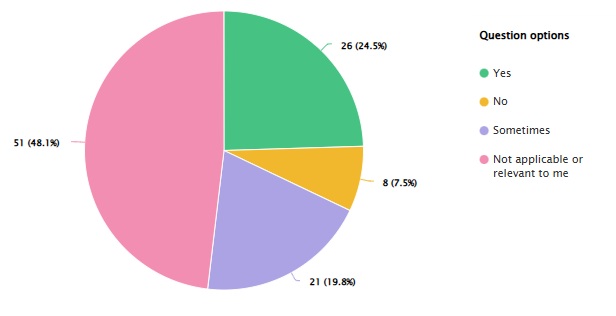
7. Are you typically able to find space available in the priority seating (mobility device) area of a bus?
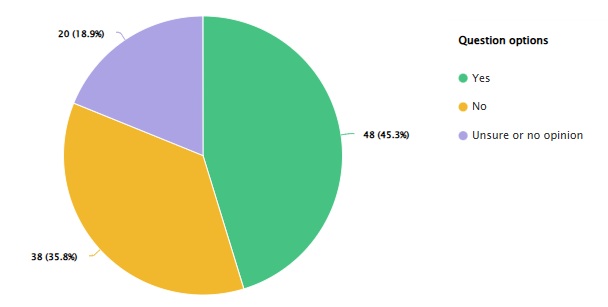
8. Do you think there is enough communication on the buses about who can use priority seating areas?
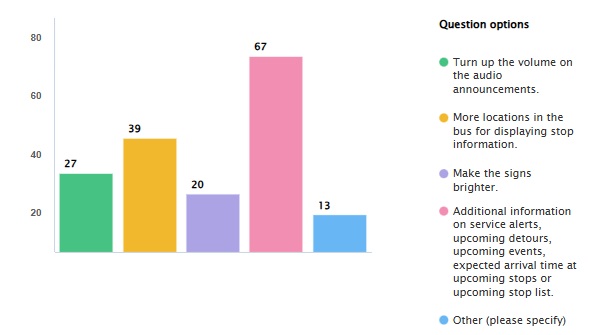
9. Thinking about the electronic displays inside the bus that provide audio and visual notice of different stops, which improvements would you like to see? Select all that apply.
10. Thinking about the information that is shared on the exterior digital signs on the bus, called destination signs, which of these options would improve your experience? Select all that apply.

11. Is there anything else you would like to tell us about accessibility of the vehicles?
- Communication: Some comments requested clearer displays, including destination information on the back of buses. Paper maps and other offline materials remain essential for riders without internet access. Some suggestions include adding voice instructions for back door use and prompts for ramp deployment or priority seating, with visual cues to support hard-of-hearing riders. Riders appreciate announcements of upcoming stops.
- Mobility Devices / Priority Seating and Boarding: Riders with wheelchairs and mobility aids want first priority to board and disembark, with drivers consistently reminding other passengers to wait. Several comments stated that priority seating is frequently occupied by non-disabled riders, and drivers rarely enforce movement; they request a public awareness campaign and more driver intervention. There is a desire for more designated space. Newer, wider bus layouts are appreciated for accommodating wheelchairs and strollers; commenters request more of these buses, if possible, with faster ramp deployment, and clearer seat mechanisms.
- Visibility: Window covering ads and decals can make it difficult for riders to see the street properly and gauge when their stop is coming up.
- Other: Several comments expressed frustration by frequent route changes at major transfer stations and overcrowded routes (e.g., through Queen’s University). They want previous routes restored and drivers consulted in planning. Seniors request shelters at key stops (e.g., Francis St across from the Seniors Centre), as benches alone are inadequate in poor weather. Some safety concerns were expressed. Concerns about buses skipping stops or leaving while passengers are running to catch them, undermining trust and reliability.
12. How do you get to your bus stop? Select all that apply.
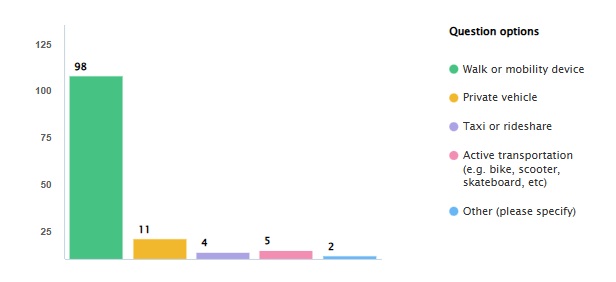
13. Please prioritize the following transit stop amenities from 1 to 9, with 1 being the most important for you and 9 being the least.
Results are summarized with their average rank. The lower the number, the more it was prioritized by respondents.
Shelter: 3.47
Real-time route information: 3.88
Stop sign with route number and destination: 4
Lighting: 4.65
Seating: 4.67
Services alert: 5.25
14. Is there anything else you would like to tell us about accessibility of transit stops and terminals?
Communication and signage: There was a desire for real-time bus info to be available at stops. Issues with the accuracy of data on current transit apps was flagged. Route signage can be unclear or missing (duplicate bus numbers, outdated/missing stop stickers). Signs often too small, high up, or low-contrast, making them hard to read—especially for seniors and low-vision riders. Requests for more obvious signs visible from a distance (300m).
Location: Strong desire for all stops to have concrete pads or sidewalks. Stops on slopes or uneven ground make boarding and waiting difficult. Dangerous location locations like busy roads without sidewalks, crossings, or pedestrian signals (e.g., Gardiner’s Rd, Bath Rd). Some comments pointed out shelter sizes such as oversized shelters in low-use areas vs. underinvestment downtown and near universities. Removing stops from residential neighborhoods harms seniors and those with mobility devices. Strong opposition to moving stops without user input. Traffic conflicts when stops are placed directly after intersections; buses also block bike lanes. Requests for better maintenance: snow/ice clearing and cleaning of pads/shelters.
Maintenance: Riders want more garbage cans, regular cleaning (including pressure washing), and enforcement of smoking bans. Faster snow and ice removal, salting, and better drainage are critical to keep stops accessible year-round. Concerns about uneven pavement, ruts, lack of crosswalks, poor lighting, and requests for emergency safety buttons. Ensure shelters and seating remain usable, free of debris, snow, and barriers.
Shelter and seating: Responses expressed a desire for every stop have a shelter, seating, and a concrete pad to ensure comfort and accessibility. Ideally they are on level ground, with pads or sidewalks, and located safely away from intersections. Shelters should be designed to avoid blocking pedestrian traffic, replicated consistently across both sides of streets, and provide adequate space for accessible needs. Clear, visible signage should be available and are particularly helpful for seniors, to reduce confusion and improve usability.
Other: A number of responses spoke about issues outside the scope of transit terminals and stops. Including issues with perceived misuse of the priority seating are. Dissatisfaction with route changes. A desire for free transits for seniors. Some compliments about accessibility improvements. A request for Kingston Transit to hire and accessibility consultant to address the accessibility within the system.
Consultation has concluded. The engagement summary is available to read.

-
October 15 2025
-
November 09 2025
All information received will be compiled and considered by staff for use under the purposes of this site. Information will be collected and used in accordance with the Municipal Freedom of Information and Protection of Privacy Act and other relevant privacy legislation. All comments made on this site are available to the public and may form part of public records.