Rural Transit Preliminary Investigation
This memo briefly outlines the potential for on-demand ridership in the rural areas of the City of Kingston. The City requested Dillon to identify the potential ridership attraction in the rural areas in Kingston. To complete this task, Dillon undertook the following steps:
- Identifying the conceptual zones that would be feasible to run an on-demand service.
- Generating high-level ridership estimates based on peers.
- Identifying how many vehicles would likely be required to run an on-demand service.
- Providing a high-level cost estimate for operating this service.
Potential Zones
The conceptual zones proposed as part of this project are identified in Figure 1. Two zones are proposed that could form the basis of an on-demand service in the rural areas:
- West: Areas west of the Cataraqui River, plus some small communities on the east side of the river. Possible transfer locations would include the INVISTA Centre, Bayridge Centre, the Kingston Train Station, King’s Crossing North, Montreal Park and Ride, and Innovation Park and Ride.
- East: Areas east of the Cataraqui River minus the communities described above. Possible transfer locations would include Innovation Park and Ride and CFB Kingston.
Within each zone, the transfer locations would encourage passengers originating in rural areas to transfer to the fixed-route service to continue their trip. Possible arrangements could include limiting passengers to the nearest transfer locations to minimize longer deadhead periods.
Ridership Estimates and Vehicles
To generate an estimate for ridership in each of the zones, the following assumptions were used:
- Based on peer systems in Ontario, a general ridership per capita for rural on-demand service (i.e., with no large settlement areas in the rural areas) can be between 0.05 and 0.20 trips per capita annually. 0.14 annual trips per capita was used to generate the starting ridership forecast, which assumed that service was only operated on weekdays.
- Service would be provided all day (loosely 6 am to 11:30 pm), based off the hours that the connecting routes generally operate from at the transfer locations.
- Population in each of the zones would generally mirror those measured in the constituent dissemination areas from the 2021 Census.
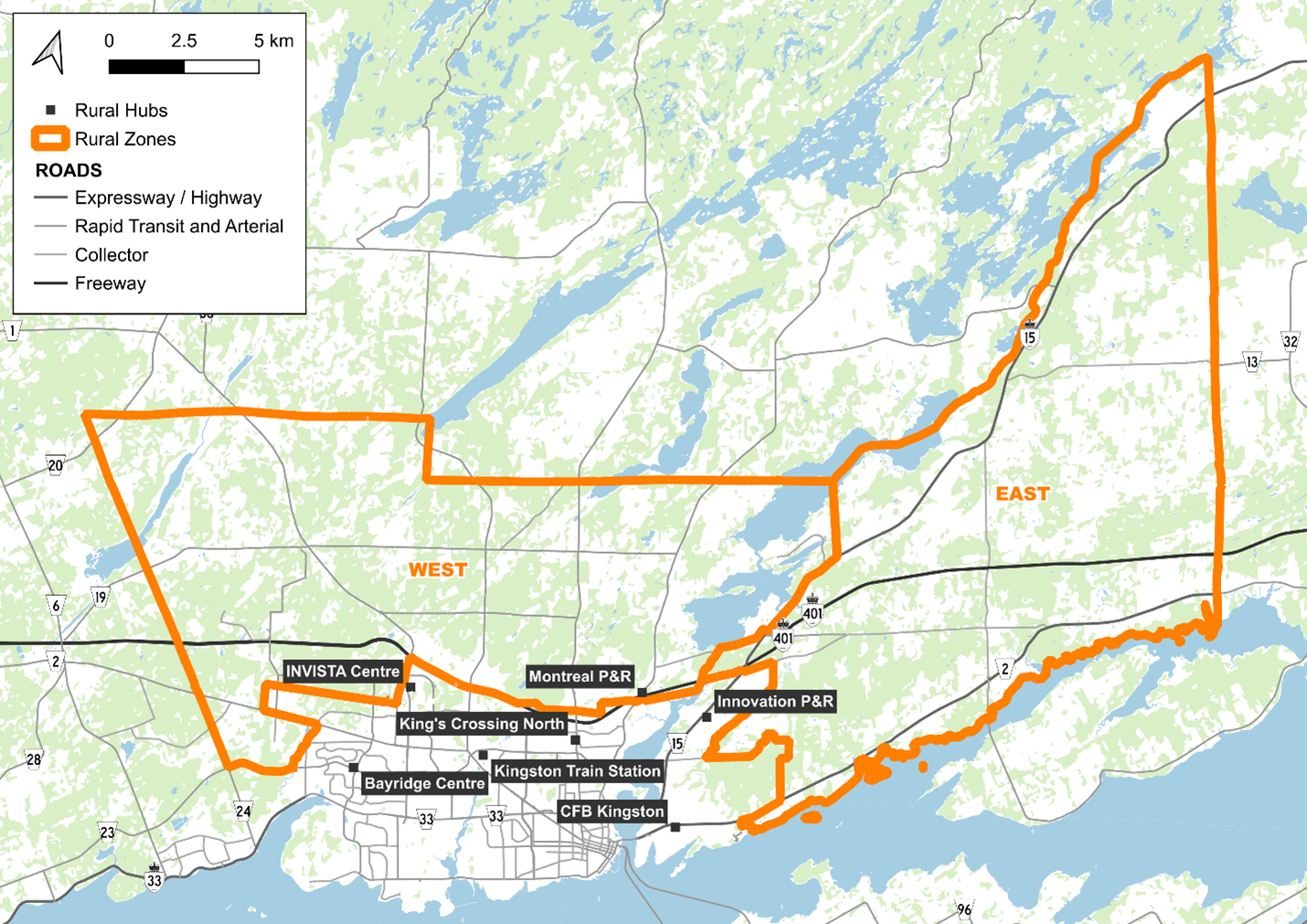 Figure 1: Conceptual Rural Zones and Hubs (Transfer Locations)
The population of the West zone was around 9000 residents in 2021, and in the East zone was around 5500 residents. Exact numbers may differ since the dissemination areas do not perfectly correlate to the zone boundaries.
Using the 0.14 annual trips per capita, it was determined that there would be around 1230 annual weekday trips in the West zone and 760 annual weekday trips in the East zone. On a daily basis, this translated to around 5 daily trips in the West zone and 3 daily trips in the East zone. It is assumed that one vehicle in each zone (two total) would be sufficient to support this service, and could potentially be reduced to one vehicle overall in very low-demand periods.
High-Level Cost Estimate
Similar to other rural on-demand services in Ontario, hourly operating costs generally are between $100 and $150 per hour. If this service were provided every weekday for the assumed period (17.5 hours), for both vehicles, it would be assumed that the service would cost between $474,250 and $711,375 annually to operate. A further assessment of the costs and ridership with more detailed forecasting would be able to determine a more specific expected cost and ridership than is provided through this memo.

Thank you for your contribution!
Help us reach out to more people in the community
Share this with family and friends