What we have heard so far
Introduction
Project Background
Kingston Transit operates local, seasonal and express services that serve the urban areas of the City of Kingston and the neighbouring community of Amherstview. Over the last ten years, the system’s ridership has grown significantly, reaching 6.1 million annual riders in 2023. Kingston Transit will need to adapt to the new transportation landscape.
To respond to these needs and to prepare for the future, Kingston Transit has initiated a Transit Service Review (the “Review”). The Review will include a comprehensive evaluation of the City’s transit system and the creation of new service guidelines which set out standards for service delivery such as frequency, service boundary, and system accessibility. The goal of the Review is to lay the groundwork for a modern transit system that is as accessible, available, direct and as reliable as possible.
The Review is being undertaken in two phases. The first phase, which took place from September to November 2025, included the project launch, the first round of public and stakeholder engagement and the initial development of service guidelines. The second phase will take place during the winter of 2026 and include a second round of public engagement, the preparation of a draft transit network report and final service guidelines. The network report and service guidelines will then be finalized during Phase 3, in the spring of 2026.
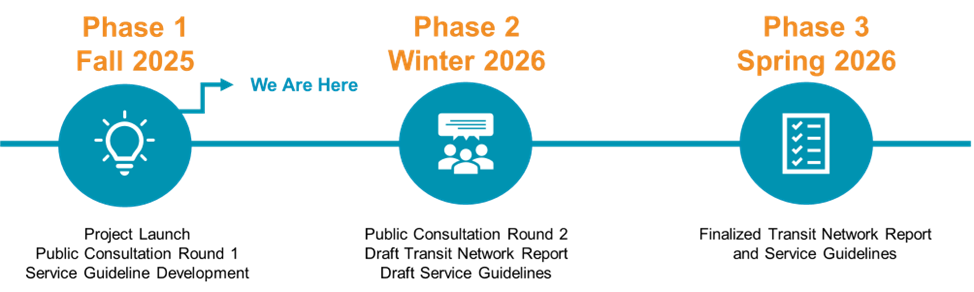 Figure 1-1 Project TimelineAt the centre of the entire process is a commitment to inclusive, transparent and accessible consultation through two rounds of public and stakeholder engagement. This report summarizes the feedback received during the first round of public engagement in Phase 1 of the project which focused on gathering feedback on current service and exploring the potential of introducing on-demand transit to the rural areas of the City. To date, opportunities to engage have included a virtual Public Information Centre (PIC) and an online community survey. These have been used to gain insight, ideas and perspectives that will inform the Review, the development of service guidelines and ultimately improvements to the City’s transit network.Engagement and communications plan
An Engagement and Communications Plan was developed to outline the approach to gathering input from the public and stakeholders over the course of the project. It emphasizes the need to use a variety of methods and set clear expectations for the feedback being sought from the public. The goal of the plan is to identify the needs and lived experienced of those who use, interact with and depend on transit to move around Kingston. The engagement activities outlined in the plan will enable the project team to understand local priorities, uncover gaps and develop an informed vision for the future of transit in the City.
Report purpose
This report documents the findings of engagement activities in Phase 1 and the feedback from the public and stakeholders. Section 2 of this report provides an overview of the engagement and communications activities that have taken place since the project was launched. Section 3 summarizes the input and identifies key themes that emerged through the engagement process including the survey. Section 4 outlines the project’s next steps and future engagement activities.
The findings of this round of engagement will inform the network modifications and service guidelines that will be proposed during the second round of the project.
Engagement and Communication Activities
The first round of engagement and communication activities in Phase 1 were designed to reach a broad and diverse audience. The project team provided multiple avenues for both stakeholders and the public to learn about the Review and provide their input on the current and future state of transit in Kingston.
The first round of engagement included the following activities, which are described in further detail in the subsections below:
- Communications and Project Launch;
- Virtual PIC; and
- Public Online Survey.
Communications Materials and Project Launch
To kick off the Review to the public, a project webpage was created on the City’s “Get Involved” platform in September 2025. The website includes an overview of the project, invites residents to “ask a question” to the project team, posts news and directs those who are interested to subscribe to receive direct updates via email. The project was also advertised through student outreach and using a post-card that was printed and handed out by the City at key locations.
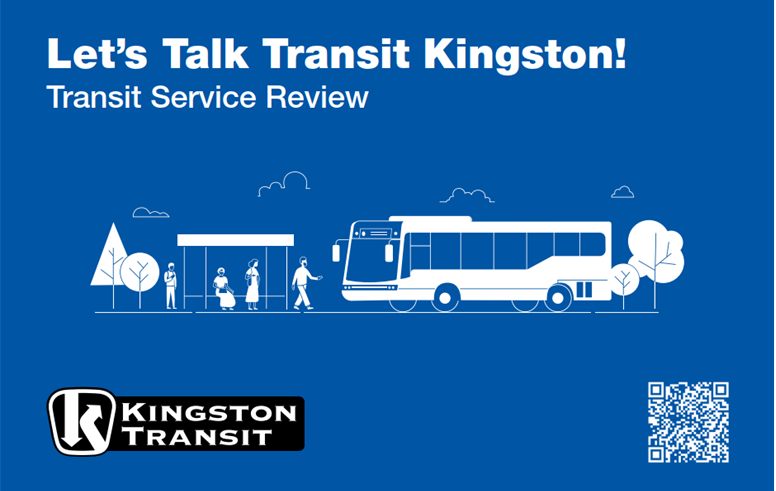 Figure 2-1 Postcar to advertise Transit Service Review
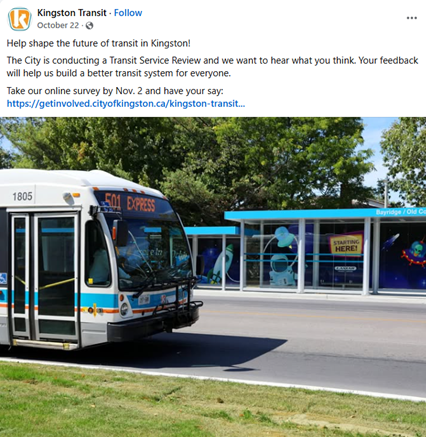
Additionally, members of the project team appeared on the City’s “Tell Me More” podcast to share information about the purpose of the Review. Information about the Review was also posted on the City’s social media accounts and LinkedIn to inform the public about the project and encourage participation in the first round of engagement activities.
Online survey
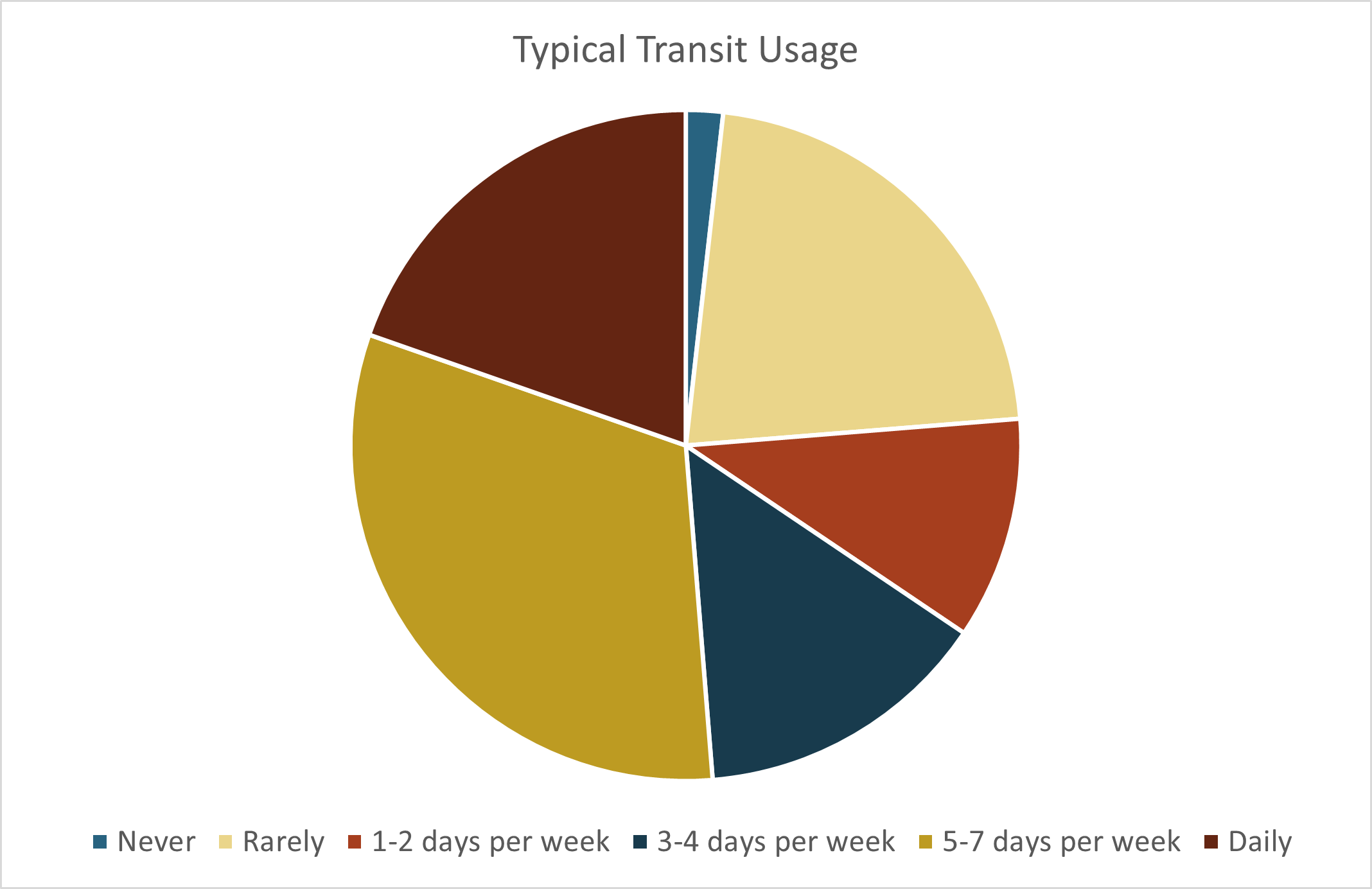
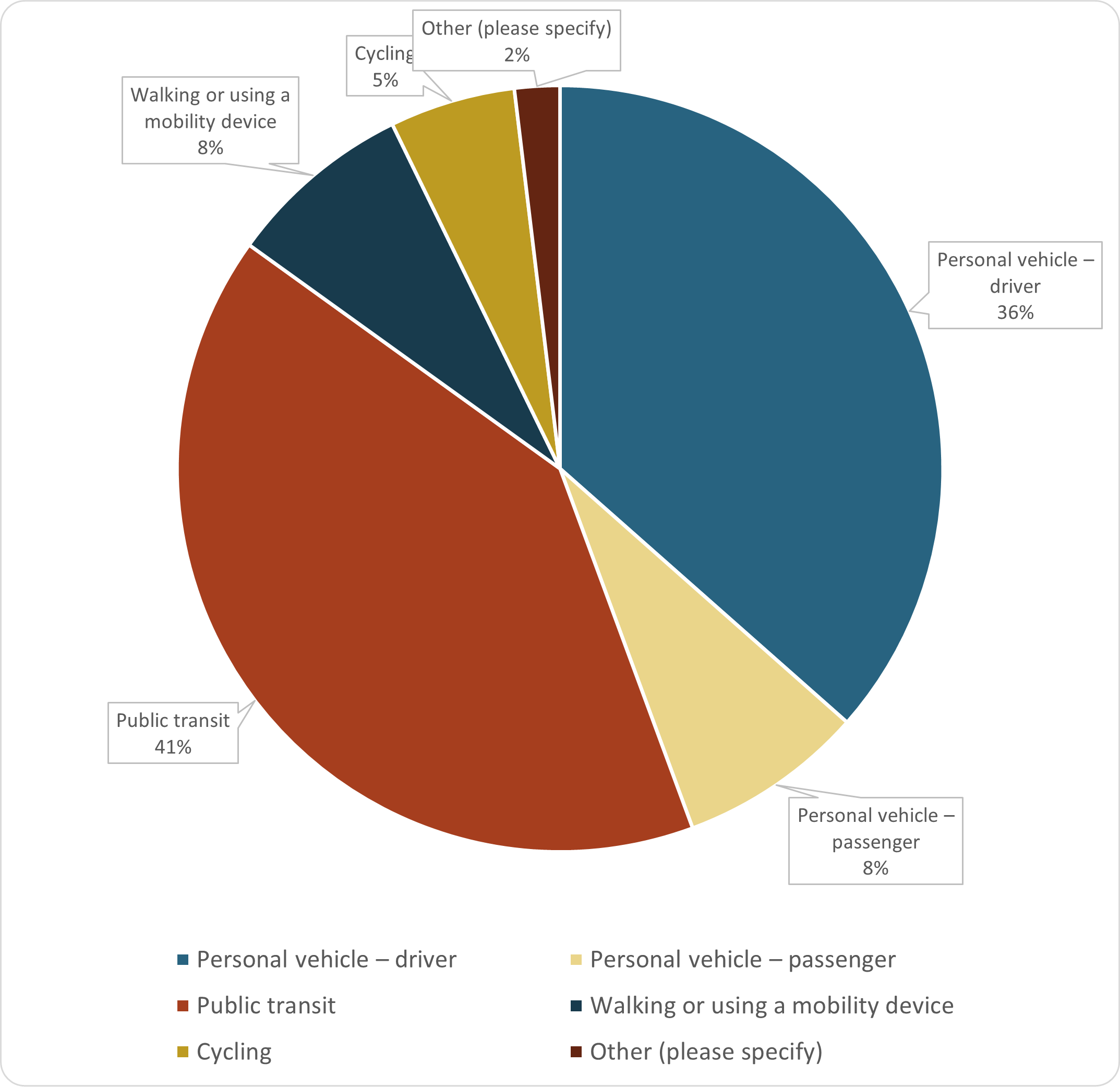
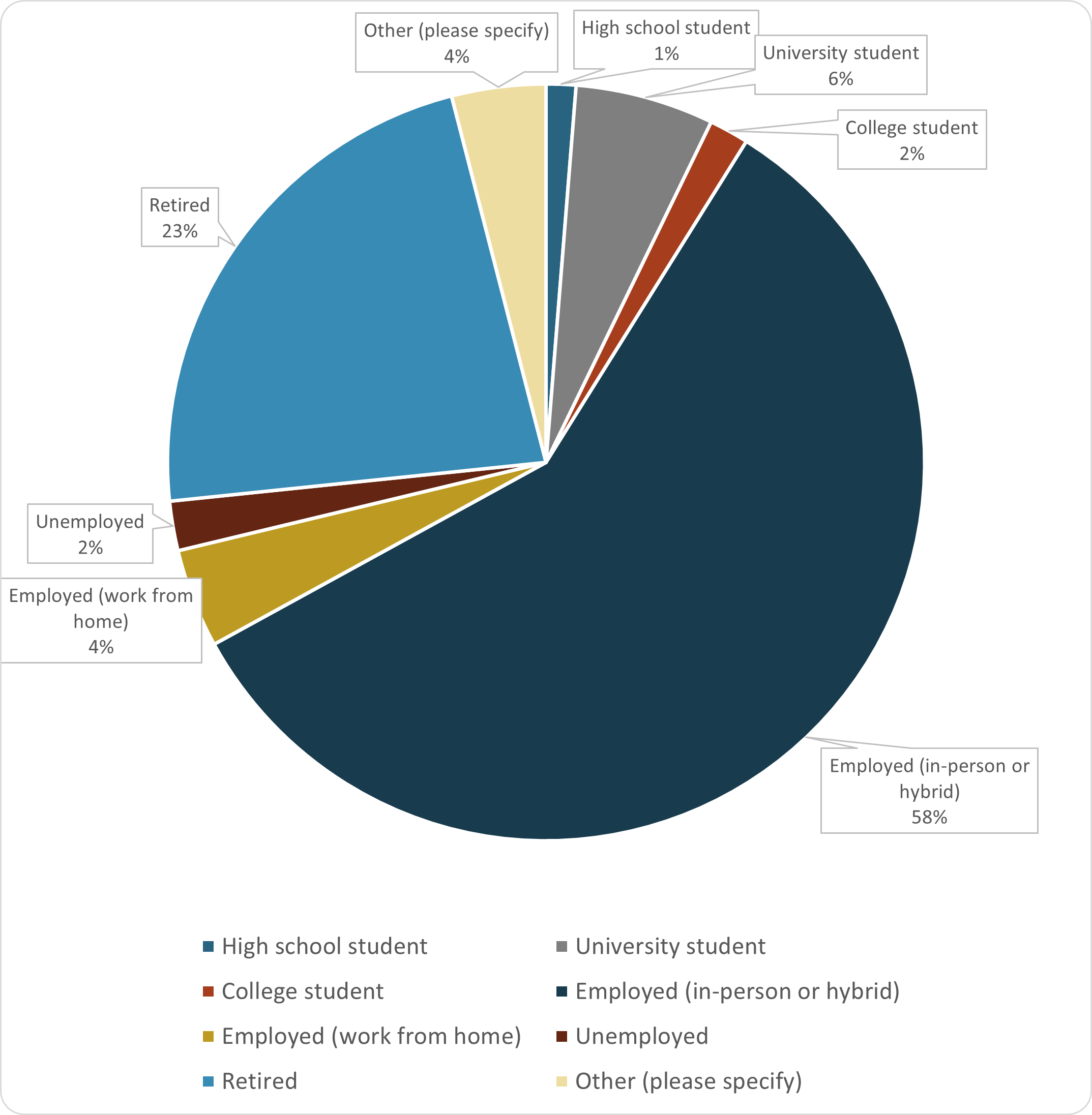
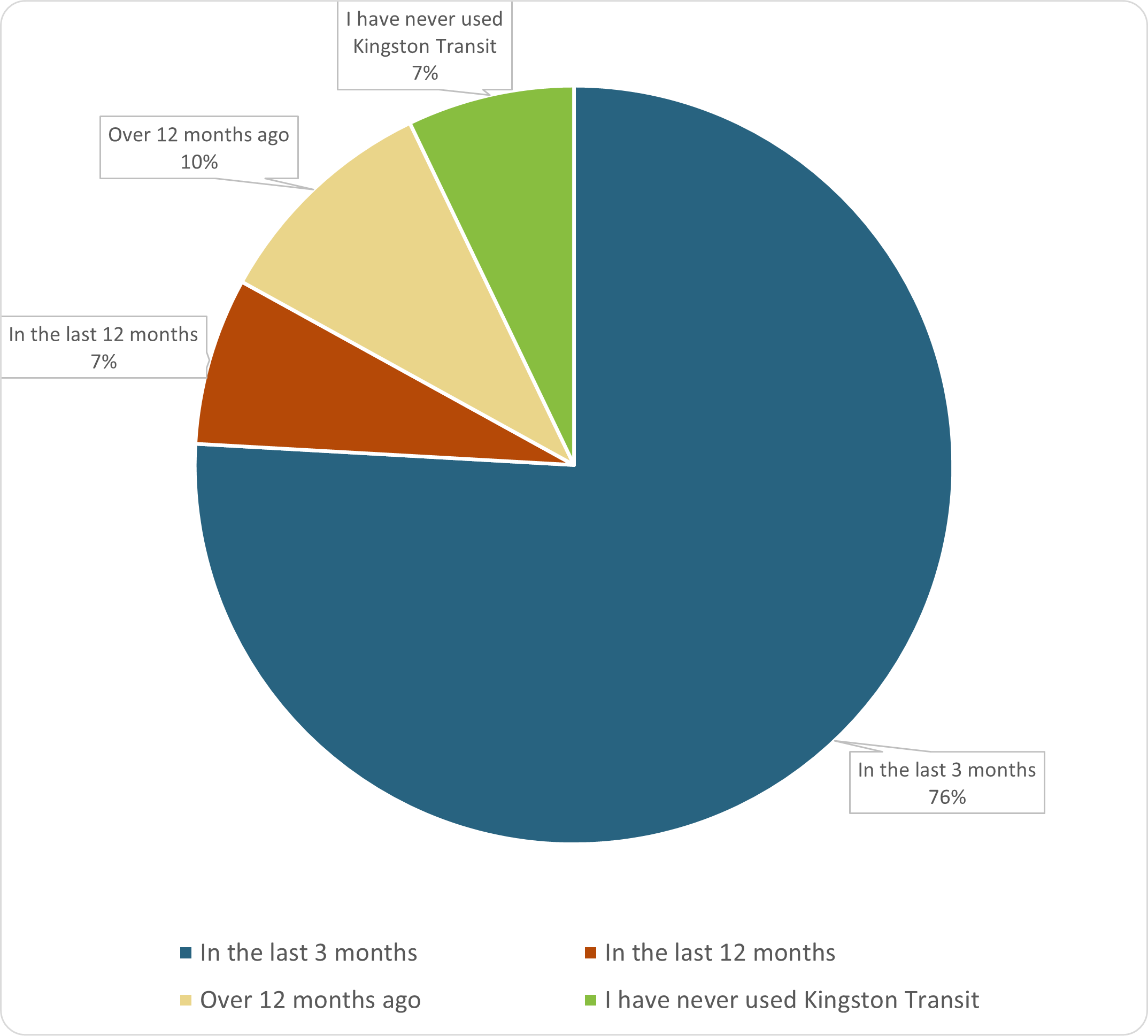
An online survey was posted on the project’s webpage on October 1, 2025 and remained open until November 2, 2025. The goal of the survey was to gain insights on trip types and frequency of use, and feedback on Kingston Access bus and Kingston Transit service, routes, support for a rural on-demand transit pilot program, and general feedback. The survey received 477 total responses. The main mode of transportation of respondents was either public transit (40.6%) or driving their own personal vehicle (36.5%). Most would describe themselves as being employed (58.1%) or retired (22.6%) and as having used Kingston Transit in the past three months (75.9%). Nearly a third (31.6%) of respondents use Kingston Transit five to seven days per week in a typical week.
A detailed summary of the survey’s findings can be found in Section 3.1 and the survey results can be found in Appendix A.
Virtual Public Information Centre (PIC)
A virtual PIC was held on September 29, 2025, on Zoom. The purpose of the PIC was to share project information, gather feedback about transit service standards like frequency, hours of service, routes and coverage, and to introduce the potential for on-demand service in the rural areas of Kingston. The PIC was attended by roughly 30 members of the public and has been viewed over 65 times since being posted on YouTube. Topics of discussion included ridership volume, route changes, accessibility, the provision of real time information and weather-related transit challenges.
Key themes from the virtual PIC are summarized in Section 3.2.
What We Learned
The public and stakeholder response to the engagement and communication activities revealed several key themes related to current and future service across the City of Kingston’s transit network. These key themes have been explored in further detail below and will be used to inform the network modifications and service guidelines proposed during the second phase of the project.
Survey Overview
As mentioned above, the online survey received responses from 477 people who live across the City of Kingston and in surrounding communities. The key themes from survey respondents have been summarized in Table 1.
| Key Theme | Description |
|---|---|
| Support for rural service | Nearly two thirds (61.8%) of respondents were supportive of the City operating a pilot on-demand transit service to connect rural areas with the urban transit system. Participants stated that offering transit to those who live rurally could reduce the number of cars on the road and help those who do not drive reach key destinations like downtown Kingston. Commonly reported areas where respondents would travel to or from using a rural service included Glenburnie, Kingston General Hospital, Downtown, Napanee, Odessa, Sydenham, Bath and Gananoque. |
| Improving wait times, frequency and reliability | Respondents who use Kingston Access Bus services and Kingston Transit indicated that wait times / service frequency and reliability were elements of service in need of improvement. When asked to rank the importance of service elements, frequency of service was found to be the most important to participants and many respondents commented on the need for more frequent and reliable peak service, particularly on express routes. |
| Stop frequency and stop proximity | A common point of feedback was that some routes, particularly express routes, have too many stops. However, bus stops being located close to where respondents live, work or shop was also ranked as the second most important element of service. |
| Trip cancellations and updates | Survey respondents called for better communication about trip cancellations and a more robust real time communications system. |
| Overcrowding | Respondents commented that buses are often full on the busiest routes during peak periods, making it difficult to plan to use transit to get to work or to appointments. According to respondents, routes which are commonly overcrowded are those servicing Queen’s and St. Lawrence College. |
| Bus stop design and weatherproofing | When asked for additional feedback, some respondents noted that bus stops lack amenities like shelters for when there is bad weather. Stop accessibility was a concern with steps at some locations, and a lack of winter maintenance and snow removal. |
| Changes to the #12, #14 and #16 routes | There were repeated requests to revert service on these routes to the way they had functioned before recent service changes. |
| Better east to west connections | Multiple respondents asked for better east to west connections with more seamless transfers and a lower overall travel time, to be able to get from one end of the city to the other. |
| Gardiners Road Plaza bus stop | A number of respondents noted that moving this bus stop from its previous location has caused them to miss transfers to other buses and that the new configuration is confusing. |
| Improvements to Kingston Access bus service | Survey respondents indicated that they would appreciate being able to create permanent or “standing” bookings so that they can avoid having to book trips two weeks in advance to ensure that there is availability. They also noted a lack of availability during off peak hours and a desire to expand service hours to accommodate trips taken later in the evening. |
A detailed survey results can be found in Appendix A.
Key Feedback Themes
On-Time Performance, Frequency and Reliability
The percentage of time the bus is on time (known as on-time performance), the frequency of service and the overall reliability of transit are interconnected issues that stand out as the most critical and frequently mentioned concerns by the public. Many noted that buses are often cancelled, which impacts the reliability of the entire transit system and the ability of riders to reach their destination on time. There were also multiple requests for improved frequency and a return to pre-COVID service levels, including having buses arrive every 5 to 10-minutes during peak periods. Calls for increased frequency centered around Route 2, and on the express routes serving Queen’s University, St. Lawrence College and Highway 15.
Accessibility and Overcrowding
Though it peaks in September, overcrowding is a significant, year-round problem that has a direct, negative impact on accessibility for individuals with mobility challenges. During peak periods, some routes are often "standing room only," and cannot properly accommodate those with mobility devices. Key feedback points included the potential to use higher capacity buses, the need to define thresholds for extra bus service and increasing the frequency of service when demand is highest. Many participants wanted to ensure that accessible seats are clear for people who need them, even when the bus is crowded.
Transfer Efficiency
The efficiency and design of transfer points were repeatedly identified as a pain point for transit users, particularly at the downtown transfer station. Riders reported that transfers are not efficient, and that recent changes have increased travel times significantly. This increase in wait time makes transit disproportionately longer than driving. The project team acknowledged that achieving reliable, direct "meet up" transfers is difficult as the city's traffic grows.
Bus Stop Placement and Infrastructure
The physical characteristics and locations of bus stops were a frequent concern raised by the public. They provided extensive feedback on this with key suggestions for creating future stop standards, including:
- Spacing: Improving stop spacing where stops are currently too close or too far apart, particularly on express routes.
- Infrastructure: The need for consistent, visible signage at all stops, especially transfer points, the inclusion of shelters and benches and addressing hazards like snowbanks in winter.
Communication and Signage
The need for clear, and timely communication was heavily emphasized by transit riders. They felt that the City should establish a minimum standard for notifying the public and drivers of changes to routes or schedules. Currently, riders are often not notified of route changes or a cancellation, making planning ahead difficult. Requests for better information include:
- Consistent signage with maps at stops and transfer points.
- Real-time information and digital signage at major stops.
- Improved coordination with event organizers so extra buses can be effectively communicated with and planned for at large events.
New Fare Payment Methods
The public highlighted the outdated nature of the current fare system, which contributes to loading delays. A desire exists to implement more modern payment options, specifically the ability to pay using credit/debit cards and the adoption of a system like Presto.
Route Design and Under-Served Areas
The review process gathered specific, targeted feedback on existing route issues and gaps in service.
- Route 2: The decision to change Route 2 and remove its downtown connection was a major point of contention, with riders noting the change made connections more difficult and less accessible.
- Key Destinations: There is demand for better, faster service to major employers and institutions, including Kingson General Hospital and Queen's University.
- New Service: The Westbrook service is currently a pilot program, but the community is requesting expanded, longer-term service. Furthermore, there is moderate public support for introducing on-demand service for currently unserved rural areas.
Next Steps
Public participation and input are valuable parts of the Review, and the input collected to date will help shape the future network changes and service standards that are currently being developed. As the project progresses there will be additional opportunities for in person and online engagement in Phase 2, Winter 2026. The participation of the community and stakeholders is appreciated, and feedback will continue to shape the outcomes of the Review and the future of transit in Kingston.
For more information, please visit https://getinvolved.cityofkingston.ca/kingston-transit-service-standards.
Appendix A
Survey Results
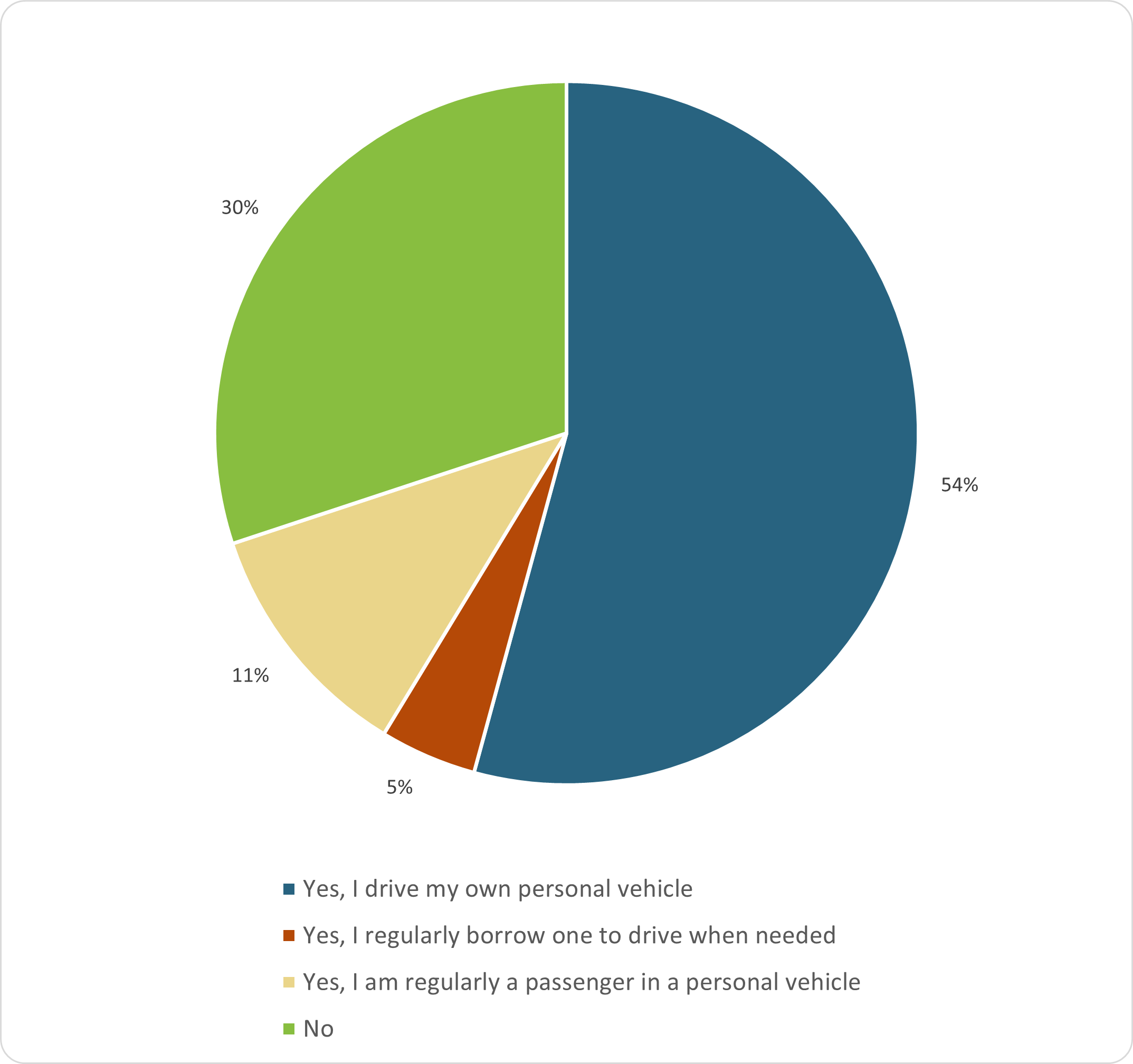
Do you have access to a personal vehicle?
What is your main mode of transportation?
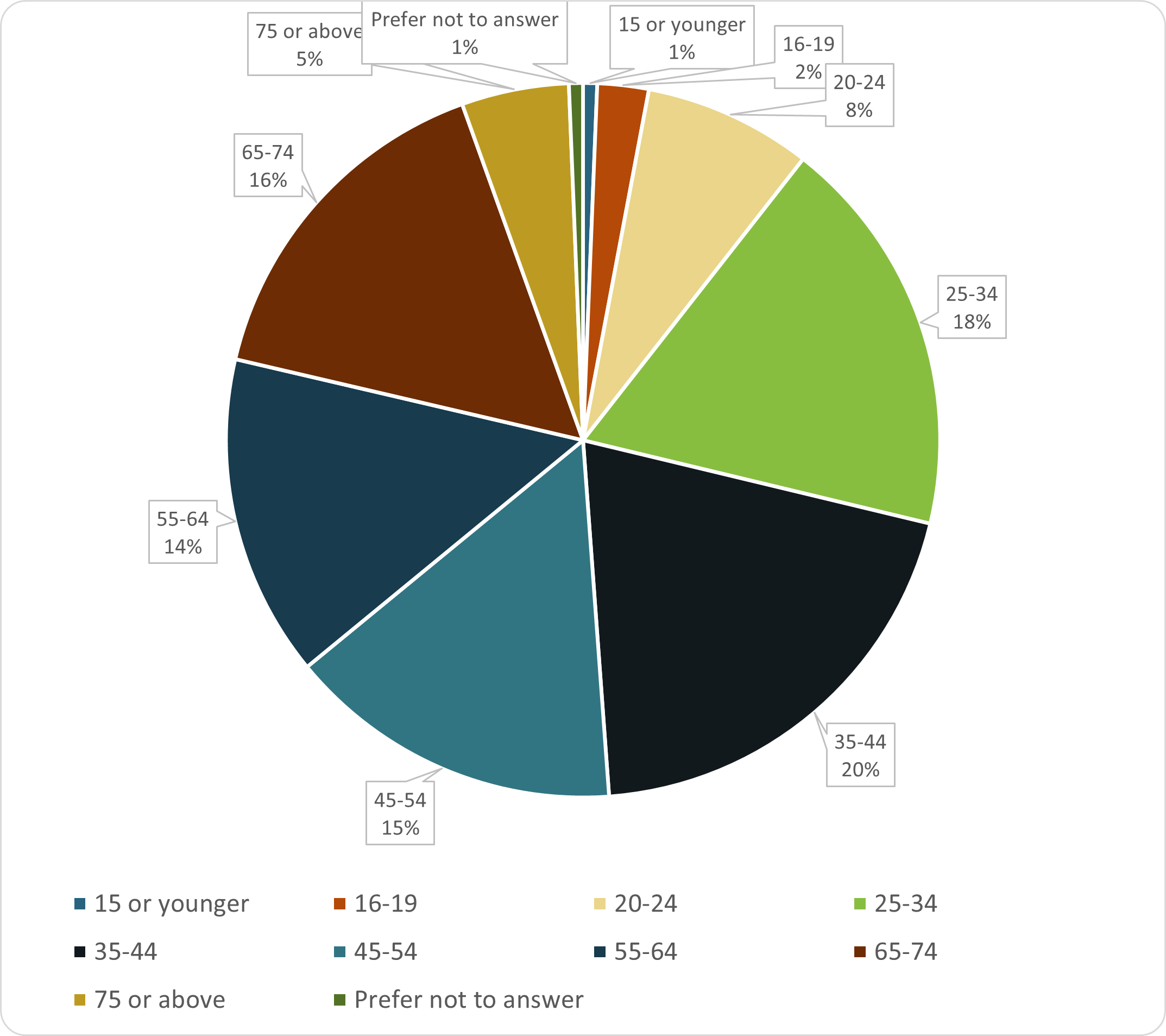
How old are you?
How do you best describe yourself?
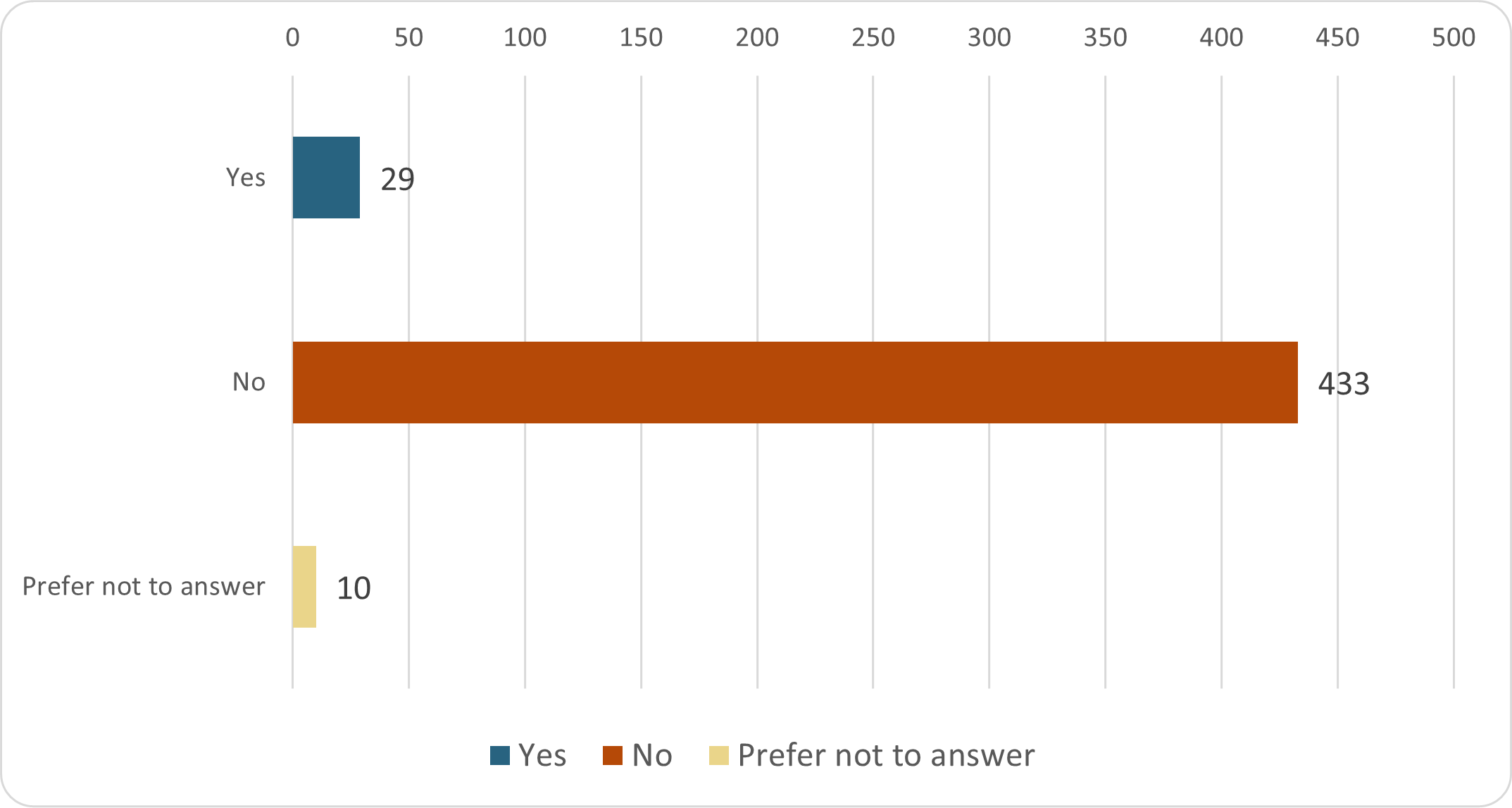
Do you have a disability that would make using transit challenging?
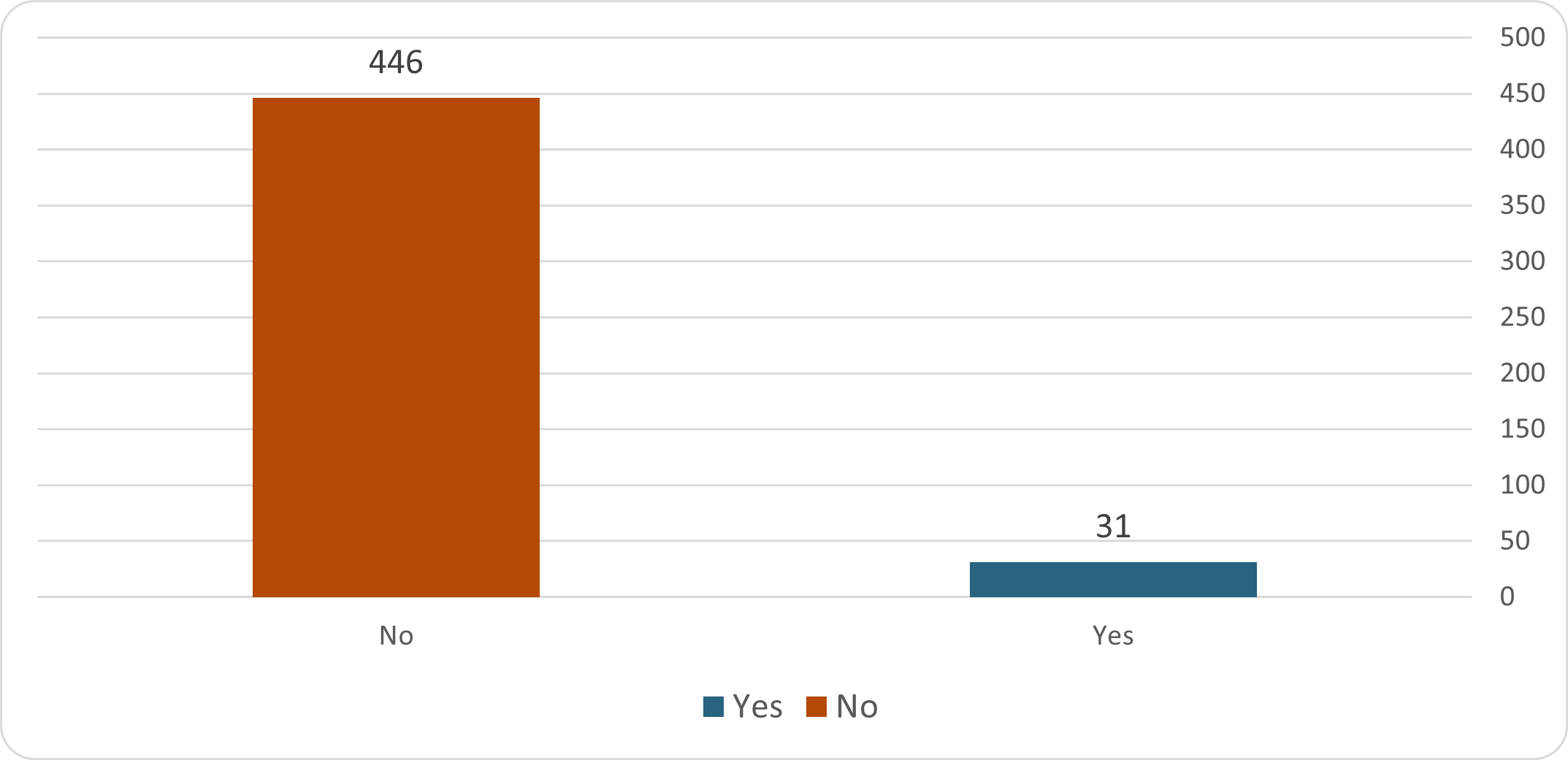
Are you a registered user of the Kingston Access Bus?
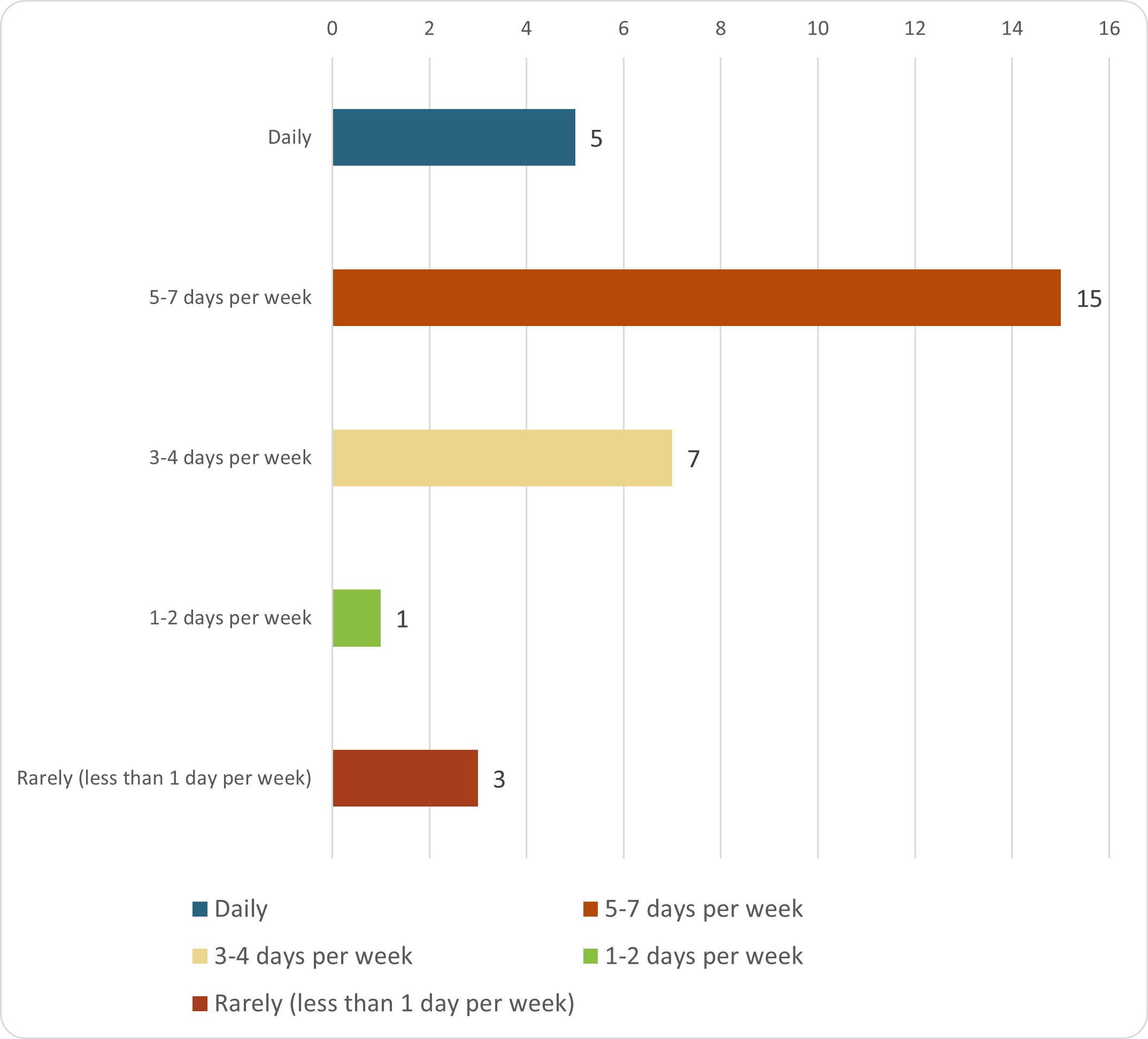
In a typical week how many days do you use the Kingston Access Bus?
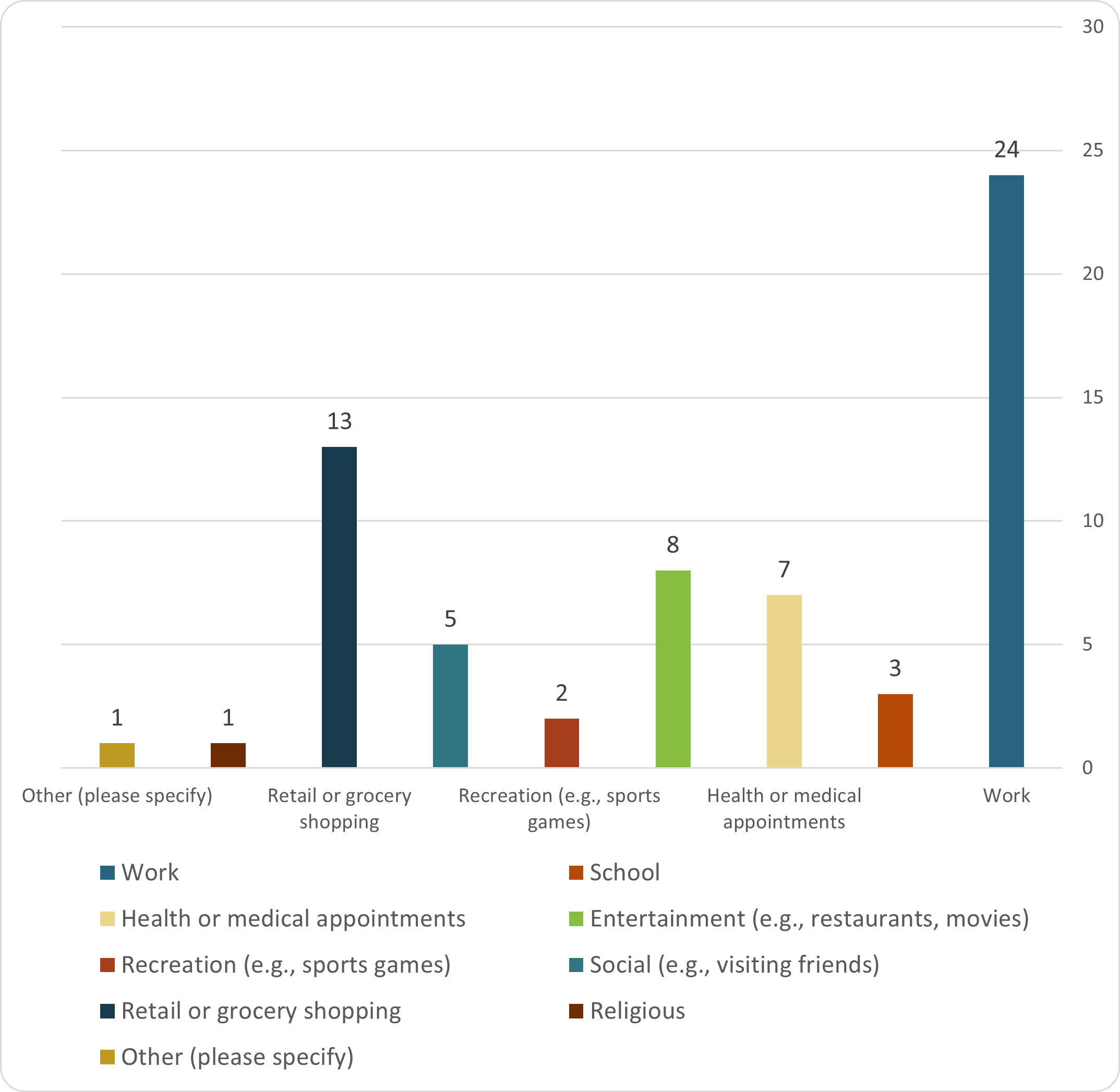
What type of trips do you typically use Kingston Access Bus for? (Select up to three of the most frequent)
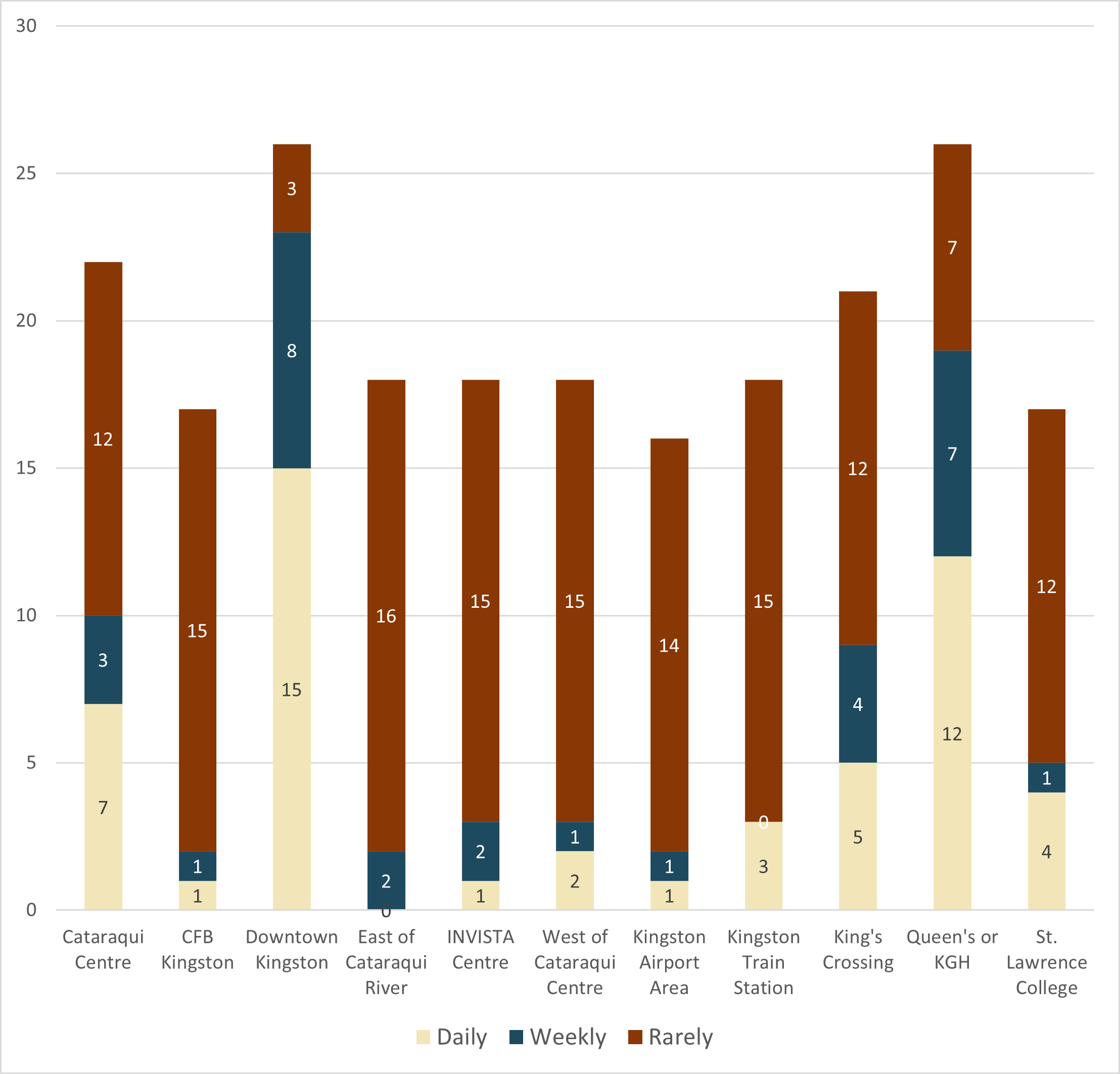
Please indicate your key destinations within the urban area and how often you would take Kingston Access Bus if available.
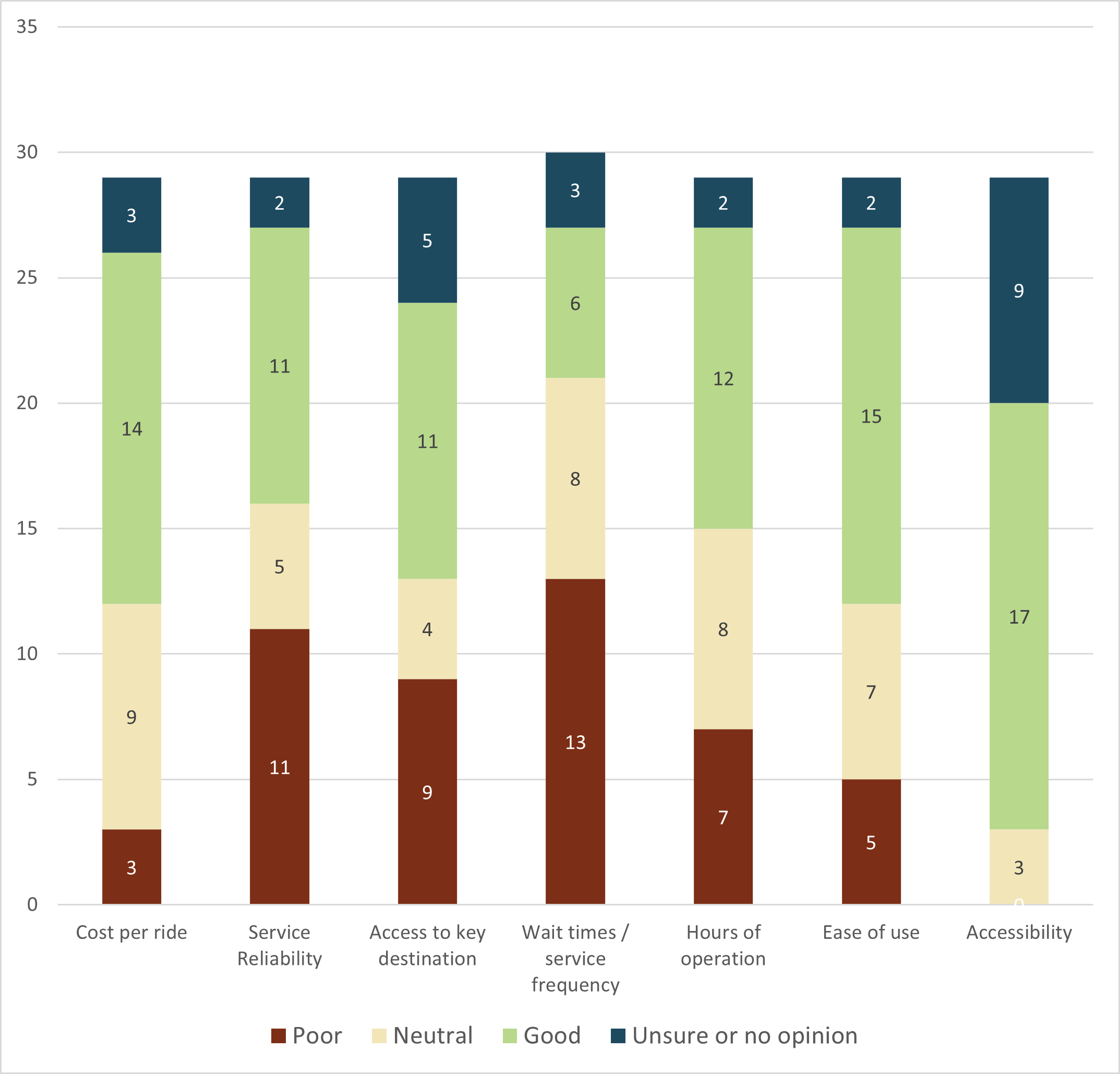
How would you rate the following elements of Kingston Access Bus? (If you are unfamiliar with any part of the service, choose “Unsure”)
When was the Last time you used Kingston transit?
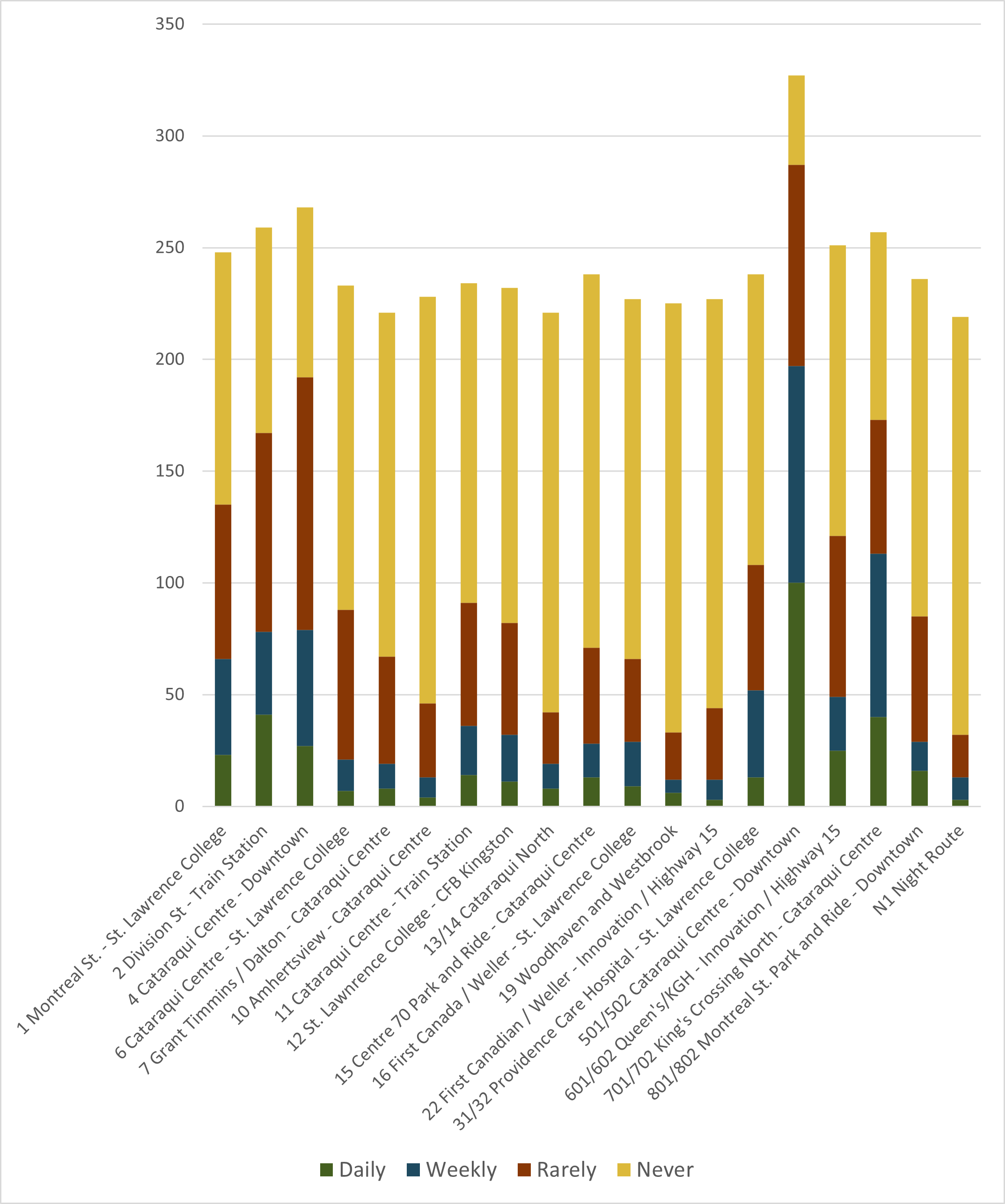
Which Kingston Transit routes do you most frequently ride? For the routes you use, please indicate if you take them daily, weekly, rarely, or never.
What type of trips do you typically use Kingston Transit for? (Select up to three of the most frequent)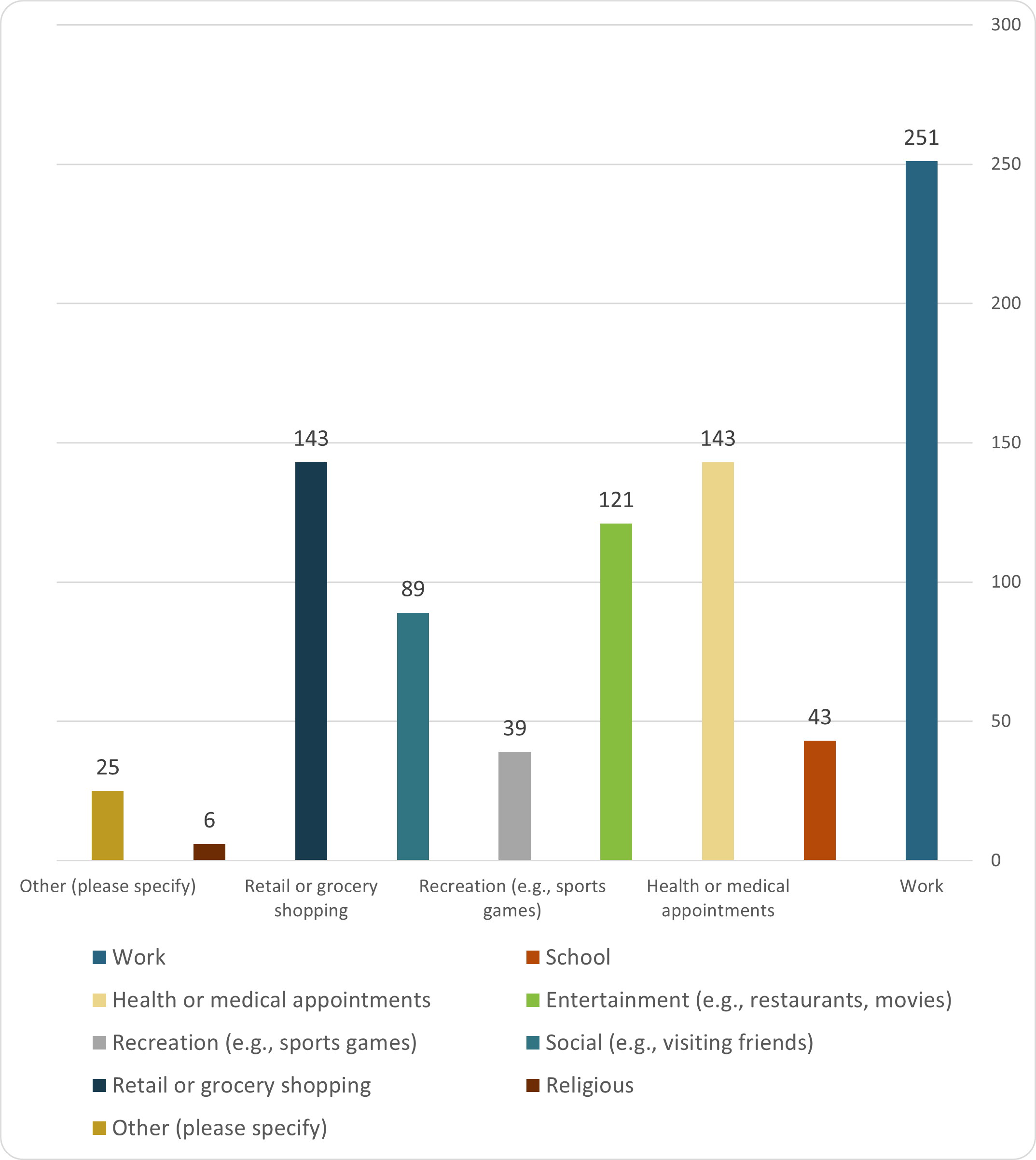
In a typical week, how many days do you use Kingston Transit?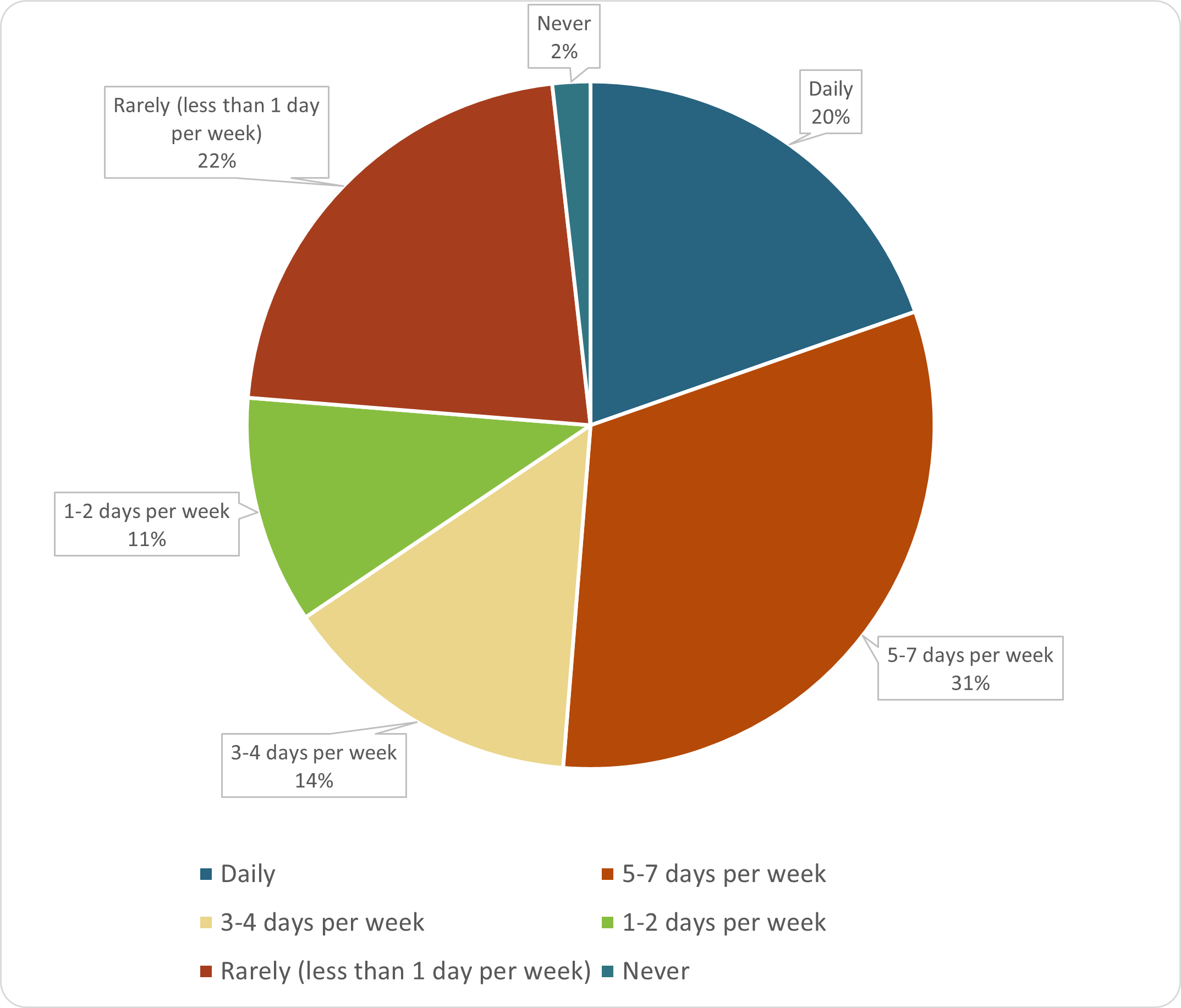
How would you rate the following elements of Kingston Transit? (If you are unfamiliar with any part of the service, choose “Unsure”)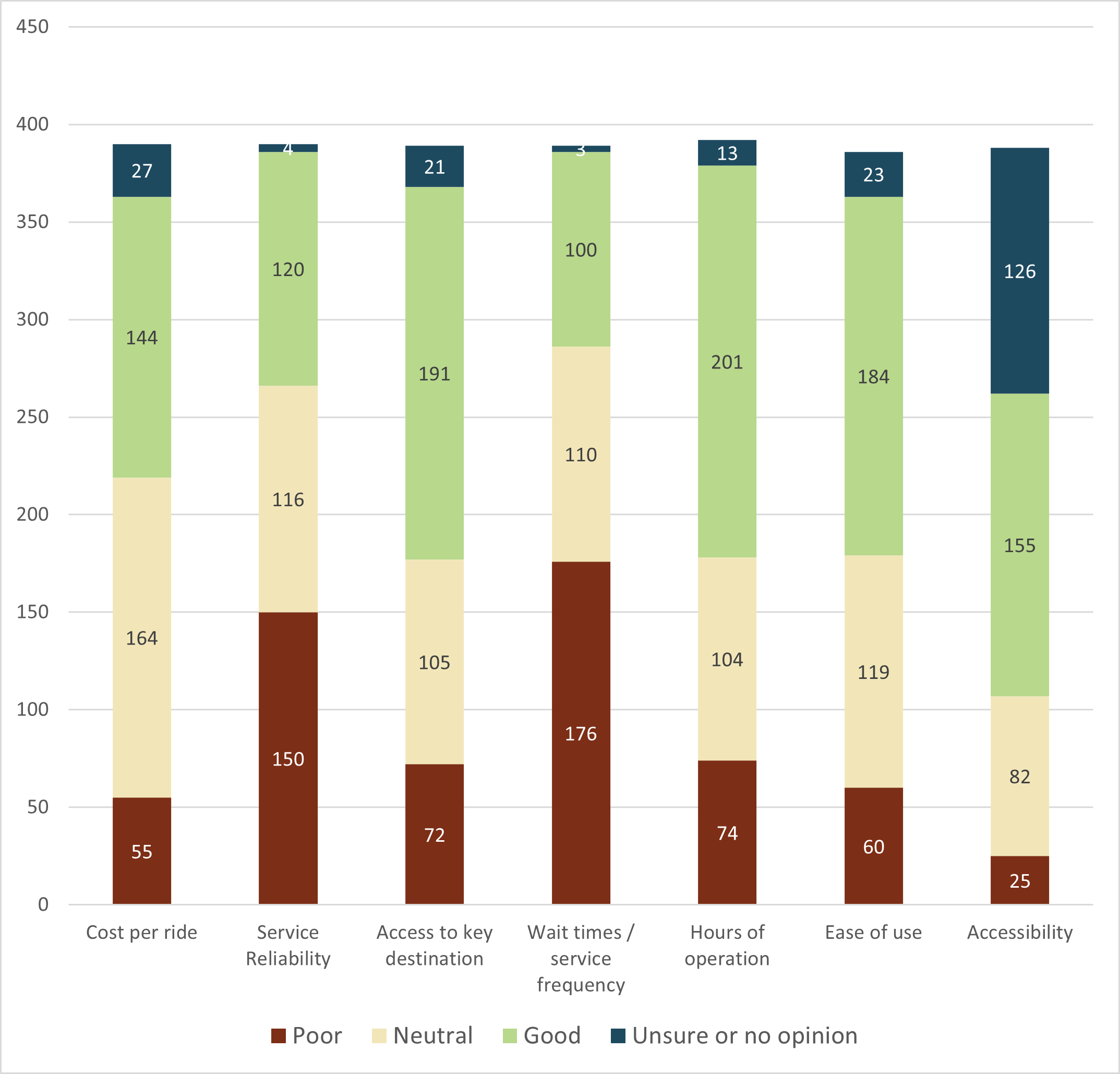 Please indicate your key destinations within the urban area and how often you would take Kingston Transit if available.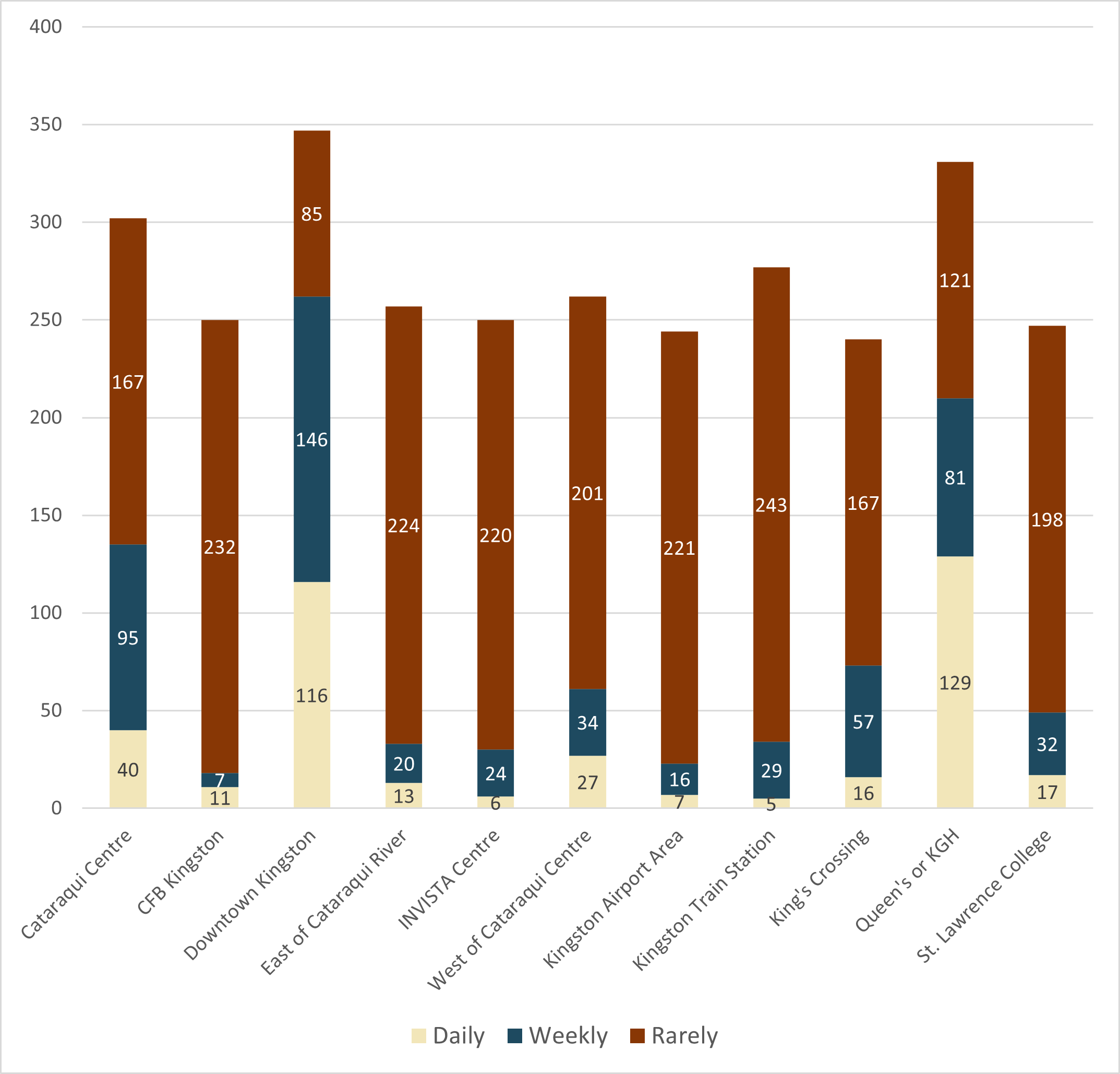
On a scale of 1-10 (1 being poor, 10 being very good) how would you rate the following elements of Kingston Transit?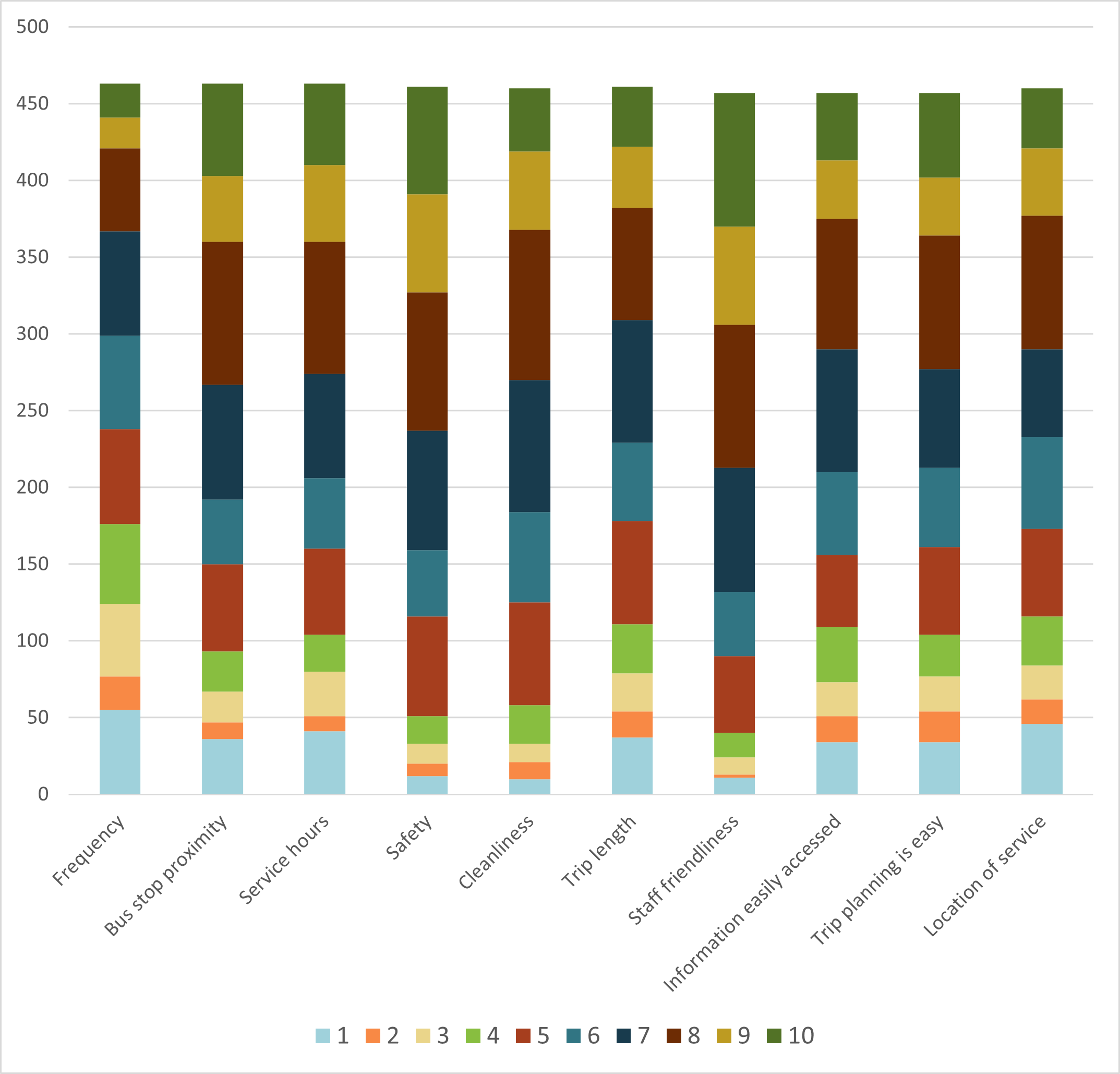
Rural areas in the City of Kingston do not currently have any transit service. Would you be supportive of the City operating a pilot on-demand (request-based) transit service to connect rural areas with the urban transit system?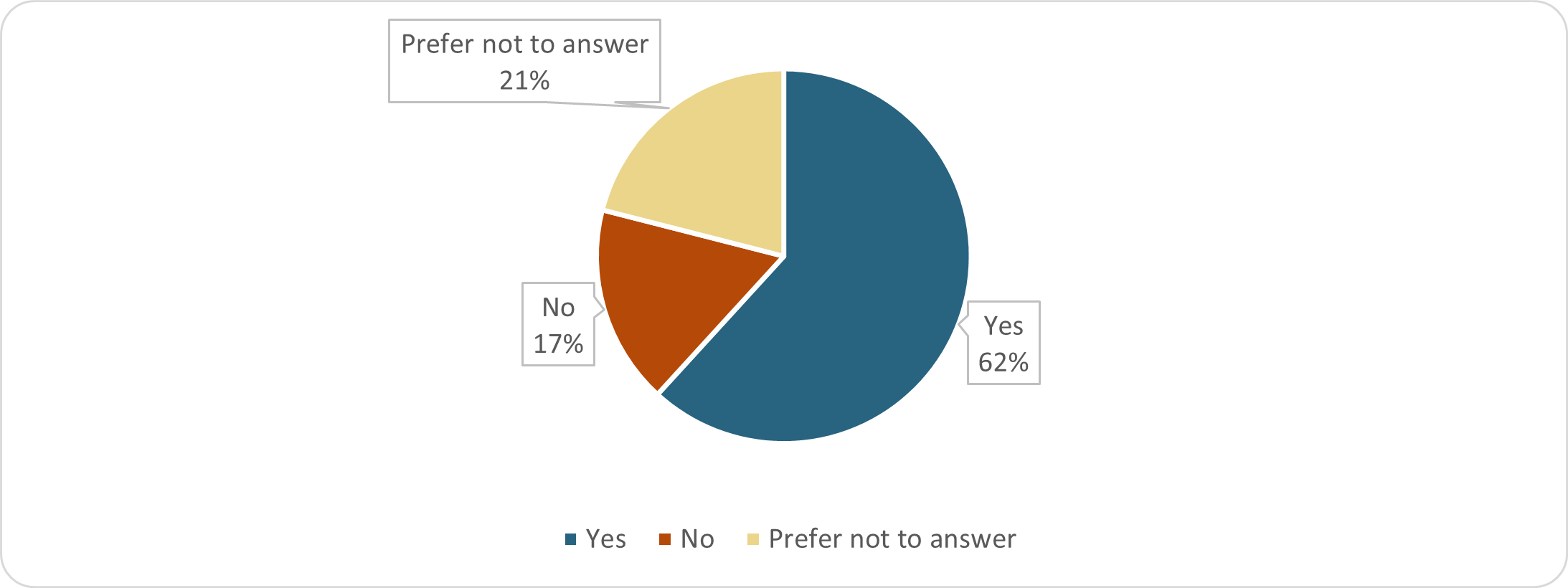 When asked why they selected “Yes” common answers included the following:
- Reducing car usage and traffic.
- Providing transit service to those in rural areas who do not drive, including seniors and children.
- Reaching rural destinations, like conservation areas.
- Improving environmental sustainability.
When asked why they selected “No” common answers included the following:
- A need to improve or expand existing urban transit services before providing a new service.
- A perception of high costs versus low use.
- A lack of drivers to operate rural routes.
When asked where respondents would use rural service to travel to or from common answers included:
From:
- Gananoque
- Napanee
- Glenburnie
- Odessa
- Bath
- Sydenham
- Harrowsmith
- Battersea
- Kingston Mills
- Verona
To:
- Downtown
- Kingston General Hospital
- Cataraqui Centre
- Little Cataraqui Conservation Area
- Queen’s University
- St. Lawrence College
Please rank how important each of the following is to you, 1 being most important to you and 9 being the least important.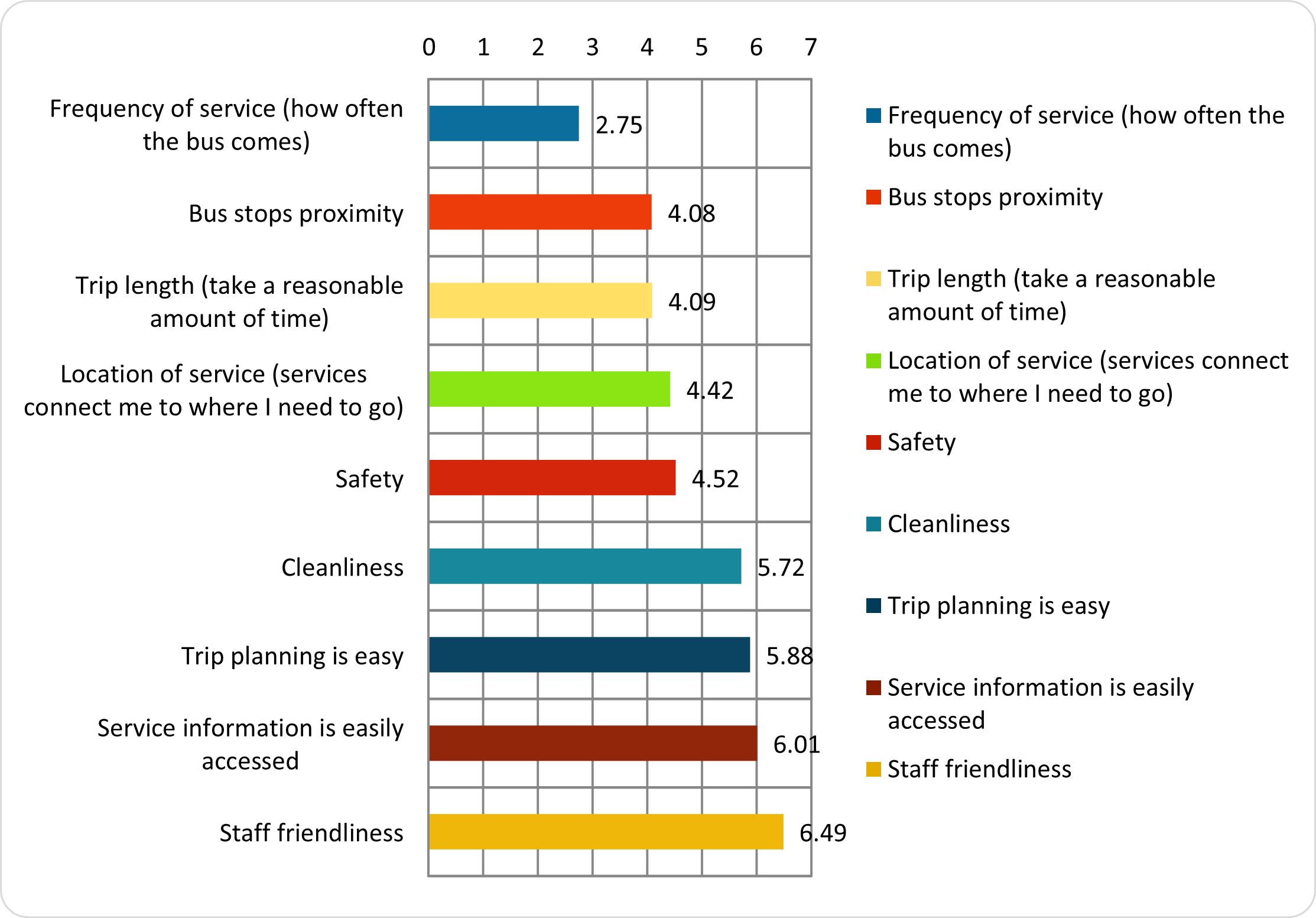
Please provide any feedback you might have that can help in creating a draft plan in the space below:
When asked for feedback about the Transit Service Review, respondents often mentioned:
- Preventing the sudden cancellation of buses.
- Scheduling buses to coincide with the beginning or end of the school day.
- Communicating route changes at transfer points.
- Aligning bus schedules with real time operations to improve reliability.
- Addressing overcrowding on certain bus routes at peak times.
- Increasing the frequency of express buses.
- Reconfiguring inaccessible bus stops and improving stop infrastructure (shelters, benches, weatherproofing).
- Shortening trip times.
- Considering using smaller bus vehicles on routes with lower ridership.
- Reducing the length of transfers where possible.
- Offering a contactless or card-based payment option.

Thank you for your contribution!
Help us reach out to more people in the community
Share this with family and friends