Articles
-
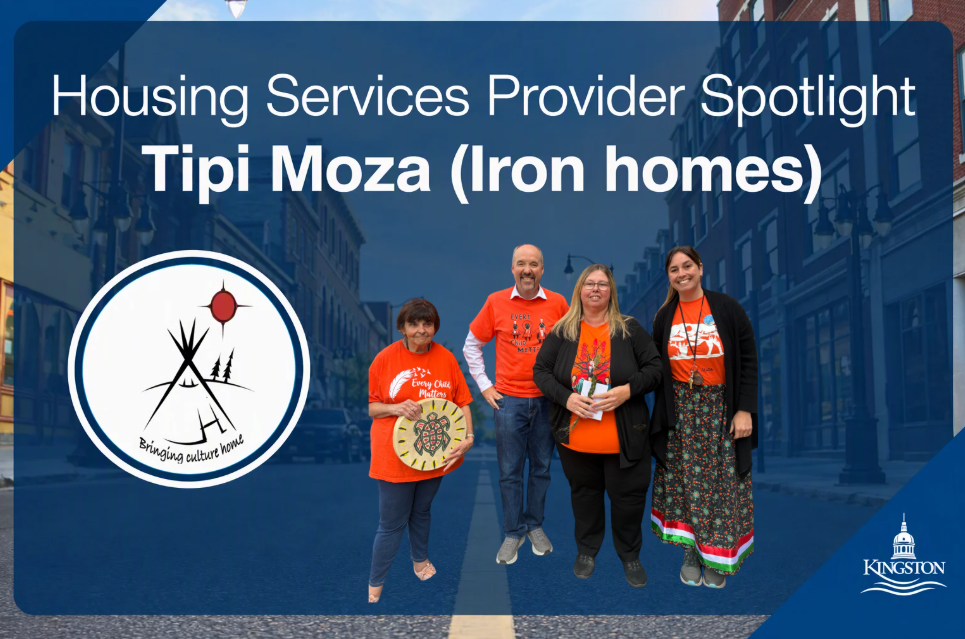
Service Provider Spotlight Series: Tipi Moza (Iron homes)
Following the National Day for Truth and Reconciliation, the City of Kingston is humbled to honour the contributions of Tipi Moza (Iron Homes), our Indigenous Housing Service Provider, as our next Service Provider spotlight.
Tipi Moza (Iron Homes)
1. Who they are
Tipi Moza (Iron Homes) operates urban Indigenous transitional housing, supportive housing, affordable and rent-geared-to-income housing for our community. Their model involves cultural connection which supports the mental, physical, emotional and spiritual well-being of residents as they work towards permanent housing goals.
On September 30th, Tipi Moza welcomed community to a ceremony in honour of Indigenous children who attended residential schools, their families and communities who suffered the loss of their children, and those who are still affected by the traumas of the residential school system, Indian day schools, Indian hospitals, and the Sixties Scoop.
We thank Tipi Moza for celebrating their resilience, their legacy, and their stories.
2. Who they serve
For decades, Tipi Moza has supported Indigenous families and individuals in the Kingston area. Locally, Indigenous people make up just 3.4% of the population but represent 31% of those experiencing homelessness, demonstrating the need for Tipi Moza’s services.
As an Indigenous housing organization, they provide culturally appropriate programming and staff who are knowledgeable about Indigenous history and cultures, including the intergenerational traumas that may exist among our clientele. Cultural programming includes traditional crafts, teaching and talking circles, smudging that promotes healing using Sacred Medicines, drumming, celebrations and ceremonies on occasions that are important to Indigenous people, and weekly traditional feasts that are open to community.
Tipi Moza offers Indigenous housing along the housing continuum allowing for long-term support and opportunities for growth. Their portfolio consists of:
- 17 rent-geared-to-income units.
- 13 affordable units.
- 19 transitional units.
- 10 portable rent supplements.
- 8 additional units they support.
3. Accomplishments and impact
Tipi Moza has helped house over 300 individuals and families. Their housing services are consistently full, and empty units are quickly filled. Residents also engage in programming that builds skills and experience. Residents have connected or reconnected with their culture and benefited from meaningful healing.
Tipi Moza has also grown their portfolio since 2018, more than doubling the number of people they support and growing their team. Most recently, Tipi Moza started operating one of the three new supportive housing properties acquired by the City of Kingston. The new home has been open for six months and has already helped increase space in Tipi Moza’s programming.
Three testimonials from residents of Tipi Moza:
“Once I moved in I felt that I finally had a chance to start over, get a foot in the door for a better future, a job, secure and safe housing, and reconnection to culture and family. Being in the transitional house, felt like I had found home again, the residents and staff felt like family. I found community, I met the neighbours on either side of the house, I shoveled their driveways in the winter, and did community BBQ in the summers… I found cultural programming the most significant, the connection to culture, acknowledging the intergenerational trauma and history of Indigenous people, experiencing powwows, having medicine available. The support workers were accommodating and resourceful, they worked with my housing team and provided wrap around support for me. I never felt judgement or discrimination from the staff or other residents.”
“My favorite part of Tipi Moza (Iron Homes) is the people, specifically the staff. I enjoy getting to know new people, such as the staff but also the other residents, as well as community members and program facilitators. I think going forward, the Indigenous sector needs more fiscal support and services need to spread throughout the city in order to best serve the Indigenous population in Kingston. As an Indigenous person I feel as though the city has forgotten us, Tipi Moza (Iron Homes) reminds me that I am not alone.”
“Tipi Moza (Iron Homes) is my home, they have given me a safe space to rest, live and learn. Mostly learn how to start over. Lots of community members and program facilitators come to teach us about our community and provide information to learn from. I enjoy the community that has been built at Tipi Moza. I am hopeful that after my time in the transitional program I will be able to live in my own place again and go back to work. Thank you for making our home a possibility.”
How to help
You can support Tipi Moza by
- Donating at https://www.canadahelps.org/en/charities/tipi-moza-iron-homes/ ,
- Bringing a cheque in-person to the main office at 113 Lower Union Street
- Sending donations via mail to 113 LOWER UNION ST KINGSTON, ON, K7L 2N3
Website: Tipi Moza (Iron Homes) | Indigenous Social Housing | 113 Lower Union Street, Kingston, ON, Canada
-
Service Provider Spotlight Series: CFOC-Doors of Compassion
This month we are excited to shine the spotlight on CFOC-Doors of Compassion, the service provider operating the new shelter at 924/928 Sydenham Road.
Our spotlight series features a local service provider each month to highlight how they contribute to improving housing outcomes in our community and ways residents can provide support. Each spotlight is posted to the Emergency Housing Responses Get Involved page and shared with subscribers.
CFOC–Doors of Compassion
928 Sydenham Road Emergency Shelter, Kingston

1. Who they are
No single organization solves homelessness. CFOC–Doors of Compassion opened the 30-bed low-barrier emergency shelter at 928 Sydenham Road in February 2026, and runs it in close coordination with the City of Kingston, local service providers, and the surrounding neighbourhood.
The shelter offers 30 beds for adults, with up to 15 additional beds available during extreme weather. It operates 24 hours a day, seven days a week, with trained, trauma-informed staff on site at all times.
Doors of Compassion is the community response division of Christian Faith Outreach Centre, a registered charity that has operated in Ontario since 1988. In Durham Region it is the largest shelter provider, running three housing-focused shelters alongside housing, peer support, and outreach programs.
The team takes part in the Community Liaison Committee each month, provides neighbourhood updates, and hosted open-house tours prior to opening. Transparency, shared problem-solving, and safety-first operations are how they approach that work.
Their model rests on a simple idea: homelessness is a circumstance, not an identity. Strong communities are built through compassion, accountability, and collaboration.
2. Who they serve
Doors of Compassion serves adults 18 and over, including couples, who are experiencing homelessness in Kingston. That includes people sleeping outside, staying in precarious or temporary housing, or in crisis. Between opening in February and the end of July, 108 people stayed at 928 Sydenham Road. The shelter has run at 99 per cent occupancy since it opened.
The shelter is low-barrier. People are not screened out because of their income, housing history, mental health, or substance use, and sobriety is not a condition of getting a bed.
Low-barrier does not mean anything goes. Substance use is not permitted on the property. Staff work from a harm reduction approach: they meet people where they are, they are trained in overdose response and de-escalation, and they connect people to treatment or detox when someone is ready. There is a nightly curfew from 10:00 pm to 7:00 am, and everyone staying at the shelter works toward a housing goal with staff. People need to be self-sufficient with daily care tasks.
The shelter is dog-friendly. For many people, a pet is the reason they will not come inside, and that should not be the thing that keeps someone on the street.
Everyone who stays receives a bed, three meals a day, showers and washroom facilities, laundry access, and storage for personal belongings.
A Patron Relations Advocate works with each person one-to-one on identification, income assistance, health connections, rental applications, landlord navigation, and housing viewings. Support does not end at the door. Staff stay connected after someone moves out, to help them keep the housing they found.
The goal is not only a safe place to sleep tonight. It is a path to housing that holds.
3. Accomplishments and early impact
Since February, the shelter has moved from a phased intake to consistent 24/7 operations, running at full capacity with a stable, trained team.
Fourteen people have moved from 928 Sydenham Road into housing. Eleven of those placements were made directly by Doors of Compassion, into transitional housing, private rentals, or reunification with family, and the rest were made alongside partner agencies. Seven more people have connected to treatment or detox. Others have started new jobs or returned to their education.
People staying at the shelter are contributing to the neighbourhood too, through regular community clean-ups and growing connections with nearby organizations.
Because the shelter is still in its first year, the most meaningful milestone is the plainest one. A shelter that did not exist in Kingston a year ago is now open, operating safely, and providing 30 people a night with warmth, meals, and support toward housing.
How to help
In-kind donations of hygiene products, clothing, and non-perishable food are welcome. Contact the shelter to arrange a drop-off. Volunteer opportunities at 928 Sydenham Road are in development, and the team is glad to hear from anyone who wants to get involved.
General and community inquiries: info.doc928@cfoc.ca | 613-483-6732
Shelter intake, 8:00 am to 11:00 pm: doc928@cfoc.ca | 613-483-6771
Online: doorsofcompassion.ca/kingston
-
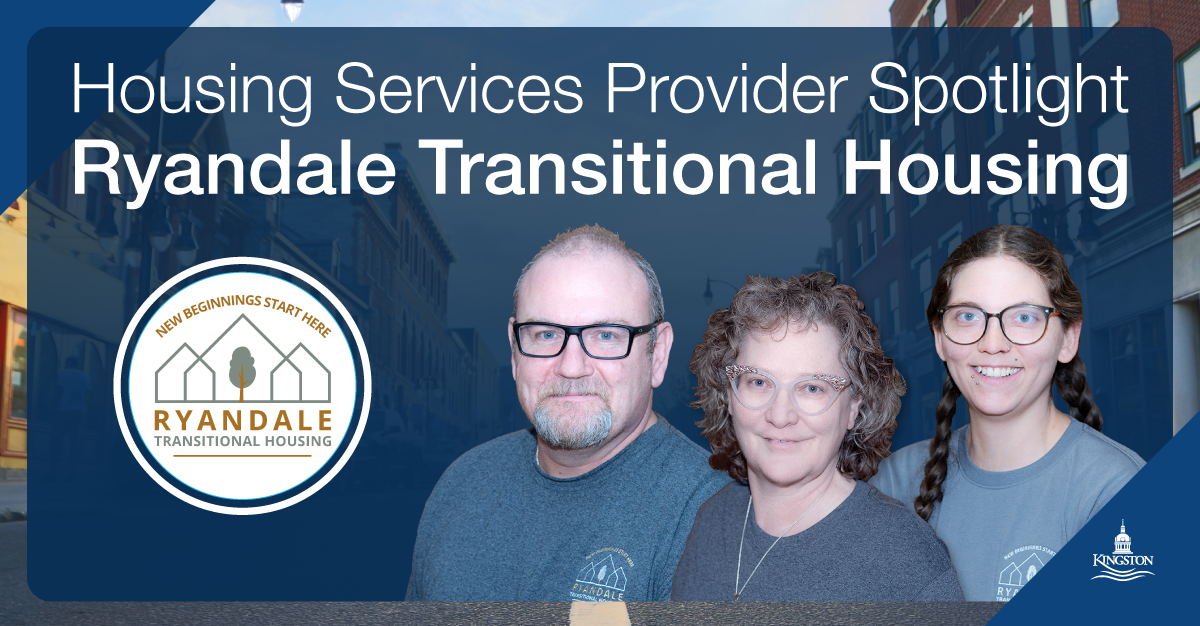
Service Provider Spotlight Series: Ryandale Transitional Housing
As Service Manager of Housing and Homelessness, the City of Kingston works closely with local agencies that deliver affordable housing and homelessness services. Through a monthly spotlight series, we will introduce the dedicated service providers who each play a vital role in Kingston’s housing and homelessness system. Each spotlight will highlight the unique services they provide, how they contribute to improving housing outcomes in our community and ways residents can provide support.
We are happy to kick off our monthly spotlight series by highlighting the life changing work of Ryandale Transitional Housing.
Who They Are
Ryandale Transitional Housing is a registered charitable organization in Kingston, Ontario that provides safe, sober transitional housing and wraparound supports for individuals experiencing or at risk of homelessness. For more than 40 years, Ryandale has been helping people rebuild their lives by providing not only housing, but also stability, structure, life-skills development, recovery support, and connections to community services. Ryandale currently operates 5 homes across Kingston, both transitional and supportive and is committed to helping residents move toward independence, dignity, and long-term housing stability.
Who They Serve
Ryandale serves adults who are experiencing homelessness or are at risk of homelessness, many of whom face challenges related to addiction, mental health, trauma, poverty, social isolation, or involvement with the justice system. Residents are provided with a supportive, abstinence-based environment where they can focus on recovery, personal growth, employment, reconnecting with family, and preparing for independent living. Ryandale welcomes individuals without judgment and works alongside community partners to help residents access the supports they need to succeed.
Accomplishments & Success Stories
Ryandale measures success not simply by housing people, but by helping individuals transform their lives and build brighter futures. Some recent success stories include:
Former resident J achieved one year of sobriety while staying at a Ryandale Home and he secured permanent housing in 2025, has found a job and started school. He shared that for the first time in many years he can envision a happy future for himself.
Another former resident - also celebrated one year of sobriety while living at Ryandale and moved into permanent housing in 2025 with the help of his daughter whom he had reconnected with.
Another resident who had spent nearly 40 years cycling through the correctional system was able to reconnect with family, change the direction of his life, and ultimately secure permanent housing after completing the program in 2021 and he has remained housed since living at Ryandale.
All Ryandale residents work or volunteer in the community and are excited to give back as they move forward in their recovery. According to their most recent impact report, in the 2025-2026 fiscal year Ryandale supported 18 residents in successfully transitioning to permanent housing with 100% still housed today.
How you can support
Volunteers are needed for Ryandale’s food box delivery program as well as sharing skills with residents in workshops.
You can also support by attending Ryandale’s regular fundraising events including this weekend’s ROCK for Ryandale: Tickets
-
Update on 315 Queen Mary Road shared care model opening
Update on 315 Queen Mary Road shared care model opening
The City of Kingston is preparing to open 33 new transitional housing units as construction nears completion at 315 Queen Mary Road.
In 2024, the City of Kingston purchased the former Extendicare building to develop an integrated model that brings together primary health care, transitional housing and community-based programming focused on addressing the social determinants of health.
This shared care model has three pillars:
- Transitional Supportive Housing
- Primary Health Care Clinic
- Community Use/Programming Space.
The primary health clinic is the Midtown Kingston Health Home operated by Kingston Community Health Centres (KCHC). It has now relocated to 315 Queen Mary Road.
The operator of the transitional housing program at 315 Queen Mary Road is Home Base Housing. The program will provide transitional housing for individuals aged 55+ with varying levels of health care needs, supported by 24/7 on site staff and a goal-based case management approach. The City expects Home Base Housing will welcome residents in August 2026, following completion of construction.
The community space is confirmed to include a vocational laundry program operated by Lionhearts where participants will gain practical experience while building the habits and self-assurance that lead to lasting employment. This program will be operational as of October, 2026. The additional community use and programming space will be activated in early 2027.
On July 7 2026, City Council approved the incorporation of a new wellness/health centre within the community space at 315 Queen Mary Road to compliment the other health care services onsite. The wellness/health centre will focus on services such as respiratory rehabilitation, occupational therapy, physiotherapy and hydrotherapy amongst a number of wellness supports.
The City is accepting applications for a Community Liaison Committee for the site. The committee will ensure continued connection and dialogue between partner agencies and the surrounding community. Applications for the Community Liaison Committee are open until August 9, 2026 on the Get Involved Kingston page.
For more information or to submit an application for the Community Liaison Committee visit the 315 Queen Mary Road Get Involved Kingston page or contact by email at ContactUs@CityofKingston.ca or by phone at 613-546-0000
Get Involved Kingston page: 315 Queen Mary Road Transitional Housing
News Release: Update on 315 Queen Mary Road shared care model opening | City of Kingston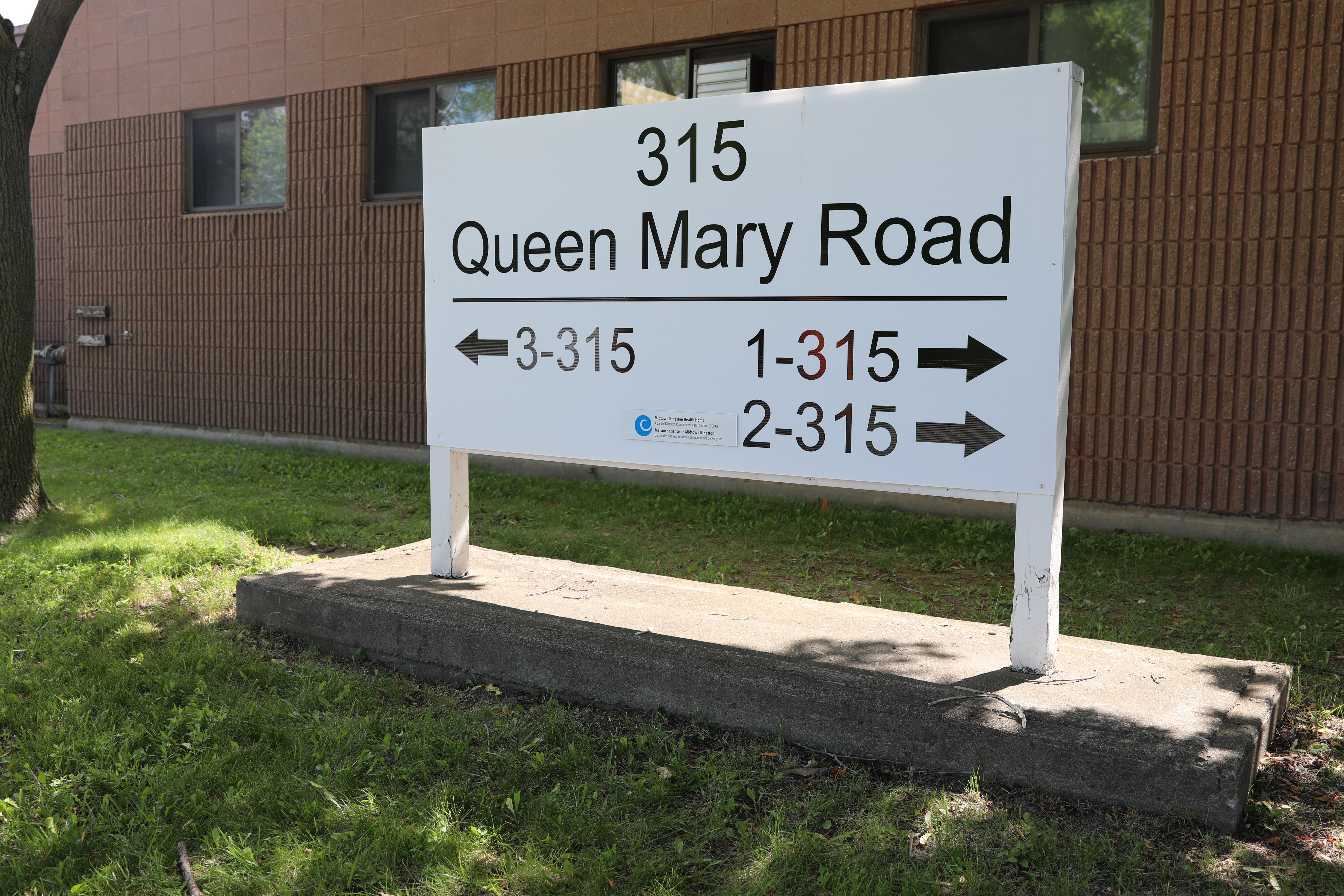
About KCHC’s Midtown Kingston Health Home
Kingston Community Health Centres’ commitment to building a stronger, more connected community. The new site has been designed to support a growing community health hub where individuals and families can access team-based primary care, health promotion programs, community groups, and a range of integrated health services in one welcoming and accessible location. MKHH attaches people to ongoing primary care through Health Care Connect: if you do not have a primary care provider, please register with Health Care Connect.
Midtown Kingston Health Home is proud to create a space where people feel welcomed, supported, and connected to care. More information about Midtown
About Home Base Housing
Home Base Housing is a reputable and well-established agency that has operated housing programs in the Kingston community since 1986. More information about Home Base Housing
About Lionhearts
Lionhearts is a non-profit offering a range of local food and nutrition programs as well as housing services. More information about Lionhearts
-
Webinar Summary: Introduction to Supportive Housing in Kingston
On Wednesday, March 4, 2026, we hosted the webinar: An Introduction to Supportive Housing in Kingston alongside staff from Tipi Moza and Ryandale, the operators of the new Supportive Housing properties opening this spring. 36 attendees joined the session live.
The webinar began with a presentation from Director of Housing & Social Services, Jayne Hartley who introduced what supportive housing is, where it fits within the broader housing continuum and how residents are selected. Tipi Moza and Ryandale then shared how their programs serve the community.
A recording of these presentations is now available on the City of Kingston’s YouTube: Webinar Recording: Introduction to Supportive Housing in Kingston
Following the presentations, City staff and Operators provided responses to frequently asked questions and answered questions submitted by attendees. The responses to all questions submitted during the webinar are summarized below:
Why is the City investing in Supportive Housing?
Supportive Housing is a Model with demonstrated success across many jurisdictions that allows for more people to work towards independent living. It is in the middle of the housing continuum and has wrap-around support and provides time needed to reduce the risk of falling back into homelessness.
How does this supportive housing support the winddown of the Adelaide Street Shelter?
As many know, the Adelaide Street Shelter was opened as a temporary measure in 2023. The winddown of the Adelaide Street Shelter is tied to the opening of the new Shelter on Sydenham Road and the launch of the new Supportive Housing properties. Together, these new services are replacing the Adelaide Street Shelter and will create more opportunities for progression along the housing continuum. Staff are actively supporting clients of the Adelaide Street Shelter to transition to services that are best aligned with their needs and long-term success.
The winddown of emergency shelter services at Adelaide Street Shelter will be completed by March 31, 2026. This will align with the opening of at least two of the supportive housing sites.
What is the By-Name list and how are people selected to move through the continuum?
The by-name list data helps service managers address homelessness by allowing them to understand the impact of different interventions and make informed decisions to improve service delivery. The By-Name-List is made up of individuals who are precariously housed in a variety of circumstances, from being in shelter to sleeping rough or couch surfing. Everyone on the list has consented to being on the list, and it is how people will be identified for moving into supportive housing. It is about fitting the right person to the right home. It also enables communities to adjust local interventions based on the data collected, ensuring that the resources and support are directed to those who need them most.
What makes for a successful supportive housing property?
With over 28 city funded supportive housing properties already operating successfully in Kingston, the program has demonstrated that it can work well in a wide range of locations. Criteria for choosing locations include diversity of neighbourhoods, properties suitable for 7-8 individuals, budget costs and potential for renovations. Not as long a list of requirements as some may think.
Residents in supportive housing are independent and require less services than lower on the continuum. Individuals are committed to moving forwards according to their goals, and they require less services than individuals who are not as far along the housing continuum.
When selecting properties, there was work across multiple departments including legal, planning and communications with the purchases approved by Council in Fall 2025.
How will the properties be staffed?
There is a 24/7 staffing model at all three properties. This is part of the agreement with the City.
Staffing levels and needs will continue to be reviewed and adjusted as the program moves forward. Staff reductions or additions would be made in consultation with the City and based on the needs of the program.
How can people help?
There is a long list of ways people can help. Ryandale has a volunteer program and can always use support with household items. Even just welcoming individuals into the neighbourhood when they are opening. If you want to know more, you can email info@ryandale.ca for the properties on Palmerston Cres. and Braemar Rd. and awardell@tipimoza.com for the property at Sheila Court.
Donations for household items welcomed.
Opportunities to stay connected with operators through email, newsletter or visiting their offices
Volunteer opportunities (screening is required).
Residents will also be volunteering or working in the community.
Neighbours can subscribe to the Get Involved Kingston page for each proprty to learn more about joining a Community Liaison Committee.
Who should people contact with questions or concerns?
Can always send an email or knock on the door to speak with staff.
Anytime you have any type of issue, you can email. A phone will be set-up for the specific property.
Do not anticipate any issues. The folks who are moving in are individuals who have done really well in transitional housing. Amazing individuals who just need the opportunity to live somewhere safe and affordable.
Any issues can be shared with operators, and they will be addressed. Staff will be onsite 24/7.
If an issue is not addressed by the operator (which is not anticipated) then contact the City via ContactUs. The City will work with the community and the operators to address any concerns.
To contact the city visit: Contact Us | City of Kingston
What is the timeline?
The opening is tied to the winddown of Emergency Shelter Services at Adelaide Street Shelter on March 31st. Preparing to welcome residents this month at Palmerston Cres and Braemar Rd., prior to March 31.
Sheila Court will be open early April.
Will not be rushing to fill beds. Ensure that residents are the right fit and will be successful.
In addition to the questions above, Webinar attendees asked the following Questions:
I experience a lot of restrictions related to eligibility criteria for transitional housing for clients, specifically for clients with a dual diagnosis (mental illness and developmental/intellectual delay). What housing support exists for this population? I think it's important to note that many clients with a dual diagnosis may in fact be highly independently and high functioning, but are excluded from these supports
Ryandale serves individuals who are seeking to maintain sobriety. These individuals have chosen that they want to change their lives. Will support individuals with developmental exceptionalities to some degree. Individuals have to be self-sufficient. Many residents have a dual diagnosis
Tipi Moza residents have to be self-sufficient. Residents needs to be able to commit to being in a dry-house where there are expectations and rules. Once residents have succeeded in transitional housing they help them transition into independent living or supportive housing. These programs are not for everybody. We want to make sure that everyone who we bring into these programs is going to be successful.
Addictions & Mental Health Services (AMHS) supports individuals living with mental health challenges. Home Base Housing (HBH) provides both transitional and supportive. There will be a transitional housing opening on Queen Mary Road operated by HBH to support adults over the age of 55.
How are the supportive housing properties staffed? What are the staffing models?
At Ryandale their existing transitional homes have staff from 9am-5pm. And on-call staffing at night with a number residents can call.
The supportive housing will be staffed 24/7 to start and will adapt accordingly. They are moving residents from transitional into supportive as well as additional individuals from transitional houses. These are individuals who require less support. Starting with 24/7 staffing to ensure a smooth start up. No guests permitted overnight, only allowed 9am-9pm.
Not moving everyone in at once. Will wait until they find the right fit of people.
Tipi has its transitional housing site at 113 Lower Union Street. The new supportive housing will be staffed 24/7. At transitional housing they have staff on call for the times when staff are not there. It is very rare that they get a call. Mostly got calls about locking out of their unit when they first opened. Needs will be reviewed as the program moves forward.
Overall, Ryandale and Tipi Moza have other types of homes, but these homes will be staffed 24/7.
How does one get on the By-Names-List?
Best way is to connect with a service provider
Connect with a worker from one of the providers (Homelessness Services | City of Kingston) and they will be added to the By-Name-List.
Will neighbors be informed if the staffing levels change?
Any changes in staffing levels will be done with the City and will be messaged. It is up to the City as the funder and Service Manager to make that decision and communicate it.
What are the two new properties being opened? can you clarify if these are for men or women?
Tipi Moza’s property will be operating for men. It will be based on signing a self-declaration
Braemar will be for women
Palmerston will be for men
Where are the homes located?
Ryandale's Braemar location is in Lakeside District, near Front Road and Days Road
Ryandale's Palmerston location is in the Collins-Bayridge District, backing onto Woodbine Rd.
Tipi Moza's is on Sheila Court in Pittsburgh District off of highway 15.
What supports are offered by staff? / What is the need for support staff?
Tipi Moza helps residents reconnect with their culture. This program has a cultural coordinator who does cultural teaching, cooking. Other staff help teach life skills. Residents have to participate in a certain amount of programming each week. They also are assigned chores such as cooking dinner, sweeping the hallways, etc. It helps build skills that they never had or lost.
Ryandale does a lot of similar things including classes on how to be good tenants, resume building and signing a lease. They do their best to teach skills to help them stay housed. They have a program call “recycling rodeo” to teach housing skills.
Do residents pay rent?
The supportive housing model is low to medium acuity. There is a requirement that residents pay rent. It can help offset the costs of the operations of the home.
Everybody in a Ryandale home pays an “occupancy fee”. It is rent-geared-to income. Residents receiving Ontario Works (OW) receive a $390 housing benefit, residents who are part of the Ontario Disability Support Program (ODSP) receive a $599 housing benefit, residents receiving Canadian Pension Plan payments pay 30% of their cheque with residents who are working also paying 30% of their cheque. Occupancy fees are subject to change based on changes in employment.
Residents are also responsible for purchasing their own food. Encourage residents to cook together for one meal a week. Residents are like a family. They are looking forward to watching a football game together, sitting in the back yard or playing a game. It is about building that community for them.
How can a neighbourhood help?
First thing is do not judge a book by its cover. Come say hello, they are going to be the kindest people you have met. Wave and say hello. Operators do not know what they need for donations until they get into the home. If you have anything to donate, please reach out and if it can be used, they will coordinate drop-off.
Community Liaison Committees will be formed for neighbours who want to be involved in these committees. Information will be shared on the City’s Get Involved Kingston site.
Some questions could not be answered within the timeframe of the webinar. The following questions were taken back by staff and are being shared now with relevant responses:
How many of the supportive housing spots are accessible for people using mobility aids such as walkers or wheelchairs?
The newly opened supportive housing homes are not fully accessible for individuals who use mobility aids such as walkers or wheelchairs. However, the City is actively expanding accessible options. A new supportive housing location for adults 55+, which will be fully accessible, is scheduled to open in mid‑summer 2026. This site is designed specifically to meet accessibility needs and will increase the number of supportive housing spaces available to people who require mobility supports.
How long is the approved funding for these programs. What happens if funding is not continued in the future?
Agreements with operators are in place for three years. If funding were not continued, which would run counter to Council’s Strategic Priorities and Direction, the use of the property would be revisited.
What is the average city cost per resident per year for this program?
Average costs per resident vary, as residents pay an occupancy fee which is generally 30% of their income or the maximum shelter portion of their Ontario Works or Ontario Disability benefits. Costs per resident vary based on their support service need and based on supportive housing operating budgets approved through the 2026 budget process.
If a resident is found to not be a good fit, do staff move the individual to another residence to ensure the person doesn't become homeless within the neighborhood?
If a resident is not successful in the housing provided by the operators, they will be connected with other services to support their needs. Individuals remain on the By-Name-List until they achieve long-term housing.
Why are the supportive housing homes staffed 24/7 but the transitional housing homes are not when the clients at the transitional home are supposedly higher acuity?
As funder of these Supportive housing properties, the City determines the level of staffing required. Increased staffing at these sites will create more opportunity for residents to build life skills, strengthen community connections, pursue employment, and enhance community integration. While transitional housing focuses primarily on stabilization, supportive housing places additional emphasis on skill building and preparing individuals for independent living and housing support, both areas where staff play key role in supporting residents.
Was proximity to public and catholic schools considered when determining a location for these homes?
As mentioned during the Webinar and on property FAQ pages, criteria for choosing locations include diversity of neighbourhoods, properties suitable for 7-8 individuals, budget costs and potential for renovations. Proximity to schools is not a consideration given the low risk of Supportive Housing. Transitional Housing and Supportive Housing operates across the City including in proximity to parks and schools. Restrictions on where Supportive Housing can be located would further risk infringing on human rights by limiting where individuals can live.
What will happen to the programs and workers at Adelaide Shelter as it closes?
As mentioned, the winddown of the Adelaide Street Shelter is tied to the opening of the new Shelter on Sydenham Road and the launch of the new Supportive Housing properties. The Adelaide Street Shelter was a temporary measure and notice of the winddown date of emergency shelter services has been known since Spring of 2025. Both the new shelter and new supportive housing sites both offer their own dedicated programming tailored to the needs of their residents. For a list of the homelessness programming that receives support from the City, visit: Homelessness Services | City of Kingston
Advice on where someone should go for shelter while on a waitlist. Are there options that encourages sobriety?
Visit Homelessness Services | City of Kingston for the list of available services. By connecting to shelter, individuals can also get connected to addictions and mental health support.
Do the residents have a curfew?
There is no curfew, however, residents are expected to observe quiet hours and be respectful of noise levels at all times. Continued breach of quiet hours or program expectations may ultimately result in removal from the program.
What are the sobriety requirements of the residents and how is that verified?
Only individuals demonstrating stability and readiness are placed in supportive housing. Please visit the Get Involved Kingston page for each Supportive Housing property to learn about the specific requirements.
How many residents at each location?
There will be a maximum of 8 residents at 1056 Palmerston Cres.; a maximum of 8 residents at 407 Sheila Court; and a maximum of 7 residents at 167 Braemar Road.
Is there an appetite to partner with a group that owns a building that the city does not own? Under similar criteria as you listed for selection?
Yes, there are existing local groups who lease space to supportive or transitional housing operators. For example, one of Ryandale’s transitional housing properties is leased from St. Andrew’s Church.
Updates on the City’s Emergency Housing Responses will continue to be shared on Get Involved Kingston and emailed to project subscribers.