Articles
Category Engagement Summaries Show all
-
What We Heard: Virtual Open House, April 27, 2026 Second Draft of the new Official Plan
This document has been prepared to consolidate the feedback received at the Virtual Open House on the Second Draft of the new Official Plan held on April 27, 2026, and staff responses to the questions received. This feedback document includes the exact wording from written questions and comments submitted at the open house. Submissions are organized by theme. There were 97 submissions received in total.
Approximately 107 residents attended the Virtual Open House. Staff would like to thank everyone who has taken the time to participate in this process and shared their feedback.
Population Forecast
Question 1
“All current evidenceContinue reading
This document has been prepared to consolidate the feedback received at the Virtual Open House on the Second Draft of the new Official Plan held on April 27, 2026, and staff responses to the questions received. This feedback document includes the exact wording from written questions and comments submitted at the open house. Submissions are organized by theme. There were 97 submissions received in total.
Approximately 107 residents attended the Virtual Open House. Staff would like to thank everyone who has taken the time to participate in this process and shared their feedback.
Population Forecast
Question 1
“All current evidence and population projections from Stats Canada and the provincial MoF show that Kingston will not grow to 220,000 by 2051. How will this new data be addressed in the OP?”
Response:
As per the Provincial Planning Statement, municipalities are required to base population and employment forecasts on the Ontario Population Projections published by the Ministry of Finance (MOF), with flexibility to modify these projections as appropriate. The Council-endorsed Medium Growth Scenario was prepared by Watson & Associates Economists Ltd. under the review of the 2023 MOF population projections which were the most current at the time at the time the City’s growth forecast was prepared. A review of the 2025 MOF projections was also undertaken in the fall of 2025. This review concluded that the previously completed forecast remained valid and that no immediate update to long-term forecasts is required at this time.
As per the growth forecast completed for the City, the City is anticipated to have a permanent population of 148,000 in 2026. As per Statistics Canada’s estimates, the City had already surpassed that population in 2024.
The City recognizes that forecasts need to be reviewed over time as new information becomes available, including Census data, MOF projections, post-secondary enrollment trends, and housing market conditions. The City will undertake new growth forecasts at regular intervals and revise the Plan if newer data shows that the long-term growth outlook has materially changed. The next Census is being undertaken this year however as per Statistics Canada, the major data releases will be completed approximately 18 months from Census Day.
Question 2
“This entire plan hinges on an unrealistic population growth. How can any of this make sense if there is so much discussion and objection to these growth projections? "Growth" is highly unlikely to take place so it makes no sense to keep referring to it.”
Response:
The Provincial Planning Statement requires Official Plans to be prepared with a lifespan of 20 to 30 years. The City’s draft Official Plan uses a long-term forecast to make sure the City is prepared for the projected population, housing and employment growth to 2051. Staff acknowledge that the forecast is not a guarantee that growth will occur exactly as projected. Over time, economic conditions, housing markets, migration patterns, and other outside factors may change. The City cannot control the pace of growth, but it can control its readiness. This Plan gives Council the tools to support growth in a coordinated, strategic, and fiscally responsible way when that growth occurs.
Please also see response to Question 1.
Question 3
“The population chart is outdated and doesn't represent what has happened in the last 2 years. This is what many people have been saying but continues to be ignored.”
Response:
Please see response to Question 1.
Question 4
“Queen's housing projections for the next three years are static. St. Lawrence college has cut more than 40% of their programs. So why is the OP projectng 47000 students by 2051?”
Response:
Full-time post-secondary student enrollment is forecast to increase from 34,000 in 2021 to 48,300 in 2051, which is an increase of 14,300 students. The student population forecast is a long-term planning assumption, not a short-term enrollment count. The City will continue to monitor post-secondary student enrollment, federal immigration policy, provincial post-secondary enrollment directions, and student housing demand. If long-term post-secondary enrollment expectations change, that information will be used to inform future updates to the growth forecast and Official Plan reviews.
Question 5
“Kingston represents 82% of the Frontenac numbers so the 227,391 needs to be reduced by 82% and that is 186,460. Vastly lower than the 220,900 planned for”
Response:
As per the Ontario population projections released in 2025 by the Ministry of Finance, 227,391 (the number noted in the comment above) is the projected population for the Frontenac Census Division for the year 2051. The Ministry of Finance notes that its projections do not represent Ontario government policy targets or desired population outcomes, nor do they incorporate explicit economic or planning assumptions. They are developed using a standard demographic methodology in which assumptions for population growth reflect recent trends in all streams of migration and the continuing evolution of long-term fertility and mortality patterns in each census division. It is not anticipated that these projections would capture all post-secondary student population residing within the City of Kingston.
As per the Provincial Planning Statement, municipalities are required to base population and employment forecasts on the Ontario Population Projections published by the Ministry of Finance, with flexibility to modify these projections as appropriate. The growth forecast for the City was prepared under the review of the 2023 Ministry of Finance population projections, and took into consideration Statistics Canada Census data, the City’s development pipeline, macro-economic conditions, as well as regional wide and local development trends, and were developed using assumptions related to births, deaths and net migration (international net-migration, inter-provincial net-migration, intra-provincial net migration). The total population forecast of 220,900 for the City of Kingston in 2051 includes the permanent population of the City (197,000) adjusted for Census undercount, as well as the post-secondary student population not captured in Census (23,900), and as such does not represent a strictly comparable permanent population figure included within the Ministry of Finance population projections.
Question 6
“Does the population and housing projections for the city in 2051 include the additional military families that will join our community?”
Response:
The population, housing and employment forecast completed in 2023 did not include the additional 900 new military housing units at the Canadian Forces Base, Kingston, announced by the federal government in February 2026. Staff note that all 900 units are proposed to be located within the existing urban boundary.
Question 7
“It feels that we are over projecting and continuing to push the boundaries we currently do not have the infrastructure for current demands. Why can't we hold off for another 10 years and focus on the infrastructure and than revisit expanding the boundaries? At this time we can't predict how many students will not come after the provincial cuts to post secondary. We currently have many areas within the City limit where we can build affordable homes and commercial. There will not be any affordable homes built from expanding the boundary.”
Response:
Section 2.1 of the Provincial Planning Statement, 2024 requires municipalities, when preparing a new official plan or updating one, to make sufficient land available to accommodate an appropriate range and mix of land uses for a planning horizon of at least 20 years and not more than 30 years. This is intended to ensure that municipalities are planning far ahead for future housing, employment, infrastructure, public service facilities, and community needs. Kingston is using 2051 as its planning horizon for the new Official Plan.
Based on the land needs assessment studies completed by the City, the current urban boundary does not contain sufficient land to accommodate population, housing and employment growth to 2051, i.e. the existing boundary on its own does not provide enough land to meet the Provincial requirement to plan for long-range growth. The Official Plan is required to be consistent with the Provincial Planning Statement.
The draft urban boundary expansion does not mean immediate development or immediate infrastructure construction. The background studies identify long-term land needs to 2051 to accommodate the projected population and employment growth. The Second Draft of the Official Plan includes phasing policies to align development with infrastructure readiness, water and wastewater capacity, transportation planning, and future Council decisions. The City is also proposing a much stronger intensification target, with 60 percent of housing growth directed to the existing built-up area within the current urban boundary.
The post secondary student forecast is not driving an urban boundary expansion. Student households are anticipated to be accommodated within the City’s existing built-up area within the current urban boundary.
Question 8
“So nothing would need to happen with expanding the urban boundry until maybe 10 years from now when the city could reassess the need of expansion based on actual population growth?”
Response:
Please see response to Question 7.
Question 9
“Why can't we wait for the 2026 Census data and see the impact of limited post secondary attendance, (as well as real estate uptake) before committing to such a large population growth?”
Response:
As per Statistics Canada, post-secondary students who are away at school or for a summer job are directed to be included on their parents' questionnaire for Census purposes if they return to live with them at any other time of the year. As such a portion of the post-secondary student population is not captured in the Statistics Canada Census data within the municipality where the post-secondary institution is located.
As per the growth forecast work completed for the City, an estimated 51% (17,500 students) of the 2021 full-time post-secondary student enrollment was not captured in the 2021 Census. It is also noted that the post-secondary student population is anticipated to be accommodated within the existing built up area of the City.
For the 2026 Census, Statistics Canada plans for all major data releases to be completed approximately 18 months from Census Day (which means data releases are anticipated to be completed at the end of 2027).
Section 26 of the Planning Act requires municipalities to update their Official Plans within 5 years of a previous Official Plan update. Kingston’s last Official Plan update was adopted by Council in 2017, so the City is already beyond the time required by the Planning Act.
The new Official Plan is being prepared using the best available long-term forecast. The City will undertake new growth forecasts at regular intervals and revise the Plan if newer data shows that the long-term growth outlook has materially changed. The Second Draft also states that the Official Plan is not intended to remain static and may be amended to reflect changing circumstances or new priorities.
Question 10
“Where are all these people the City thinks are moving to Kingston coming from? Who are they? Where do they live now? Why would they move to Kingston?”
Response:
The forecast is based on a combination of anticipated local population changes (births, deaths), net migration (international net-migration, inter-provincial net-migration, intra-provincial net migration), post-secondary student population, macro-economic trends, employment growth, and Kingston’s role as a regional centre for education, health care, public institutions, manufacturing, tourism, defence, and services. The Official Plan does not identify individual future residents, but plans for the housing, jobs, infrastructure, and services that would be needed for the forecasted growth.
Question 11
“Can the supply of housing to support your growth projections concerntrate more on mid-rise to high-rise higher density solutions rather than single family low density developments?”
Response:
The City is proposing a much stronger intensification target, with 60 percent of housing growth directed to the existing built-up area within the current urban boundary. The Second Draft of the new Official Plan directs a significant share of growth to mid-rise and high-rise forms of development, especially in the Strategic Growth Areas, and expects most high-density housing to be accommodated within the built-up area.
Proposed Urban Boundary Expansion
Question 12
“If climate policy is at the heart of this plan, why is the city even entertaining urban sprawl (urban expansion)?”
Response:
The City’s primary growth strategy is intensification, including a proposed 60 percent intensification target within the existing built-up area. The proposed urban boundary expansion arises because the land needs analysis concludes that even with a higher intensification target, additional land is needed over the long term for housing, employment, parks, commercial uses, institutional uses, and other complete community needs. Development within the urban boundary expansion areas would remain subject to all applicable policies of the Official Plan, including those related to the natural heritage system, infrastructure, climate change mitigation and adaptation, and phasing.
Question 13
“So rural area remains rural but is shrunk to accomodate supposed growth? That's how the urban boudary is moved? Who is driving the different urban boundary changes? It appears developers are.”
Response:
It is correct that an urban boundary expansion will result in a reduction of the land area that is currently included within the rural area.
Private landowner requests are one input into the proposed urban boundary, but staff’s recommendation is based on planning analysis which considers provincial policy and other factors such as the Council-endorsed growth forecast, land needs requirements, available and planned infrastructure, impacts on prime agricultural areas, and land use compatibility.
Please also see the response to Question 7.
Question 14
“Taggart Construction is driving urban boundary growth in the east. Correct?”
Response:
No single landowner or developer determines the City’s future urban boundary recommendation. Staff reviewed submitted requests alongside broader land needs requirements to determine the location of the urban boundary expansion shown in the Second Draft of the Official Plan.
Question 15
“So the provincial planning statement does not require an urban boundary expansion necessarily as long as any possible growth can be accomodated within the current boundaries? Is that true?”
Response:
The Provincial Planning Statement (PPS) does not require an urban boundary expansion if a municipality can demonstrate that an appropriate range and mix of land uses (including a range and mix of housing options and densities) to meet the projected needs for a time horizon of at least 20 years, but not more than 30 years, can be accommodated within the existing urban boundary.
In Kingston’s case, the background studies concluded that there is not enough land within the current urban boundary to accommodate the Council-endorsed growth forecast to 2051, even with a higher intensification target (40% in the existing Official Plan proposed to be increased to 60% in the new Official Plan). To accommodate various demographic groups, the City will require a range of housing options including high density, medium density and grade-related low density housing options in line with the PPS policies. While there is significant intensification potential, not all residential development will be accommodated through intensification within the existing built up area due to the need to plan for a full range and mix of housing options, which is driving the need for an urban boundary expansion. An urban boundary expansion is also required to accommodate future employment uses.
Questions 16 and 17
“How can the City say it is committed to sustainability and then expand the boundary and remove trees, increase traffic, etc.?”
“*I mean increase car use”
Response:
Policies included within the Second Draft of the Official Plan are intended to manage growth in a way that protects natural heritage, reduces car dependence, supports transit and active transportation, and aligns infrastructure with long-term need. The draft urban boundary expansion areas do not approve tree removal or future development by themselves. Future development would be required to go through the development approvals process, and satisfy applicable policies of the Official Plan such as those related to the natural heritage system, servicing, mobility, climate change mitigation and adaptation, stormwater management, and phasing requirements before proceeding.
Question 18
“If we are not sure if we will need to expanded area in the next few years, and since the housing infrastructure is not there yet, and assuming that these will be single family form development, this seems like the high cost will be high for the well-being of the city overall and meeting the needs of a small number of people compared to those you estimate will need to be withing the current urban boundries.”
Response:
The draft urban boundary expansion areas are not intended to be developed immediately or be made available only for single-detached housing. Future development would need to be phased with infrastructure and planned as complete communities with a mix of housing, services, parks, mobility options, etc.
The Second Draft of the Official Plan includes phasing policies and development requirements that make it clear that future development in the expansion areas will only proceed when Council determines it is in the City’s interest to invest in the necessary infrastructure and services.
Question 19
“I think it is critical that these last two questions are addressed. Moving ahead with infrastructure work and land development immediately seems ill advised, especially given the push-back you are seeing regarding the population growth predictions. Intensification within the current urban boundaries seems a more measured way to proceed.”
Response:
Please see responses to Question 12 and 18.
Question 20
“Could you speak to the impact on land values when an area changes from rural to a development area, even when they are identified as "deferred?"”
Response:
A change from rural to urban can affect market expectations and perceived development potential of a property. It is beyond the scope of the Official Plan project to consider individual land values.
The Deferred Form Designation applies to lands that have been brought into the proposed urban boundary expansion, but do not yet have an identified built form or detailed planning framework. This designation signals that the form of development will be determined at a later stage through a future Official Plan Amendment application once more detailed planning and design work has been completed.
Sequencing of Development and Infrastructure
Question 21
“If the City actually goes ahead with urban boundary expansion in the east, will the City actually commit to expanding and widening Hwy 15, Gore Rd, and Middle Road prior to allowing any new development? Traffic is already a mess and any further growth will bring east to a stand-still.”
Response:
Through the Integrated Mobility Plan (IMP), the 2051 population and employment forecasts are being utilized to understand how growth will impact the transportation system, including in the east end. As part of this, the City is evaluating and prioritizing options across all modes of travel, and how those options can integrate within the available right-of-way to support that growth in a phased and sustainable way. The next phase of the Integrated Mobility Plan, which is focused on draft network planning and infrastructure recommendations, will be presented at the IMP open house scheduled for Monday, May 11th, 5:00-7:30pm, at the Central Branch Library. Materials will also be available online on the YG220K project page.
Question 22
“Can you please say more about the sequencing of development beyond the current urban boundary vs in the expansion lands? Sukriti talked about how intensification should come first, but since there are already applications from private developers for the expansion lands, it seems like intensification and expansion will happen in tandem…”
Response:
Intensification within the current urban boundary remains the City’s primary near-term growth strategy. While applications for an urban boundary expansion have been submitted, it is not anticipated that the expansion lands will be available for development immediately. The Second Draft of the Official Plan includes phasing policies and development requirements that make it clear that future development in the expansion areas will only proceed when Council determines it is in the City’s interest to invest in the necessary infrastructure and services.
Question 23
“To ensure these new urban expansion areas evolve into complete communities, what is the city's strategies for implementing secondary plan areas or neighborhoods? Are there efforts underway for these areas to guide density and ameneties?”
Response:
Policies have been included within the Second Draft of the Official Plan which enable the City to require a developer or multiple developers to proceed through an Official Plan Amendment application and/or complete a secondary plan for complex development proposals where coordination of technical matters (e.g., servicing) is required. As part of such proposals, the City may require developers to complete a comprehensive environmental impact study or natural heritage study, technical cultural heritage studies, a master servicing plan, an assessment of natural hazards, a phasing and timing program and a financial implementation plan.
Specifically for the urban boundary expansion area on Highway 15 identified as 10C1 on Map 15, policies have been included in the Second Draft that require coordination between all property owners to demonstrate a fully integrated build-out of the lands as one fully integrated complete community.
Question 24
“Can your design for the future of Kingston have a greater emphasis on walkable bikable high density mass transit friendly downtown rather than planning for more car-centric suburban big box parking lot sprawl?”
Response:
Yes, the Second Draft places a strong emphasis on transit-supportive densities, complete communities, and active transportation. The Second Draft includes policies that direct more growth to walkable, bikeable, transit-supportive areas, while ensuring any expansion areas are also planned around complete community principles rather than auto-oriented sprawl.
Question 25
“The p;lan for an MSC for water and wastewater specifically says that operating and infrastructure costs decisions will be made by the MSC not Council. Please correct the slides on this.”
Response:
The proposed Municipal Service Corporation (MSC) structure is not part of the Official Plan project. For more information on the MSC, please see Report Number EITP-26-007.
Proposed Rural Settlement Area on Highway 2
Question 26
“What is the advantage to the city and to taxpayers of adding more Rural Settlement Areas? This does not seem to provide much advantage, while potentially increasing cost and disrutpting natural heritage. Thank you.”
Response:
In 2021, the City undertook a Lifecycle Fiscal Impacts of Development study. This study shows that the cost of growth depends heavily on the type, location, and servicing needs of development. In this case, the proposed Rural Settlement Area has been proposed to help avoid the higher infrastructure commitments that would come with full urban expansion. Where new service connections are required, those costs would be the responsibility of the developer through the development process. The City’s ongoing costs would be municipal services such as waste collection, winter maintenance, road maintenance, and other services that already exist in the area.
The municipal benefit is that additional development increases the tax assessment base in an area that is close to the existing urban boundary, and already served by some municipal infrastructure. The Rural Settlement Area would provide housing options in an area that already contains rural residential development. This will contribute to the needed housing options that have been identified through the population, housing and employment forecast.
The environmental and well-related concerns would need to be addressed at the development stage. The proposed designation would not remove the need for site-specific review. Any future development would need to demonstrate that the site can be serviced over the long term, that there are no negative impacts to groundwater supply, and that natural heritage and water resource policies are satisfied. One important benefit that should be considered for the proposed Partial Services Settlement Area – under the Provincial Planning Statement, in order for new development to connect to the existing municipal water service as a “partial service”, this area must be designated as a settlement area. Allowing these properties to connect to the existing municipal water service ensures that they are not drawing water from the groundwater supply.
Question 27
“Will Hwy 2 rural growth area advertise the sounds of live fire training coming from the Base?”
Response:
The Second Draft includes a National Defence Buffer Area related to CFB Kingston. Future sensitive land uses near the range and training area would require consultation with the Department of National Defence and/or CFB Kingston, and may require the completion of noise or vibration studies, mitigation, fencing, or landowner information packages registered on title to clearly inform future property owners of the proximity to CFB Kingston, and of the likelihood of ongoing military noise and vibration.
Question 28
“Is Area 4 slated for later development? I am unclear what the advantage is to the city and to taxpayers of adding a Rural Settlement Area? Development here seems likely to increase cost to taxpayers while disrupting existing natural heritage.”
Response:
Should the proposed rural settlement area be approved as part of the new Official Plan, development within this area may be able to proceed sooner, subject to the property owner(s) successfully completing the development approvals process, including the submission of required technical studies completed to the City’s satisfaction. For a future residential subdivision, the required applications include, but are not limited to a zoning by-law amendment and a plan of subdivision.
Please also see response to Question 26.
Question 29
“What is the housing density of the proposed rural settlement area? Are the structures single family homes in the entire area?”
Response:
The density and housing form within the proposed Rural Settlement Area would be determined through technical studies submitted at the time of future development applications. Through the development review process, the City will evaluate the appropriateness of future development to ensure that it is similar in scale and intensity to existing residential development in the surrounding area. The Rural Settlement Area is not intended to function as an urban subdivision or urban growth area.
Policies have been included in the Second Draft of the Official Plan which clearly state that the new Rural Settlement Area on Highway 2 is intended to be rounded out with new infill rural housing development, with supportive commercial and business uses.
Rural housing is defined in the Second Draft as: one principal housing unit plus two additional rural units in the rural area.
Question 30
“What ensures that “Area 4 Hwy 2 Rural Settlement” will be developed as rural rather than cookie cutter urban urban sprawl, as has happened all along Hwy 15 towards the industrial park?”
Response:
Please see response to Question 29.
Gross Hectares and Employment Lands
Question 31
“As a follow up, can you explain why an area designated -in part - as wetland has been shown as 340 hectares of employment land?”
Response:
Mapped urban boundary expansion areas include components of the natural heritage system such as significant woodlands, other wetlands, etc. however, that does not mean all lands are developable. The components of the natural heritage system remain subject to the Natural Heritage System policies, including Environmental Impact Study requirements.
Question 32
“What is a gross hectare and how is it different from a hectare in this planning analysis?”
Response:
A gross hectare in a land needs analysis includes the broader land area needed to support development, such as roads, parks, stormwater management, and other supporting infrastructure. For example, for community area land needs, gross hectares include lands to be used for actual residential development, but also lands needed for the road network, stormwater management facilities, schools, parks, commercial uses, etc.
Question 33
“1) Please explain why employment land (area 3) is one big almost rectangular parcel, and not a series of smaller parcel 2) why are no employment lands being set aside north of the 401.”
Response:
Employment lands are often planned in larger contiguous areas because industrial and business uses typically need larger parcels to accommodate large scale buildings and goods movement access. Several areas north of Highway 401 have been designated for rural industrial and rural business uses, for example those along Perth Road and Highway 38.
Natural Heritage System
Question 34
“No mention is made about natural heritage features that are mostly in rural areas. How are they prioritized?”
Response:
The Natural Heritage System components for the entire City, including the rural area, are shown on Map 8 of the Second Draft of the Official Plan. Section 5B of the Second Draft has associated policies that apply City-wide, that speak to the identification, protection, and enhancement of those various components. Those policies identify where development is proposed to be prohibited within those features, as well as where development is proposed to be prohibited subject to the demonstration of no negative impacts.
Question 35
“How will the city deal with the fact that the province has just removed protection for endangered and threatened species? What protection will there be?”
Response:
While the Province did introduce changes to the protection of endangered and threatened species through the approval of the Species Conservation Act, 2025, which came into force on March 30, 2026, replacing the Endangered Species Act, 2007, there are still protections at both the provincial and federal levels. The Second Draft policies do not permit development and site alteration in the habitat of endangered and threatened species, except in accordance with provincial and federal requirements.
Question 36
“What definition of "no negative impact" for the NHS policies is the OP considering?”
Response:
The Second Draft uses the same definition as the Provincial Planning Statement, as noted below:
Negative impacts:
in regard to fish habitat, any harmful alteration, disruption or destruction of fish habitat, except where an exemption to the prohibition has been authorized under the Fisheries Act;
in regard to other natural heritage features and areas, degradation that threatens the health and integrity of the natural features or ecological functions for which an area is identified due to single, multiple or successive development activities.Question 37
“How do you prove no negative impact?”
Response:
No negative impact is typically demonstrated through an Environmental Impact Study prepared by a qualified professional and reviewed by the City. The study identifies natural features and their ecological functions, assesses potential impacts of the proposed development, and may recommend avoidance or mitigation measures if negative impacts on the natural heritage system are anticipated. As noted in the Second Draft, the City will be preparing new Environmental Impact Study Guidelines as outlined in the draft Natural Heritage Study. All Environmental Impact Studies will be required to comply with the requirements of Council-approved Environmental Impact Study Guidelines.
Question 38
“Thank you Sukriti, the statement prohibiting development “unless no significant impacts” is used frequently and seems to provide unnecessary wiggle room for development. Can I ask why not simply prohibit development? The latter statement would provide better protection to NH areas of importance.”
Response:
Some features are proposed to be protected through a strict prohibition, including significant wetlands and significant coastal wetlands. Other features are reviewed through the “no negative impacts” test because that is the provincial planning framework for many natural heritage features. If an applicant cannot demonstrate no negative impact, development would not be approved in the affected area.
Question 39
“How is this plan protecting wetlands when eastern and western urban boundaries push up against Butternut Creek wetland and Milhaven Creek respectively?”
Response:
An urban boundary expansion does not override the Natural Heritage System policies included in Section 5B of the Second Draft. Development within the urban boundary expansion areas would remain subject to those policies, including requirements for Environmental Impact Studies to ensure that new development does not have a negative impact on the natural features or their ecological functions.
The proposed urban boundary included in the Second Draft of the Official Plan does not extend to Millhaven Creek, which is located in Loyalist Township.
Question 40
“Has any of these policies to do with protected areas and buffers been run by First Nations? They know better than anyone if any of this makes sense. We need far more natural heritage to support human health and certainly "offsetting" should not be the fall back.”
Response:
Indigenous consultation has been part of the Official Plan process as well as the Natural Heritage Study. The Natural Heritage Study conducted community workshops in February, 2025, including consultation with the local urban Indigenous community. The Natural Heritage Study was also discussed with three surrounding First Nations and local Indigenous organizations.
Question 41
“can additional protections above and beyond those in the current urban boundary be given for these expansion areas. For example, could larger buffers to natural heritage features like wetlands be included and requirement for exclusion fencing and crossing structures for turtles and other wildlife for any roads through these features?”
Response:
Larger buffers, exclusion fencing, wildlife crossings, and other mitigation measures would be required where supported by the findings and recommendations of an Environmental Impact Study. The new Environmental Impact Study Guidelines will include additional guidance on appropriate buffer widths and mitigation strategies.
Question 42
“General question - is it possible to add requirements that exclusion fencing and crossing structures be included in the construction of any new roads that are adjacent to or cross turtle habitats and also be required for roads that under go construction maintenance.”
Response:
Section 5B3.11 of the Second Draft of the Official Plan generally discourages development that would fragment the natural heritage system and requires consideration of appropriate mitigation measures to maintain ecological connectivity and reduce wildlife mortality. Further, Section 5B3.17 indicates that the City will explore opportunities to reduce wildlife mortality and restore ecological linkages through road reconstruction or major capital projects, particularly for turtles. Implementation details would need to be considered at the time of development or site alteration.
Question 43
“It is important to know that Creekford road is already a high turtle mortality road as it crosses an important and significant wetland with heavy vehicle traffic.”
Response:
Thank you for the comment. The comment has been captured as part of the meeting record.
Question 44
“To have it on record that the collins bay penitentiary lands are also important for turtles as there is a wetland that transects the property. bath road at the prison is one of the major turtle mortality locations within the city as per the 2014 study the city had done. Any growth there should ensure appropriate measures and land use planning beyond typically to ensure human impacts on turtles are minimal (e.g. exclusion fencing and mitigation efforts, consideration of buffers and nesting sites).”
Response:
Should these lands come into private ownership and become available for development, any mitigation measures identified through the City’s review and approval of an Environmental Impact Study would be required to be implemented before future development can proceed.
Questions 45 and 46
“Can specific protections for keystone species be named in the official plan?”
“I’m thinking of turtles and beavers as examples.”
Response:
The Official Plan policies protect significant wildlife habitat and habitat of endangered species and threatened species as per the Provincial Planning Statement policies, rather than naming specific species. The Natural Heritage Study did not advance recommendations related to the protection of keystone species, partly due to a lack of comprehensive data across the municipality.
Question 47
“How does intensification, ie infill, reconcile with the woefully low canopy cover in the downtown area (around 8.7%) if the target is to hit 30% canopy cover?”
Response:
Targets for canopy cover and woodland cover are intended to be applied on a city-wide basis, rather than on an area-specific basis. The Natural Heritage Study Report acknowledges that increases are more likely to be achieved through urban tree canopy expansion rather than woodland expansion; opportunities to expand the woodland cover target will primarily be located in rural areas, where woodlands are less fragmented and development pressure is lower. Within the urban area, development within or adjacent to remaining significant woodlands would only be permitted if an Environmental Impact Study, reviewed and approved by the City, demonstrates no negative impacts. It is acknowledged that intensification should be supported by tree preservation, new tree planting, low-impact development, and careful design of hard surfaces. The City typically uses implementation tools such as Site Plan Control and the Tree By-Law, alongside tree planting on municipal property, to enhance canopy cover while accommodating growth. Further, the City encourages tree planting on private properties through the “Neighbourhood Tree Planting Program”, which subsidizes the cost of trees for private planting.
Question 48
“How are decisions being made about the urban boundary with respect to creating resilience relative to climate change? It feels as though development - and rapid expansion - is driving the plan, and there is not a clear vision that will guide the climate strategy. I know that there are specific, small-scale policies to deal with climate change, but what’s the large strategy that forces developers’ hands to retain natural heritage features, incorporate green rooves on industrial buildings, created more than the bare minimum urban canopy, reduce open asphalt spaces, etc.”
Response:
The broader climate strategy of the Second Draft of the Official Plan is to integrate land use planning and transportation planning to support complete communities. The Second Draft identifies Strategic Growth Areas on Map 2, and concentrates new housing, jobs, and services in corridors and nodes, paving the way for higher densities and mixed uses around a strengthened transit network.
The Plan supports increases in the tree canopy and the protection and enhancement of the natural heritage system which is integral to climate change mitigation and adaptation. The Plan also supports the prioritization of green infrastructure and low-impact development.
While sustainable features are supported and encouraged by the City, Official Plans cannot establish green development standards (such as requiring green roofs on industrial buildings).
Future development within the urban boundary expansion areas would be planned as complete communities with a range and mix of uses, including residential, commercial, parks, and employment uses.
Site-specific applications for development would be required to demonstrate conformity with all applicable Official Plan policies.
Question 49
“Will the city be implementing sponge city principles for all future development?”
Response:
The term “sponge city” has not been used in the Second Draft, however it includes many related principles within policies associated with green infrastructure, stormwater management, riparian ribbon, tree canopy, and climate adaptation.
Site-specific applications for development would be required to demonstrate conformity with all applicable Official Plan policies.
Ecological Offsetting
Question 50
“How would you measure woodland compensation? Because you can’t consider cutting an old growth tree replaced with a sapling as equivalent.”
Response:
The draft Natural Heritage Study Report notes that ecological offsetting should not be considered within complex features, such as mature or old-growth forests. Additional information on the offsetting process, requirements, and replacement ratios will be contained within future Ecological Offsetting Guidelines, which will be subject to public consultation.
Question 51
“Off-setting takes years. Why allow the deforestation at all?”
Response:
Ecological offsetting is only considered as the last option within the mitigation hierarchy of: avoid, minimize, mitigate, compensate. Ecological offsetting is only proposed to be permitted in situations where development or site alteration will not be able to avoid, minimize or fully mitigate negative impacts on the natural heritage system, where the feature and form can be replicated in a reasonable timeframe (e.g. 5 years for wetlands and 20 years for woodlands). Ecological offsetting needs to be implemented carefully but can be used to achieve no-net-loss, and can seek an overall net gain in terms of area and ecological function for the natural heritage system, such as by infilling fragmented woodlands to increase interior habitat or replacing isolated wetlands with larger, connected features. Offsetting will only be considered after the completion and Council approval of Ecological Offsetting Guidelines. Ecological offsetting would be required to comply with the requirements of Council-approved Ecological Offsetting Guidelines.
Question 52
“If offsetting is considered for wetlands and other nature features will the city put together a process to follow and/or recommended consultants to use for designing these offset features. I ask because the replacement of these features is both difficult and costly so there needs to be some type of understanding before offsetting is allowed/considered to ensure it will actually occur properly and at all.”
Response:
The City will prepare Ecological Offsetting Guidelines as per the recommendations of the draft Natural Heritage Study. It is anticipated that the Guidelines will help identify limitations to offsetting (off-limit areas or components), identify replacement ratios (whether offsetting should be used to demonstrate ‘no net loss’ or a ‘net environmental gain’); outline expectations around construction, maintenance and monitoring of features to ensure they will achieve intended size and function; clarify how securities will be kept and requirements for their release; and explore opportunities for long-term success of the feature, including ownership and zoning considerations. The Ecological Offsetting Guidelines will be subject to public consultation.
Question 53
“I asked my question a little early - mostly answered now. But curious the way that developers complying with actually creating the offset features will occur. What is the penalty or method of enforcement?”
Response:
Offsetting compliance would need to be secured through legal agreements. Should Council support the concept of ecological offsetting, staff will be potentially looking at a Community Planning Permit System for the City to be able to require such agreements. A Community Planning Permit System would be subject to Council approval. It is anticipated that many of the details will be addressed through the Ecological Offsetting Guidelines.
Question 54
“How were the "reasonable" time frames for offsetting decided on?”
Response:
The timeframes for offsetting suggestions of approximately five years for wetlands and 20 years for woodlands are based on guidance from the Natural Heritage Reference Manual (MNR, 2010) as well as offsetting undertaken in other jurisdictions whereby successional status and replaceability of a feature are accomplished within a reasonable timeframe. Depending on the complexity of the feature, it is possible to establish ecological function within a wetland within five years and within a woodland within 20 years. Old growth forests, bogs, fens, and other complex habitats cannot be replicated within these time frames and would not be features considered for ecological offsetting.
Question 55
“How does the actual process work when the NO Net Loss requirement is used to manage woodlands in a way that protects the climate and environment in light of the fact that when a mature tree is removed the new trees planted don’t manage the ground water and carbon footprint untill the new trees are mature?”
Response:
Ecological Offsetting Guidelines will provide replacement ratios for each natural feature type eligible for offsetting, which will take into consideration the age and complexity of the feature being replicated to ensure objectives related replacement area, form and function can be replicated within a reasonable timeframe. It should be noted that ecological offsetting primarily focuses on replicating ecological functions rather than on climate change adaptation.
Question 56
“What is the timeline for City to complete guideline docs for Environmenal Impact Studies and Ecological Offsetting / Guidelines ?”
Response:
It is anticipated that some draft information will be available in June. Consultation on the Ecological Offsetting Guidelines and Environmental Impact Study Guidelines will continue after Council approval of the new Official Plan. Both sets of guidelines will be subject to Council approval.
Question 57
“I am also wondering how offsetting will be maintained, to ensure the natural heritage features that are “offset”. How are developers required to maintain and ensure that these new features thrive, when they are allowed to cause damage to existing features, with new development?”
Response:
Please see response to Question 53.
Question 58
“If offseting is not approved, would that mean that significant wetlands/woodlands would be respected and not filled/clearcut by using offseting as a remedy?”
Response:
If offsetting as a tool is not supported by Council, findings and recommendations of an Environmental Impact Study, reviewed and approved by the City, would inform appropriate avoidance or mitigation measures. As per the Provincial Planning Statement, development is not permitted within significant wetlands, whereas development may be permitted within significant woodlands provided it can be demonstrated there would be no negative impacts.
Question 59
“Why, when speaking of natural heritage features is the term 'net' loss, 'net' gain. Why not simply use the term loss or gain?”
Response
Loss would only describe what is removed. Gain would only describe what is added or improved through restoration. The word “net” is used to reflect the overall result after accounting for both.
Industrial and Business Uses
Question 60
“What does ‘protected under the planning act’ mean vis a vis industrial land.”
Response:
Lands called “area of employment” under the Planning Act can now only be used for industrial uses, such as manufacturing, research and development in connection with manufacturing, warehousing, goods movement, associated retail and office, and ancillary facilities.
In the past offices and independent research and development facilities could be co-located with industrial uses, which is no longer permitted by the Planning Act definition of an ‘area of employment’. These areas are protected from sensitive uses and from conversion to non-industrial uses unless provincial and municipal criteria are met.
Questions 61 and 62
“Would AI data centres be considered an employment area or a business area? What policies does the 2nd draft Official Plan set for AI Data Centres? Where are they allowed in the City?”
“Paige - -please answer the rest of my question re: policies in draft 2 and where they would be allwoed?”
Response:
The Second Draft does not specifically refer to AI data centres. Based on the draft use designation framework, an AI data centre would generally be permitted on properties where a Business Use is permitted, subject to the form designation and all other applicable policies of the Plan. Map 5 of the Second Draft of the Official Plan shows areas where a Business Use would be permitted.
As part of the public feedback on the Second Draft, staff have received a number of comments about AI data centres and will be addressing this in the Third Draft.
Question 63
“Following up on Vicki’s question–will there be certain areas designated for any type of AI centre?”
Response:
Please see response to Question 61.
Questions 64 and 65
“Do you have any insight as to what industries will be moving to Kingston?”
“Can you provide any insight as to what industries may be moving to Kingston?”
Response:
The City is planning for a broad range of employment growth in the industrial sector, such as advanced manufacturing, wholesale trade/distribution, and transportation and warehousing.
Question 66
“How are employment lands being pushed to be part of the innovative climate change strategy? These lands sit on huge parcels, having giant rooves, and large asphalt areas, typically. These should be pushed to be part of the solution.”
Response:
The Second Draft of the Official Plan establishes a policy framework that encourages sustainable design, green infrastructure, low impact development, and opportunities for innovation such as district energy systems – which would apply to employment lands.
As the primary developer of City-owned industrial and business lands, the Second Draft establishes a shovel-worthy framework for the City which focuses on ecological health, sustainability, and community well-being over the next seven generations. Please see Section 2C5 of the Second Draft.
Battery Energy Storage Systems
Questions 67 and 68
“What policies for Large-scale Battery Energy Storage Systems (BESS) vs protection of watersheds and Natural Heritage Features are included in the draft OP?”
“Paige/Nial -- please answer the question regarding: What policies for Large-scale Battery Energy Storage Systems (BESS) vs protection of watersheds and Natural Heritage Features are included in the draft OP? Thank you.”
Response:
The Second Draft treats energy storage systems (which include battery energy storage) within the framework to reducing energy consumption.
A large-scale BESS proposal would need to comply with all applicable policies of the Official Plan, including those related to the natural heritage system and stormwater management. Depending on the where those facilities are proposed, and what natural heritage features may be present in the area of the development or on adjacent lands, the City would require the submission of an Environmental Impact Study (EIS) to assess potential impacts on the natural heritage features. The EIS would include identification of mitigation measures or avoidance mechanisms in terms of locating the facility appropriately, including buffers, and respecting feature boundaries. A stormwater management report would also be required to ensure the quality and quantity of water is appropriately managed.
Battery energy storage systems are regulated by the Independent Electricity System Operator (IESO). As part of the IESO procurement process, proponents are required to consult with municipalities to ensure local planning considerations are addressed.
Form Designation
Question 69
“Form based sounds like it is about optics. What are the functional reasons for the form-based designmation?”
Response:
The form designation helps guide height, massing, scale, and transition in relation to the surrounding context. The form designation is intended to create upfront and clearer expectations for the anticipated built form of the development.
Question 70
“Form based policy talks about "fit" of buildings in neighbourhoods not just what is inside the building. This clearly has not been the case in areas where 16 storey buildings dwarf regular housing and low rise commercial in the city (i.e. building at corner of Queen and Barrie). Is this going to change now? Can we expect buildings to be compatible with the existing flavour of the neighbourhood?”
Response:
Existing buildings were approved under the context of the Official Plan policies that were in place at the time of the development application.
The new form-based framework is intended to provide clearer direction on building scale, height, massing, transition, and fit. Future applications would be reviewed against the applicable Use Designation, Form Designation, and all other applicable policies once the new Official Plan is in force.
Question 71
“In line with Yvonne's question, can we expect that plans will not be presented by the city that already include exemptions to the plan?”
Response:
Future applications would be reviewed against the applicable Use Designation, Form Designation, and all other applicable policies once the new Official Plan is in force. If a proposal does not conform with the Official Plan, it would require an Official Plan amendment and a public process.
Cultural Heritage
Question 72
“The current draft uses the vocabulary of how the OP ‘must comply’ with the relevant Heritage Conservation District Plan for all three heritage districts. But Map 7 of protected views does not include ANY of the views protected in HCDP for the village of Barriefield. I've raised this before but the problem persists.”
Response:
Based on feedback received on the First Draft of the Official Plan, the Second Draft was revised to remove the specificity from Barriefield Heritage Conservation District (HCD) section so that there are no inconsistencies between the Official Plan and the HCD Plan. The policy now states that new development must comply with the HCD Plan. This would include protected views. If the HCD Plan is amended in the future, the Official Plan policies would continue to apply without the need for an amendment.
Questions 73 and 74
“Is cultural heritage covered? It doesn't look like it - just natural heritage - when will my question be answered?”
“Is cultural heritage covered in this meeting is what I meant”
Response:
The open house presentation was structured around the key highlights of the Second Draft of the Official Plan along with detailed topic areas that included natural heritage and urban boundary expansion. Cultural heritage was referenced on the slide titled ‘Heritage + Placemaking’, in the first part of the presentation on the key highlights, but not included in the detailed topic areas.
Cultural heritage is covered in the Second Draft of the Official Plan in Section 5A, which includes policies on cultural heritage resources, built heritage resources, cultural heritage landscapes, archaeological resources, protected heritage properties, area-specific cultural heritage policies, protected views, living heritage, heritage character areas, and cemeteries.
Public Engagement
Question 75
“Duncan Sinclair: How do you propose to involve more of the citizenry in development of this plan given the absence of an effective newspaper or radio station and the proliferation of social media sites?”
Response:
Staff have been using multiple engagement channels to reach out to as many residents as possible, including the project website on Get Involved Kingston, the project email list, social media, public open houses, committee meetings (for example Planning Committee, Planning Advisory Committee, Rural Economic and Community Development Working Group), targeted stakeholder outreach, youth engagement, Indigenous engagement, and direct notice where required, including publishing in the Kingston Whig-Standard. Additionally, as part of the Official Plan project, a community advisory group (CAG) was established which includes a panel of community members. Some members of the CAG act as project champions and have held events in their communities to make residents aware of the Official Plan project.
Question 76
“Will the 3rd draft OP have a public feedback period of days or weeks or none at all?”
Response:
The Third Draft is anticipated in early June and will be open for public comment leading up to the Special Meeting of Council on June 30, 2026, as per the Council approved schedule of meetings.
Questions 77 and 78
“Does a question have to pertain to the main themes in order to be answered in this forum?”
“Following up on my query - If so, it would have been good to know that in advance. The meeting was advertised as an opportunity to address all facets of the OP.”
Response:
Questions were welcomed on all aspects of the Second Draft of the Official Plan.
Staff appreciate the feedback and will take it into consideration for future sessions to ensure expectations are communicated as clearly as possible.
Question 79
“I am also wondering about the presentations from developers that were supposed to be part of the Special Meeting of Council on March 31. Will the public have an opportunity to hear what those developers were going to say? If so, when?”
Response:
No presentation materials were submitted by developers for the canceled meeting. Should those individuals wish to present at a future Special Meeting of Council, it would be at their discretion.
Question 80
“What will timing be for responses to outstanding questions from tonight? How will they be shared publically?”
Response:
Questions received at the open house have been grouped by theme in this ‘What We Heard’ document. The ‘What We Heard’ document has been shared with the registrants and posted on the Get Involved Kingston project website.
Question 81
“The schedule sounds good - but how do you intend to include the content of the Housing and Homelessness plan in this plan, given that it won't be released until the fall?”
Response:
It is not anticipated that the ongoing Housing and Homelessness Plan Review and Update will be completed prior to the finalization of the new Official Plan. Should future recommendations from the Housing and Homelessness Plan need to be reflected within the Official Plan policies, there will be the opportunity to incorporate them as a City-initiated amendment to the new Official Plan.
Intensification
Question 82
“This may be too specific for this forum, but Map 2's Strategic Growth Areas, Map 4's Priority Pedestrian Areas, and Schedule 1's zone maps, all create pockets along Montreal street that essentially allow islands of development which are disconnected from other such areas in the city. Has any consideration gone into general intensification along Montreal street, allowing for more integrated development with the other regions identified by the plan?”
Response:
The City completed a study for the North King’s Town (NKT) area in 2025, which included the Montreal Street corridor. As part of this work, there were several locations identified for intensification on Montreal Street, which have been carried forward into the draft Official Plan mapping as strategic growth areas. In identifying sites for intensification, the NKT study took into consideration adjacent land uses, parcel fabric as well as heritage considerations. Based on that work, not all properties along Montreal Street were considered appropriate for intensification.
Question 83
“Thank you for this information. As a resident of North King’s Town for 19 years, I feel like my community is vulnerable to what many see as misguided and poorly thought-out intensification. Are current downtown “intensification” projects readily approved by city staff simply because they are satisfying an intensification target—regardless of obvious planning rules? And does approval occur despite strong opposition from neighbours? Without the opportunity to participate at the OLT, do long-time residents of downtown Kingston no longer have a voice at all?”
Response:
Intensification targets do not replace planning review. Development applications are reviewed on their own merit and evaluated against applicable Official Plan policies as well as the Provincial Planning Statement. Residents continue to have a voice through the development approvals process, even where provincial changes have affected appeal rights. Decisions on applications are made by Council or the Committee of Adjustment, as applicable, and not by City staff.
Existing Undeveloped Lands
Question 84
“Has all the Novellis land been taken into consideration for building new commercial and residential spaces? Lot of land sitting adjacent to Sir John A MacDonal Blvd.”
Response:
The Novelis lands have been considered as part of the land supply analysis. The lands have been included within an Industrial use designation in the Second Draft of the Official Plan.
Questions 85 and 86
“are there undeveloped lands within the urban boundary that could be expropriated or the owner be encouraged to develop the land so expanding the boundary can be avoided?”
“*eg, there are empty gravel lots and unused commercial buildings with lots”
Response:
The City can encourage development through land use and zoning permissions, infrastructure planning or other incentives. Expropriation is a separate legal tool used only in specific circumstances and is not generally used as a broad growth management strategy. The land needs analysis has taken vacant lands within the urban boundary into consideration.
Underused lots and vacant commercial properties are important intensification opportunities. The Second Draft of the Official Plan supports intensification in appropriate locations through flexible dual use permissions and form-based policies.
Question 87
“Aside from Collins Bay, has the City identified other lands within the current UB that are owned by other orders of government and could have good potential for residential / commerical use? Is the City lobbying other orders of government to make those lands available in the interest of tackling the housing crisis without promoting urban sprawl?”
Response:
Lands within the Kingston Provincial Campus at 752 King Street West have been included within a Residential + Commercial + Institutional Use designation to allow for residential and commercial uses.
Staff continue to reach out to federal and provincial ministries about surplus lands that may be disposed of in the foreseeable future.
Excess Soil Management Site on Highway 15
Question 88
“Part of the highway 15 section that is being considered for urban boundary expansion is currently being used as a dump site for construction excavation materials which continues to grow in size. Why is farmland that has been sold to the developer who has applied for urban boundary expansion and future development been allowed to use this site as an ever expanding dumpsite for excavation waste in an area that hasn’t yet been approved for urban boundary expansion?”
Response:
In December 2019, the government passed Ontario Regulation 406/19 under the Environmental Protection Act, titled “On-Site and Excess Soil Management” to support improved management of excess construction soil. These changes reduce soil management costs, while protecting human health and the environment.
The owner of the property at 1623 Highway 15 has registered those lands with the Province as a beneficial re-use site under Ontario Regulation 406/19. Once registered, an estimated end date is provided but can be updated based on actual need.
This process is handled through the Ministry of the Environment, Conservation and Parks, and is separate from the Official Plan review process being undertaken by the City. The use of the subject property as a beneficial re-use site is not controlled by the City nor is it associated with the owner’s application to request an urban boundary expansion.
Question 89
“Why is the highway 15 proposed development site being used as a construction waste material at all when it is not being considered as a 'short-term' development site.”
Response:
Please see response to Question 88.
Question 90
“The permits that are provided to a developer to house waste on other sites - do they have an expiry date? I am thinking in terms of the Hwy 15 site which has held construction waste for nearly a year.”
Response:
Please see response to Question 88.
Status of the Plan
Question 91
“Has this plan been submitted to the province of Ontario. Was it approved as written. Were comments from the province received by the city and if so, are they available for public review”
Response:
The Second Draft is not the final version of the new Official Plan and has not been approved as written by the province.
Additional Comments and Statements
Comment 92
“Not a question. Hoping I can rejoin if battery dies before I get to my charger.”
Comment 93
“Thank you for that comprehensive answer Paige.”
Comment 94
“Thank you for the response. Appreciate it. I will ask privately about the Rural settlement area and what the benefits are. Thank you very much for the detailed reply about timing Ms. Agnew that was very clear!”
Comment 95
“Thank you for the information, and for the opportunity to weigh in. This public consultation is extremely important, as are clear answers to very important complex questions.”
Comment 96
“Thank you to all who presented and answered questions, for the presentation and information.”
Comment 97
“Thank you for your time and committment this evening. It was well done.”
Response
Thank you for participating. Comments 92 through 97 have been captured as part of the meeting record.
Correction
Please note that following the presentation, a correction was identified to the information included in the Population, Housing and Employment Growth Forecast slide. The 2021 population for the City was noted as 136,600, which represents the permanent population of the City adjusted for Census undercount. However, the total population, including post-secondary students not captured in the Census was 154,100 in 2021. Accordingly, the forecasted increase in the total population between 2021 and 2051 is 66,800.
-
Next stop – Integrated Mobility Plan Open House
You’re invited to join us for an upcoming drop-in public open house on the Integrated Mobility Plan - the new long-term transportation plan for Kingston. This plan is being developed as part of the YG220K initiative and complements the Official Plan. While the Official Plan of focuses on land use, the Integrated Mobility Plan focuses on transportation – how people and goods move throughout the city.
Date: Monday, May 11, 2026
Location: Central Library (in Meeting Room 1)
Time: Drop-in anytime between 5:00 – 7:30 p.m.
Come share your thoughts on the draft transportation networks for the Integrated Mobility Plan. The draft networks illustrate how Kingston’s streets could function in the future, including corridors for frequent and reliable transit, facilities that support comfortable walking, rolling, and cycling, and key supporting policies that guide how the system works together.
Drop-in to explore interactive displays, speak with the project team, and share your feedback. Your input will help inform key transportation inputs to the draft Official Plan, as well as the next stages of the Integrated Mobility Plan as the networks are refined and implementation planning advances.
Materials will also be made available online next week for review and comment. Please stay tuned for updates.
What we heard
We have published the engagement summary highlighting input received during fall 2025 and early 2026 across a range of engagement activities. This includes an overall engagement summary report, as well as a separate summary of the virtual open house survey results.
Thanks for your ongoing interest and participation.
- Integrated Mobility Plan and YG220K Project Team
You’re invited to join us for an upcoming drop-in public open house on the Integrated Mobility Plan - the new long-term transportation plan for Kingston. This plan is being developed as part of the YG220K initiative and complements the Official Plan. While the Official Plan of focuses on land use, the Integrated Mobility Plan focuses on transportation – how people and goods move throughout the city.
Date: Monday, May 11, 2026
Location: Central Library (in Meeting Room 1)
Time: Drop-in anytime between 5:00 – 7:30 p.m.
Come share your thoughts on the draft transportation networks for the Integrated Mobility Plan. The draft networks illustrate how Kingston’s streets could function in the future, including corridors for frequent and reliable transit, facilities that support comfortable walking, rolling, and cycling, and key supporting policies that guide how the system works together.
Drop-in to explore interactive displays, speak with the project team, and share your feedback. Your input will help inform key transportation inputs to the draft Official Plan, as well as the next stages of the Integrated Mobility Plan as the networks are refined and implementation planning advances.
Materials will also be made available online next week for review and comment. Please stay tuned for updates.
What we heard
We have published the engagement summary highlighting input received during fall 2025 and early 2026 across a range of engagement activities. This includes an overall engagement summary report, as well as a separate summary of the virtual open house survey results.
Thanks for your ongoing interest and participation.
- Integrated Mobility Plan and YG220K Project Team
-
What We Have Heard So Far
Over the past year, we have connected with community members from all walks of life, in a variety of different ways and places, to gather input on the city’s future. As part of our engagement process, we remain committed to reporting back on what we’ve heard and sharing how the community is shaping the project.
Today, we have published a public engagement report detailing what we have heard and learned so far. You can also review the results from the survey published earlier this year furtherContinue reading
Over the past year, we have connected with community members from all walks of life, in a variety of different ways and places, to gather input on the city’s future. As part of our engagement process, we remain committed to reporting back on what we’ve heard and sharing how the community is shaping the project.
Today, we have published a public engagement report detailing what we have heard and learned so far. You can also review the results from the survey published earlier this year further below.
As these plans move forward, we will continue to share updates on what we’re hearing. If you have questions or require one of these documents in an alternate format, please email getinvolvedkingston@cityofkingston.ca or phone 613-546-0000
- Read the full What We Heard Report (PDF)
Official Plan and Integrated Mobility Plan Survey Results
The following summarizes responses to the Official Plan and Integrated Mobility Plan survey, which was open from January 29 to March 17, 2025. Results are presented by question and reflect the perspectives shared by participating residents.
1. Which of the following best describes your interest in the Official Plan and Integrated Mobility Plan projects? (select top three).
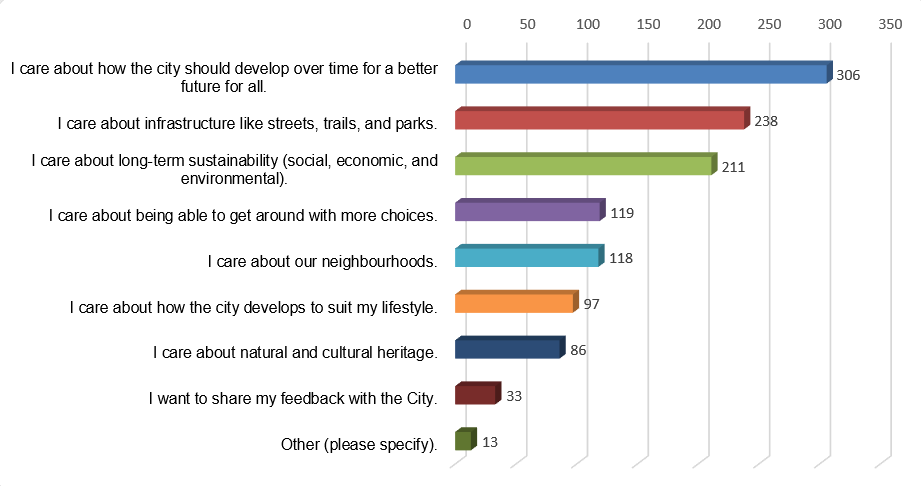
The responses to Question 1 indicate a strong interest in how the city develops, both in terms of personal lifestyle and broader future sustainability. Key areas of concern include infrastructure, long-term sustainability, and neighbourhood development. The highest number of respondents (306) care about how the city should develop over time for a better future for all, followed by those who care about infrastructure like streets, trails, and parks (238), and those who care about long-term sustainability (211). Additionally, there is significant interest in neighbourhood development and providing more choices for getting around.
2. Thinking about the next 25 years, what should Kingston prioritize in the new Official Plan? (select up to five).
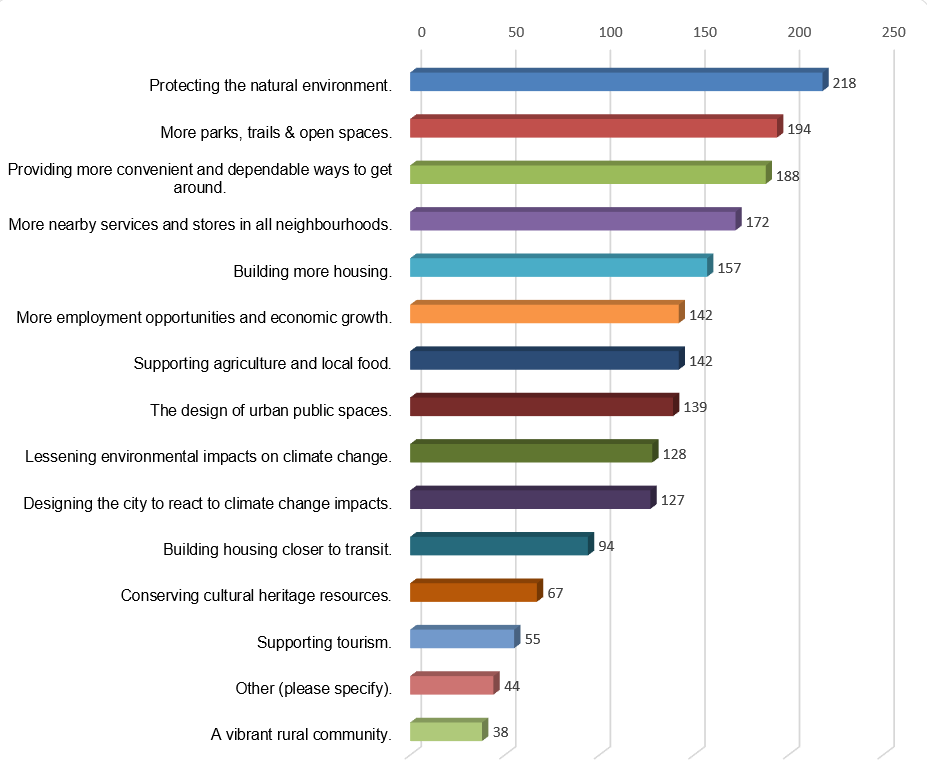
The responses to Question 2 indicate that respondents prioritize protecting the natural environment, providing more parks, trails, and open spaces, and providing more convenient and dependable ways to get around. Other significant priorities include building more housing, supporting agriculture and local food, and enhancing employment opportunities and economic growth. Additionally, respondents highlighted the importance of conserving cultural heritage resources, designing urban public spaces, and addressing climate change impacts in shaping Kingston's future. The highest number of respondents (218) prioritize protecting the natural environment, followed by those who prioritize providing more parks, trails, and open spaces (194), and those who prioritize providing more convenient and dependable ways to get around (188).
3. What does your ideal housing arrangement look like in the year 2051?
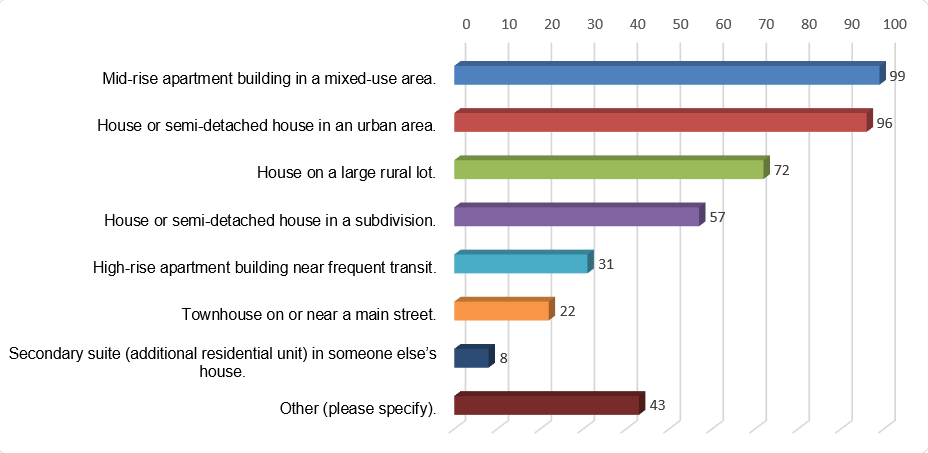
The responses to Question 3 indicate a diverse range of preferences for ideal housing arrangements in the year 2051. The most popular choices are mid-rise apartment buildings in mixed-use areas (99 respondents) and houses or semi-detached houses in urban areas (96 respondents). Other significant preferences include houses on large rural lots (72 respondents) and houses or semi-detached houses in subdivisions (57 respondents). There is also interest in high-rise apartment buildings near frequent transit (31 respondents) and townhouses on or near main streets (22 respondents). A smaller number of respondents prefer secondary suites in someone else’s house (8 respondents).
4. What do you think makes Kingston special today (e.g., historic sites and buildings, parks, markets, arts, economy)? What would you like to see change or improve in the future? Leave blank if you would prefer not to answer.
Summarized Responses:
Historic Character & Heritage Preservation (Most Popular)
- Core Identity & Cultural Legacy:
- Many responses emphasize that Kingston’s historic downtown, heritage districts, and landmark buildings (e.g. Fort Henry, Kingston Pen, architecture, limestone structures) are what make the city unique.
- Several comments note that the city’s history—despite sometimes having an "uncomfortable" past—is central to its identity.
- Protection, Revitalization & Sensitive Growth:
- Calls to protect historic sites from overdevelopment or demolition (e.g., preventing large, unattractive high rises, preserving the Memorial Centre).
- Suggestions for adaptive reuse, higher design standards for new buildings, and integrating heritage-friendly features (like green roofs and masonry details) so new development complements the old.
- Balancing History with Innovation:
- Some responses envision Kingston building on its rich past toward an innovative, self-sustaining future—merging historic charm with modern amenities while retaining a small-town feel.
Walkability, Active Transportation & Sustainable Transit (Most Popular)
- Enhanced Connectivity & Safety:
- Strong demand for expanded pedestrian-only zones, continuous and uninterrupted cycling/walking paths (including along the waterfront from Ontario Park to the causeway), and safe, dedicated bike lanes.
- Transit Improvements:
- Calls for a reliable, accessible public transit system (with mentions of electric buses and improved bus stop infrastructure) that serves all community hubs—including religious and cultural centres.
- Reduced Car Dependency:
- Emphasis on redesigning streets to support a multi-modal transportation network, reduce congestion, and improve road conditions and maintenance.
Waterfront Access & Natural Environment (Most Popular)
- Emphasis on redesigning streets to support a multi-modal transportation network, reduce congestion, and improve road conditions and maintenance.
- Valued Natural Assets:
- Consistent praise for Kingston’s waterfront, parks, trails, and overall green spaces as key attractions for both residents and tourists.
- Development & Protection:
- Requests to enhance public gardens, boardwalks, and multi-use trails along the waterfront without allowing high-rise developments that block views or light.
- Emphasis on preserving the urban tree canopy, protecting natural resources (lakes, rivers, creeks), and promoting sustainable outdoor spaces.
- Recreational & Community Spaces:
- Suggestions include more accessible public events in green spaces, outdoor sports facilities, and continuous trails that connect different parts of the city.
Housing, Urban Development & Land Use
- Smart, Human-Scale Growth:
- Many responses advocate for mixed-use, low- to mid-rise housing that preserves Kingston’s small-town feel and avoids the over-densification seen in large apartment complexes.
- Calls for innovative affordable housing solutions (such as city-leased units or lease-to-own models) to serve working families and reduce homelessness.
- Controlled Expansion & Quality Standards:
- Concerns over urban sprawl, hastily built developments, and high-rise projects that might undermine the historic character and quality of residential streets.
- Emphasis on incentivizing the preservation and adaptive reuse of existing buildings while instituting design standards that respect the historic scale.
Local Economy, Vibrant Downtown & Public Amenities
- Downtown Vitality & Small Business Support:
- Recognition of Kingston’s vibrant inner city—with its markets, independent shops, restaurants, and cultural events—as a central asset.
- Concerns over the potential corporate takeover of downtown and calls to support affordable rental opportunities for small businesses.
- Enhanced Public Spaces & Community Programming:
- Requests for more pedestrian-only areas (e.g., market square, interlocked streets near City Hall), better parking solutions, and a broader array of cultural and community events.
- Tourism & Economic Diversity:
- Emphasis on leveraging heritage, arts, and unique local attractions (like farmers’ markets and live music) to boost tourism and diversify local employment opportunities.
Arts, Culture, Education & Economic Diversity
- Rich Cultural Scene:
- Frequent mentions of Kingston’s active arts and music venues, local festivals, and creative community, which are seen as integral to the city’s character.
- Educational & Institutional Assets:
- The presence of key post-secondary institutions (e.g. Queen’s University, RMC, St. Lawrence College) is celebrated for fostering innovation, research, and a dynamic cultural environment.
- Community Engagement in Culture:
- Calls for more proactive promotion of local events (beyond social media), including the use of traditional media like printed flyers or video billboards, to better engage all residents.
Equity, Social Inclusion & Community Engagement
- Affordable Housing & Inclusive Development:
- Strong emphasis on addressing housing affordability and ensuring that development supports working people rather than exclusively catering to students or profit-driven interests.
- Accessible Public Amenities:
- Calls for community spaces and transit solutions that are inclusive for seniors, persons with disabilities, and marginalized groups.
- Local Identity & Participation:
- Desire for a greater sense of community and for local decision-making processes that safeguard Kingston’s unique culture and heritage—ensuring that all voices are heard.
Infrastructure, Public Safety & Maintenance
- Roads, Parking & Transit Infrastructure:
- Repeated concerns about deteriorating roads, inadequate parking (even in downtown areas), and the need for better maintenance and visible road markings.
- Specific calls for improvements to Kingston Transit, including dedicated lanes and pull-off zones, as well as safer intersections and winter upkeep.
- Overall Urban Maintenance:
- Emphasis on keeping the streets clean and well-maintained to support both residents and tourism, and on upgrading infrastructure to support sustainable urban growth.
Environmental Sustainability & Responsible Urban Growth
- Eco-Friendly Development:
- Advocacy for sustainable building practices—such as green roofs, renewable energy, and environmentally sensitive materials—in new developments.
- Urban Greening & Climate Action:
- Calls for increased tree planting, preservation of green spaces, and the creation of green corridors (e.g., “blooming boulevards” or butterfly corridors) to enhance biodiversity and climate resilience.
- Balancing Growth with Environmental Stewardship:
- Emphasis on ensuring that new development respects the city’s natural assets, prevents urban sprawl, and supports a self-sustaining, innovative future built on Kingston’s historical foundation.
5. What makes you feel connected to a place? (select all that apply).
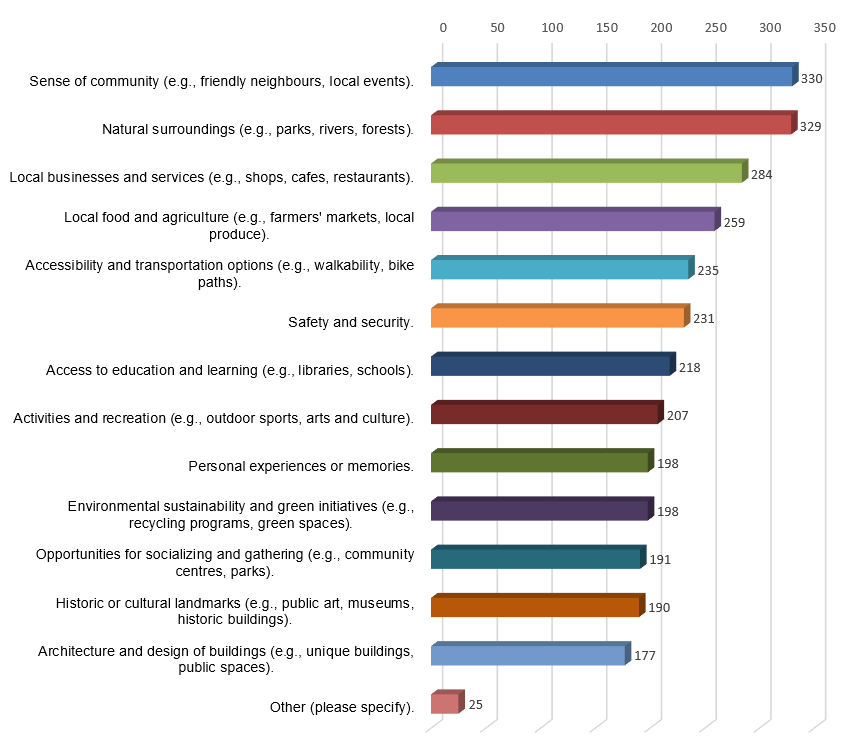
The responses to Question 5 indicate that the most important factors that make respondents feel connected to a place are a sense of community (330 respondents), natural surroundings (329 respondents), and local businesses and services (284 respondents). Other significant factors include accessibility and transportation options (235 respondents), safety and security (231 respondents), and local food and agriculture (259 respondents).
6. Do you have suggestions for ways the city can create more people-friendly streets and public spaces? Leave blank if you would prefer not to answer.
Summarized Responses:
1. Active Transportation & Pedestrian Infrastructure
- Protected, Connected Networks:
- Develop and expand dedicated, physically separated bike lanes and multi-use paths that interconnect neighbourhoods, downtown, and waterfront trails.
- Ensure continuous, well-maintained sidewalks and safe crossings (e.g., raised crosswalks, push-button signals) for all users, including students and people with disabilities.
- Create pedestrian-only zones—whether permanent or seasonal (e.g., on parts of Princess or Ontario Streets)—to encourage walking and safe public gatherings.
- Enhancing Walkability & Comfort:
- Widen sidewalks, add street furniture (benches, picnic tables), and incorporate greenery and public art to create inviting, human-scale spaces.
- Improve sidewalk lighting, especially in areas used by students (such as near Frontenac High) and along neighbourhood cut-throughs, to enhance safety during evenings and winter months.
- Ensure proper snow and debris removal on sidewalks and bike paths to keep them accessible year-round.
- Cycling Infrastructure Enhancements:
- Increase robust bike lanes (with physical separations) and consider innovative programs (e.g., scooter rental systems with integrated passes) modeled on European cities.
- Address issues with poorly designed or merged bike lanes at intersections so cyclists have safe, predictable routes.
2. Reducing Car Dependency & Reclaiming Public Space
- Reallocation of Road Space:
- Reduce the space dedicated to private vehicles—narrow lanes, fewer parking spots—and repurpose these areas for public amenities, cultural hubs, and vibrant outdoor plazas.
- Propose permanent closures of certain streets (e.g. Princess from Division to Ontario) to non-commercial traffic to enhance the pedestrian environment.
- Consider initiatives like car-free Sundays or seasonal pedestrian-only periods to test and promote people-friendly street use
- Traffic Calming & Lower Speeds:
- Lower speed limits generally and on specific roads (Hwy 15, Taylor Kidd Boulevard, Sydenham Road) to reduce accident severity and make streets safer for pedestrians and cyclists.
- Employ engineering solutions such as bollards and modal filters to force slower traffic and create a “human-scale” street environment.
- Improve traffic enforcement (increased red-light cameras, dedicated patrols) to hold inattentive drivers accountable.
- Enhanced Transit & Alternative Mobility:
- Invest in better public transit options (e.g., a free downtown bus loop, LRT proposals) to reduce dependence on cars and alleviate congestion.
- Encourage integration of transit with active transportation corridors, thereby providing viable alternatives to driving.
3. Urban Design, Public Spaces & Community Amenities
- Vibrant Public Realm:
- Increase green spaces and trees along streets, and create pocket parks, community gardens, and “little forests” to improve air quality and provide shade.
- Transform areas like Confederation Basin into licensed cultural hubs and pedestrian plazas that support outdoor events and local businesses.
- Enhance public seating, interactive art, and outdoor amenities (e.g., public washrooms, bike parking) to make streets inviting and multifunctional.
- Mixed-Use, High-Density Development:
- Encourage mid-rise, mixed-use buildings with setbacks that preserve public space, avoid overwhelming streets with high-rises, and include ample parking solutions (e.g., multi-storey parking garages) without sacrificing pedestrian areas.
- Integrate local commerce (e.g., cafes, shops, community centres) into neighbourhoods so that destinations are within walking or cycling distance.
- Aesthetic and Functional Improvements:
- Experiment with design elements (e.g. vibrant sidewalk colours) to enhance visual appeal and differentiate public spaces from car-centric areas.
- Provide community-oriented amenities such as outdoor fitness equipment, child-friendly playgrounds, and spaces that invite free public use without a purchase requirement.
4. Traffic Safety & Infrastructure Maintenance
- Safety Enhancements:
- Implement lower speed limits and redesign problematic intersections (such as those on Front Road and near key transit points) to reduce pedestrian risk.
- Increase traffic enforcement and monitoring to hold drivers accountable for violations (e.g. inattentive driving, illegal parking across sidewalks).
- Address design flaws such as missing or broken sidewalks and unsafe crosswalks, particularly near critical areas like schools and transit hubs.
- Infrastructure Upkeep:
- Prioritize regular repair and maintenance of roads, sidewalks, and bike lanes, especially around high-traffic areas (e.g. near KGH, the Rio Can Centre, and dense downtown corridors).
- Ensure that streets, sidewalks, and public areas are cleaned and well maintained (including rapid snow removal and proper waste management) to enhance safety and usability.
5. Integration, Connectivity & Accessibility
- Seamless Networks:
- Build or improve interconnected pathways (bike lanes, pedestrian bridges, trails) that connect downtown, suburban, and waterfront areas to create a continuous network.
- Develop dedicated transit corridors and consider converting streets like Brock Street into active transportation and transit corridors.
- Universal Accessibility:
- Ensure that all public spaces, sidewalks, and transit hubs are designed to be accessible to everyone—students, seniors, individuals with disabilities, and families—through inclusive design practices.
- Engage communities in the planning process to address localized issues (e.g., poorly lit pathways, inaccessible crosswalks) and ensure that all demographics are served.
- Local Connectivity:
- Foster “fifteen-minute neighbourhoods” by promoting mixed-use developments that include nearby essential services, reducing the need for long trips by car.
- Improve local signage, public information kiosks, and wayfinding systems to guide residents and visitors through safe, pedestrian-friendly routes.
6. Social Considerations & Broader Community Impacts
- Addressing Homelessness and Mental Health:
- Provide more geared-to-income, affordable housing and robust mental health support, addiction treatment, and transitional housing for the unhoused.
- Create dedicated support hotlines and crisis teams (separate from police) to assist individuals in need, aiming to reduce visible social issues on the streets.
- Enhancing Public Safety & Community Well-Being:
- Increase police and bylaw enforcement presence in problematic areas to deter unsafe behaviour (e.g., aggressive panhandling, illegal parking) while coupling enforcement with compassion and social services.
- Develop community ambassador programs or kiosks at key intersections to offer assistance, disseminate information, and monitor public spaces.
- Fostering a Community-Centric Identity:
- Prioritize public events, festivals, and outdoor activities that bring communities together and make public spaces vibrant and welcoming.
- Ensure that urban planning puts residents first by integrating community feedback and balancing the needs of various groups (from students and seniors to small business owners).
7. At pop-up booths held across the city during the summer of 2024, we learned that walkability—having easy access to key destinations like stores, services, and community spaces—is important to many people in Kingston. What changes would make your neighbourhood more walkable? (select all that apply).
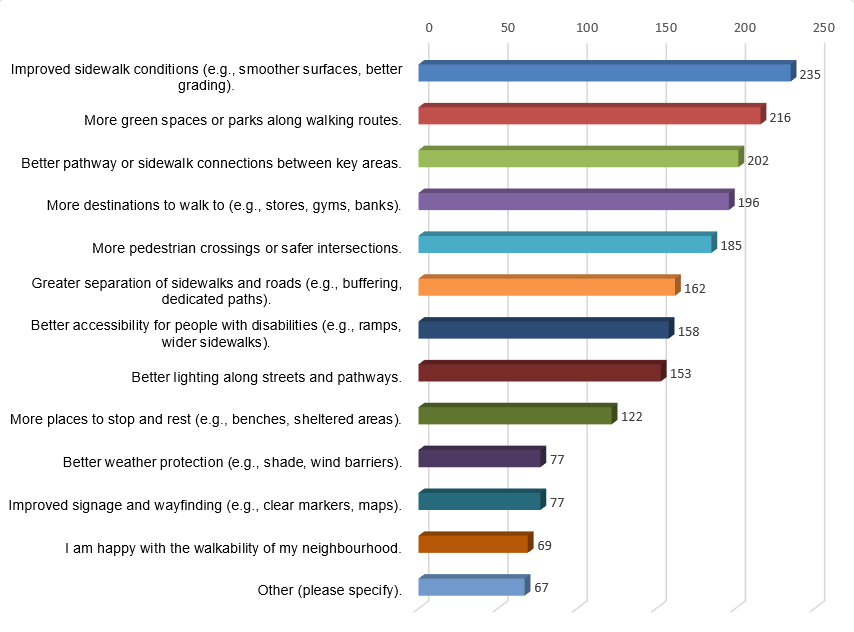
The responses to Question 7 indicate that respondents prioritize improved sidewalk conditions (235 respondents), more green spaces or parks along walking routes (216 respondents), and better pathway or sidewalk connections between key areas (202 respondents) as the most important changes to make their neighbourhoods more walkable. Other significant priorities include more destinations to walk to (196 respondents), more pedestrian crossings or safer intersections (185 respondents), and better accessibility for people with disabilities (158 respondents).
8. Kingston is expected to grow to about 220,000 people in the next 25 years. The new Official Plan needs to plan what the city will look like with 29,300 more homes and 33,400 more jobs. Where should new houses be built, and why? Leave blank if you would prefer not to answer.
Summarized Responses:
1. Urban Density & Infill Development
- Concentrated Growth:
- Prioritize new housing on underutilized parcels (e.g. the Novelis property, former industrial sites, unused parking lots) to fill gaps in the urban fabric.
- Encourage infill and gentle intensification in existing neighbourhoods rather than outward suburban sprawl.
- Development Types:
- Shift away from detached single-family dwellings toward mid-rise and multi-unit (duplexes, triplexes, four-plexes) developments, including “missing middle” housing.
- Support adaptive reuse of old buildings and brownfield sites to preserve heritage while accommodating increased density.
2. Location, Transit & Accessibility
- Transit-Oriented Development:
- Build new housing near existing transit hubs and along major arterial routes (e.g., near Sydenham Road, Division Street, Montreal Street, and transit corridors).
- Concentrate development in areas with strong transit, walking, and cycling networks—such as the downtown core—to create walkable, connected neighbourhoods.
- Geographic Priorities:
- Several responses favour the northwest corner, east end, and parts of the west end as areas for intensified development while preserving rural or greenfield land outside the urban boundary.
3. Affordable & Equitable Housing
- Housing for All:
- Prioritize affordable housing options—including rent-geared-to-income units and mixed-income developments—to serve current residents and newcomers.
- Ensure that new developments provide a range of housing types (from apartments and condos to townhouses) that meet diverse family and income needs.
- Community Impact:
- Focus on housing strategies that prevent displacement, maintain affordability, and support a balanced mix of residents.
4. Zoning Reforms & Strategic Planning
- Regulatory Changes:
- Update zoning bylaws to eliminate single-family exclusionary policies and parking minimums, thereby enabling higher density and mixed-use developments.
- Rezone underutilized areas (e.g. parts of the former industrial or institutional lands) to allow for multi-unit, transit-oriented housing.
- Long-Term Planning:
- Establish clear, data-driven growth projections and periodic reviews by independent experts to ensure that development targets align with the city’s long-term vision and infrastructure capacity.
5. Environmental Protection & Heritage Preservation
- Build Up, Not Out:
- Encourage vertical growth (mid-rise and low-rise apartments) within the existing urban footprint to protect greenfields, farmland, and environmentally sensitive areas such as wetlands.
- Sustainable Design:
- Promote green building standards, adaptive reuse, and energy-efficient design that respect Kingston’s historic character while meeting modern needs.
- Preserve Community Assets:
- Ensure that new development respects and protects key cultural and natural heritage resources, maintaining a balance between growth and quality of life.
6. Mixed-Use Development & Adaptive Reuse
- Integrated Neighbourhoods:
- Develop mixed-use zones where residential, commercial, and community spaces coexist. For example, encourage housing above retail spaces (such as apartments atop big-box stores) and the creation of mini malls that blend low-rise housing with cafes, restaurants, and independent shops.
- Community Hubs:
- Redevelop underused or abandoned buildings (including industrial or government-owned sites) into vibrant, community-oriented spaces that support local businesses and provide amenities.
7. Infrastructure & Community Amenities
- Supportive Infrastructure:
- Ensure that new housing is paired with adequate infrastructure—such as public transit, roads, sewers, and utilities—to support higher densities without increasing sprawl.
- Local Amenities:
- Focus development near existing or upgraded amenities (parks, grocery stores, schools, employment centres) so that residents can easily access services and daily necessities without relying on cars.
- Neighbourhood Quality:
- Enhance community livability by integrating public spaces, green areas, and recreational facilities into new developments, promoting a complete communities concept.
9. What types of services are missing from your neighbourhood? (select all that apply).
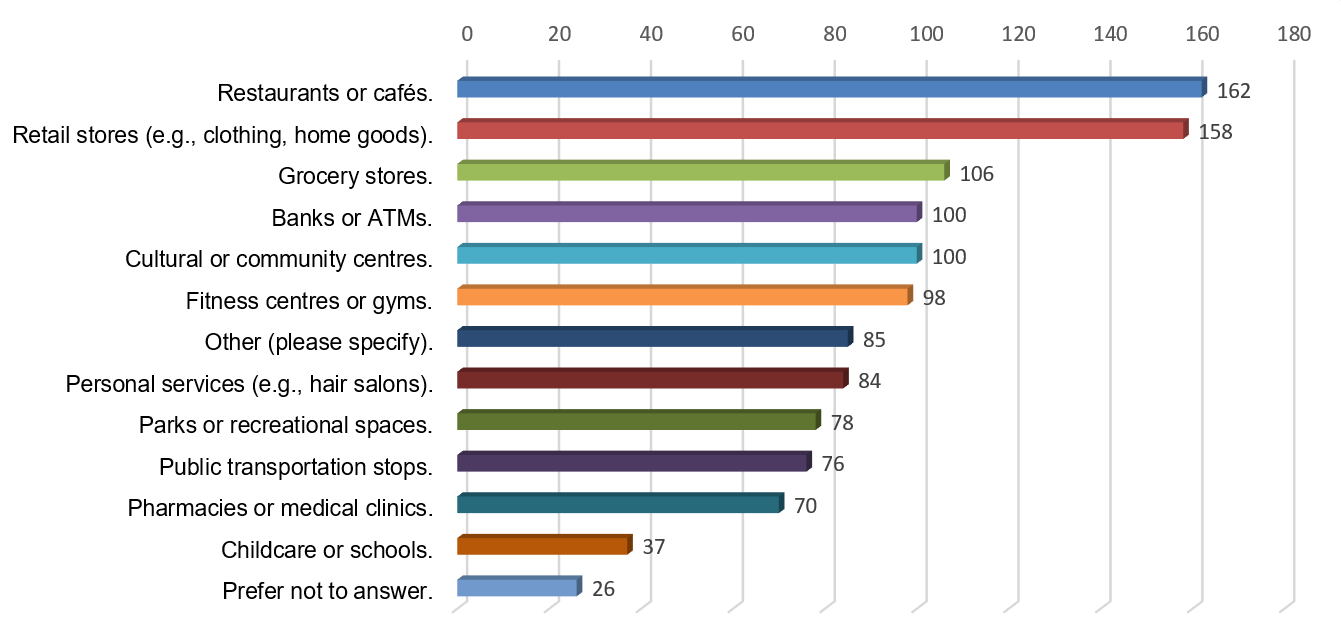
The responses to Question 9 indicate that respondents feel the most missing services in their neighbourhoods are restaurants or cafés (162 respondents), retail stores (158 respondents), and cultural or community centres (100 respondents). Other significant missing services include banks or ATMs (100 respondents), fitness centres or gyms (98 respondents), and grocery stores (106 respondents).
10. How can the Official Plan help ensure everyone has equal access to opportunities and resources, especially people who might otherwise be excluded or marginalized (e.g. improving access to public transportation, increasing job opportunities in all areas of the city)? Leave blank if you would prefer not to answer.
Summarized Responses:
1. Public Transportation Improvements
- Expanded, Reliable Service:
- Increasing frequency, extending operating hours (including off-peak and night service), and ensuring dependable transit in underserved areas (e.g., Woodhaven, Westbrook, routes linking to major employers, schools, and community centres).
- Proposals for free or discounted fares—especially for seniors, low-income riders, students, and people with disabilities—to reduce financial barriers.
- Ideas for innovative transit solutions such as small electric buses, express routes, trolley or dedicated bus lanes, and improved transfer options.
- Accessibility & Integration:
- Upgrading bus stops (adding shelters, ramps, better lighting, direct access to essential destinations such as healthcare, places of worship, and shopping) and ensuring that transit routes connect seamlessly with residential areas and mixed-use developments.
- Linking transit improvements with land use planning (e.g., building affordable housing or mixed-use developments along transit corridors).
- System Audits & Quality:
- Conducting audits of existing routes and services to identify inefficiencies (e.g., looping routes, underused services) and to ensure that service quality is maintained.
- Ensuring that transit planning is responsive to community needs and that residents have a voice in how services are expanded or modified.
2. Active Transportation & Pedestrian Infrastructure
- Enhanced Non-Motorized Networks:
- Expanding and improving sidewalks, bike lanes, pedestrian-only zones, and crosswalks. Respondents noted the absence of sidewalks, poor lighting, and unsafe streets that favour cars over pedestrians or cyclists.
- Emphasizing maintenance: fixing cracks, removing snow/ice, ensuring continuous and well-maintained bike lanes, and providing secure bike parking (with surveillance and proper signage).
- Accessibility for All Users:
- Designing streets and pathways that account for the needs of the elderly, children, people with disabilities, and those who cannot afford cars—such as wider, well-lit sidewalks and accessible crossings.
- Ensuring that active transportation infrastructure is part of a broader strategy to create a walkable, bike-friendly, and less car-dependent city.
3. Affordable Housing & Mixed-Use Development
- Inclusive Housing Options:
- Increasing affordable, rent-controlled, and mixed-income housing options distributed across neighbourhoods—not just concentrated in specific areas.
- Ensuring that housing is built in or near existing transit corridors and community services so that residents can access essential amenities on foot or by public transit.
- Addressing barriers in current zoning and design rules (such as large minimum yard requirements) to foster denser, mixed-use, and accessible communities.
- Mixed-Use Zoning & Community Amenities:
- Promoting zoning that blends residential, commercial, and community uses to allow essential services (grocery stores, hardware stores, pharmacies, medical offices) to be within a short walk from residents.
- Incentivizing developers to build projects that include public amenities, green space, and community centres while preserving affordable housing options.
4. Social Equity, Community Inclusion & Engagement
- Targeted Support for Vulnerable Groups:
- Improving access to essential services (e.g. healthcare, child care, education, mental health supports) in marginalized neighbourhoods.
- Prioritizing services for seniors, people with disabilities, low-income families, refugees, and the unhoused through free transit, subsidized housing, and supportive community programs.
- Ensuring that transit and public infrastructure are designed with the needs of all—including those who can’t afford a car—in mind (e.g. safe, accessible routes and amenities near places of worship, food banks, and employment centres).
- Inclusive Planning & Community Voice:
- Actively engaging residents via town halls, citizens’ assemblies, and participatory planning processes so that community needs directly shape public policy.
- Calling for a neutral, bipartisan Official Plan that balances developer interests with community priorities, ensuring that public funds and services truly benefit the broader population.
5. Urban Planning, Land Use, & Policy Reforms
- Official Plan & Regulatory Changes:
- Integrating land use planning with transportation planning to ensure that development happens in areas with existing or potential transit and community infrastructure.
- Reforming zoning rules to allow for more mixed-use development, denser communities, and incentives for affordable housing, including inclusionary zoning policies.
- Revising policies that currently favour developers or large-scale projects over community needs, such as reducing burdens from heritage designations or minimum yard requirements, to create more livable neighbourhoods.
- Data-Driven & Equitable Planning:
- Using tools (like GIS mapping) and community assessments to identify underserved areas and direct investments where they are most needed.
- Focusing on decentralizing employment opportunities and community services so that residents have shorter commutes and more local options, reducing the reliance on cars.
- Fiscal & Policy Considerations:
- Addressing issues like high property taxes that may push out small businesses and contribute to inequitable development.
- Ensuring that public investments (e.g., in transit, public housing, and community amenities) are sustainable and responsive to demographic changes and local needs.
11. How can the city be more accessible and friendly for people of all ages? Select all that apply.
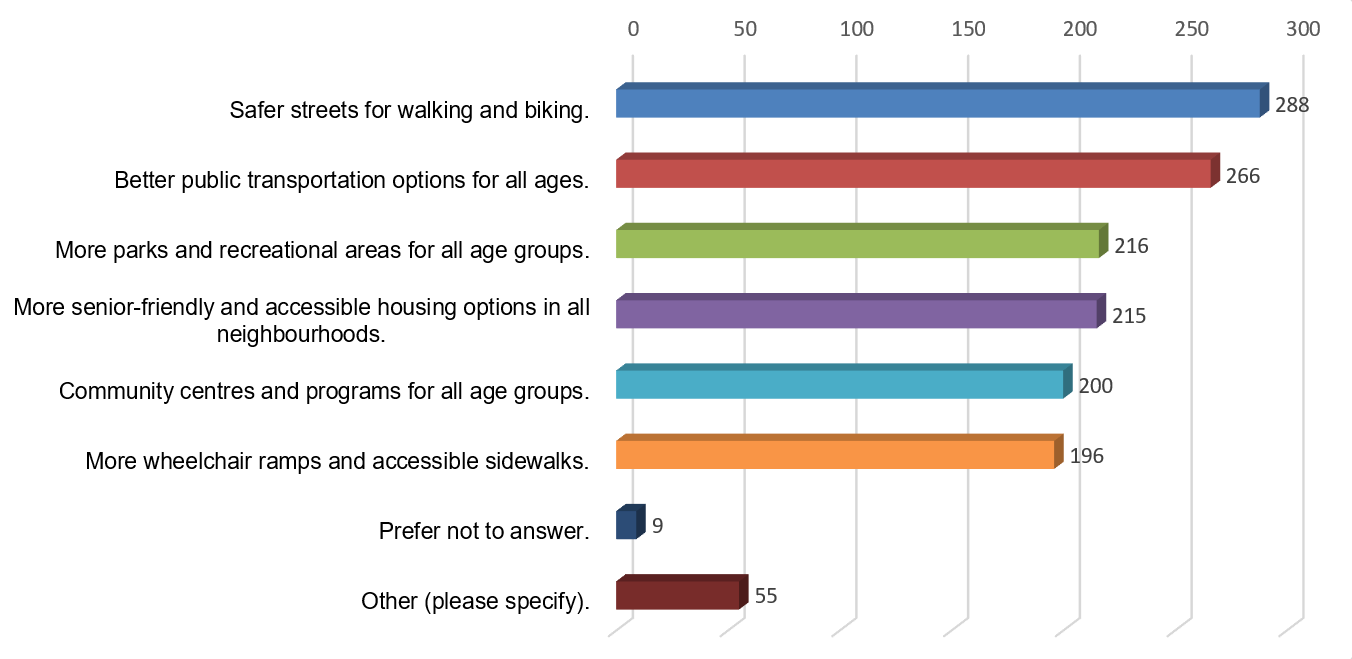
The responses to Question 11 indicate that respondents prioritize safer streets for walking and biking (288 respondents), better public transportation options for all ages (266 respondents), and more senior-friendly and accessible housing options in all neighbourhoods (215 respondents) as the most important changes to make the city more accessible and friendly for people of all ages.
12. The design of neighbourhoods, buildings, public facilities, and public spaces can greatly affect how people move around, connect with others, and experience their community. This has a direct impact on public health and wellbeing. How should neighbourhoods be designed to better support physical, emotional, and mental health? (select all that apply).
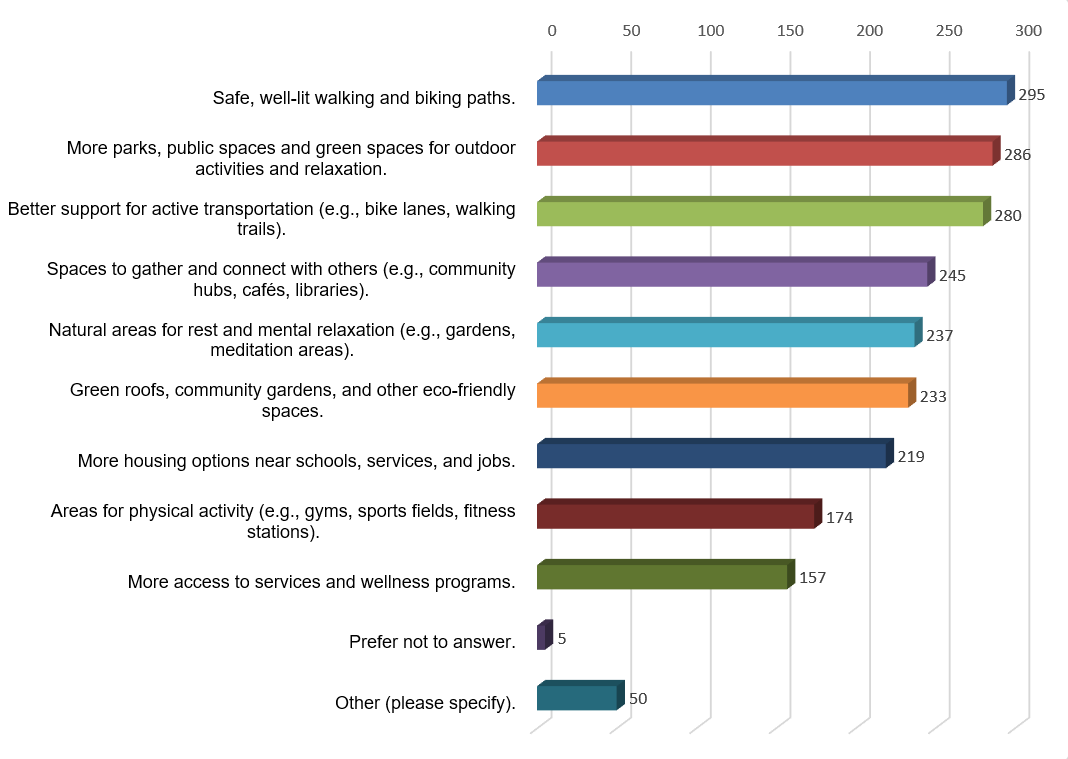
The responses to Question 12 indicate that respondents prioritize safe, well-lit walking and biking paths (295 respondents), better support for active transportation (280 respondents), and more parks, public spaces, and green spaces for outdoor activities and relaxation (286 respondents) as the most important design elements to better support physical, emotional, and mental health in neighbourhoods. Other significant priorities include spaces to gather and connect with others (245 respondents), natural areas for rest and mental relaxation (237 respondents), and green roofs, community gardens, and other eco-friendly spaces (233 respondents).
13. Thinking about your neighbourhood, what can the city do to better support agriculture and local food initiatives (e.g. more farming support or options in the rural area, allowing indoor farming in more areas, allowing small food and local food stores in urban neighbourhoods, more community gardens, farm-to-table choices and farmers' markets)? Leave this blank if you would prefer not to answer this question.
Summarized Responses:
1. Community Gardens & Urban Agriculture
- Expansion & Accessibility:
- Calls for more community gardens in parks, vacant lots, residential areas, and even on rooftops.
- Proposals include easing permit requirements (e.g., allowing in-ground beds without expensive raised structures) and providing support (starter kits, subsidized materials, water access, and even a dedicated city position to coordinate efforts).
- New ideas suggest using underutilized spaces—such as the roofs of city buildings or community centres (e.g., Rideau Heights Community Centre)—to install greenhouses for year‑round food production, education, and program delivery.
- Education & Engagement:
- Numerous responses emphasize the value of educational programming, from free gardening classes and seed swaps to community food forests that teach residents about gardening in small spaces.
- Innovative ideas include creating model farms outside the city where families can visit, learn, and participate in farm activities.
2. Farmers Markets & Local Food Retail
- Improved Local Access:
- Repeated calls to expand and improve farmers markets across multiple hubs - including year‑round indoor markets - to increase accessibility, especially for residents without cars.
- Support for local food stores or “green grocers” in neighbourhoods, providing fresh, locally produced food as an alternative to big box chains.
- Market Quality & Support:
- Emphasis on ensuring that these markets remain truly local (i.e., run by local farmers rather than large businesses) and affordable, with suggestions for reducing regulatory barriers and offering incentives or marketing support.
- Continued support for established markets such as the Memorial Centre market is seen as essential.
3. Support for Local Food Production & Farm-to-Table Initiatives
- Innovative Production Methods:
- Advocacy for indoor farming, hydroponics, vertical and rooftop agriculture to increase local food production year‑round.
- Ideas to repurpose underused urban spaces—like empty fields, building rooftops, or warehouse roofs—for food production and educational greenhouses.
- Strengthening Local Supply Chains:
- Proposals to connect local farms directly with consumers through community-supported agriculture (CSA) programs, farm-to-table initiatives with restaurants, and partnerships with local institutions.
4. Protection of Agricultural Land & Smart Urban Planning
- Preservation & Infill:
- Concern about urban sprawl driving up land prices and displacing local farmers; many call for protecting existing agricultural lands and prioritizing infill development.
- Suggestions to preserve agricultural property (e.g., protecting sites like the “Salt of the Earth” farm) and incorporate zoning changes that encourage local agriculture rather than unrestrained development.
- Zoning & Land-Use Incentives:
- Proposals include revising zoning by-laws to allow indoor farming, community gardens, and small local food retailers in urban neighbourhoods while discouraging large-scale developments that consume farmland.
5. Policy, Regulation, and Community Support
- Regulatory Relief & Incentives:
- Calls to reduce red tape, for example, lowering permit fees and easing restrictions on backyard gardens, to enable small farmers and local food vendors to thrive.
- Suggestions include offering tax credits or grants to support local food initiatives, and even creating a framework that incentivizes green roofs and urban agriculture as part of new development standards.
- Municipal Role & Partnerships:
- Some respondents believe the municipality should support local agricultural initiatives by providing space (for markets or farming), offering educational programs, and consulting with local farmers. Others caution that the city should let private initiatives drive agriculture while removing unnecessary regulatory burdens.
- Emphasis on aligning policies with sustainability and food security goals, ensuring that all residents have access to locally produced, fresh food.
14. Outside of protecting agricultural areas, how can the Official Plan best support a vibrant rural area (e.g. more farming or farm-related businesses, allowing more housing, tourism or rural businesses to develop, improving transportation options between rural and urban areas)? Leave blank if you would prefer not to answer.
Summarized Responses:
1. Transportation & Transit Improvements
- Enhanced Urban–Rural Connectivity:
- Many respondents call for improved public transportation that spans both urban and rural areas (e.g., dedicated bus routes, shuttle services, park-and-ride lots, dial-a-bus options, and reliable mini-bus routes).
- Emphasis on creating safe multi‑modal transit options—including protected bike lanes and well‑located bus stops (even on highways and at rural nodes)—to ensure that both rural residents and urban visitors can move freely between regions.
- Active Transportation:
- Several responses stress the importance of safe bike routes and multiuser trails (e.g., improvements along Highway 2 and on trails like the K&P) to support non‑motorized travel.
2. Rural Preservation & Smart Land Use
- Protecting Agricultural Land:
- Numerous responses advocate for preserving farmland and protecting rural areas from unchecked urban sprawl, emphasizing that agricultural lands should remain dedicated to farming.
- Calls for zoning and land‑use measures that restrict the subdivision of large lots, limit housing developments on prime agricultural land, and prevent over‑development that would erode rural character.
- Balanced Rural Housing:
- Some respondents support moderate housing expansion in rural areas—such as higher‑density or townhome developments with local services—provided it is carefully planned to maintain the rural fabric and does not displace farming.
3. Support for Local Agriculture & Food Systems
- Strengthening Local Food Production:
- Many comments emphasize supporting local farmers through subsidies, tax incentives, and funding for small, diversified farms (e.g., small plots for specialized farming such as beekeeping, flower, or tree farms).
- There is robust support for enhancing farmers markets—both outdoor and indoor year‑round—and for establishing more local food retail options (green grocers, farm stands, and dedicated local stores) to improve food access.
- Innovative & Educational Farming Initiatives:
- Ideas include developing model farms or “farm-for-a-day” programs for families, promoting indoor and vertical (or hydroponic) farming, and utilizing roofs of city buildings for food production.
- Respondents also advocate for community education (farm tours, school partnerships, and agricultural workshops) to build awareness of local food systems and regenerative practices.
4. Urban–Rural Integration & Economic Development
- Bridging Communities:
- Several responses highlight the need to integrate rural and urban areas by creating strong links—via improved transit, trails, and active transportation—that help urban residents access rural attractions and local products.
- There is support for programs that connect rural businesses and farms with urban consumers (e.g., food tours, co‑operatives for retail spaces, and partnerships with tourism initiatives).
- Local Business & Agritourism:
- Proposals include supporting farm-related industries (processing, agritourism, and farm‑to‑table restaurants) and encouraging rural commercial zones that bolster the local economy without compromising farmland.
5. Policy, Regulation & Governance
- Transparent Land-Use Planning:
- Respondents call for clear, community‑informed planning processes and stricter zoning regulations that prevent the conversion of agricultural land into large-scale housing or tourism projects.
- Concerns are raised about rezoning decisions made without proper public consultation and the need to protect natural and agricultural heritage through honest, transparent governance.
- Incentives & Support:
- Several comments advocate for financial incentives (tax breaks, subsidies, and low‑interest loans) to support small farms, local food producers, and rural business development.
- There is also an emphasis on aligning municipal policies with sustainable practices (such as requiring green roofs on new buildings) and minimizing bureaucratic hurdles.
6. Environmental Sustainability & Community Spaces
- Preserving Natural Assets:
- Some responses underscore the importance of conserving natural areas (trees, wetlands, wildlife corridors) and reclaiming spaces—like parking lots or underused fields—for parks, trails, or community gardens.
- Calls are made for environmentally sensitive development that prioritizes green spaces, reduces empty lots, and maintains a balance between built-up areas and nature.
- Community Vibrancy & Mixed-Use Development:
- A few comments focus on promoting density in existing neighbourhoods, mixed‑use buildings that encourage vibrancy and community interaction, and ensuring that new developments are integrated with public transit and green spaces.
15. Outside of protected agricultural and environmental areas, do you support the creation of more residential properties (lot creation through property division) in the rural area?

The responses to Question 15 indicate that a majority of respondents (179) support the creation of more residential properties in the rural area through lot creation and property division. However, a significant number of respondents (110) are opposed to this idea, while 115 respondents are unsure, and 17 respondents have no opinion on the matter. This suggests that while there is support for rural residential development, there are also considerable concerns and uncertainties among the respondents.
16. What do you think are the best ways to address climate change in the new Official Plan? (select all that apply)
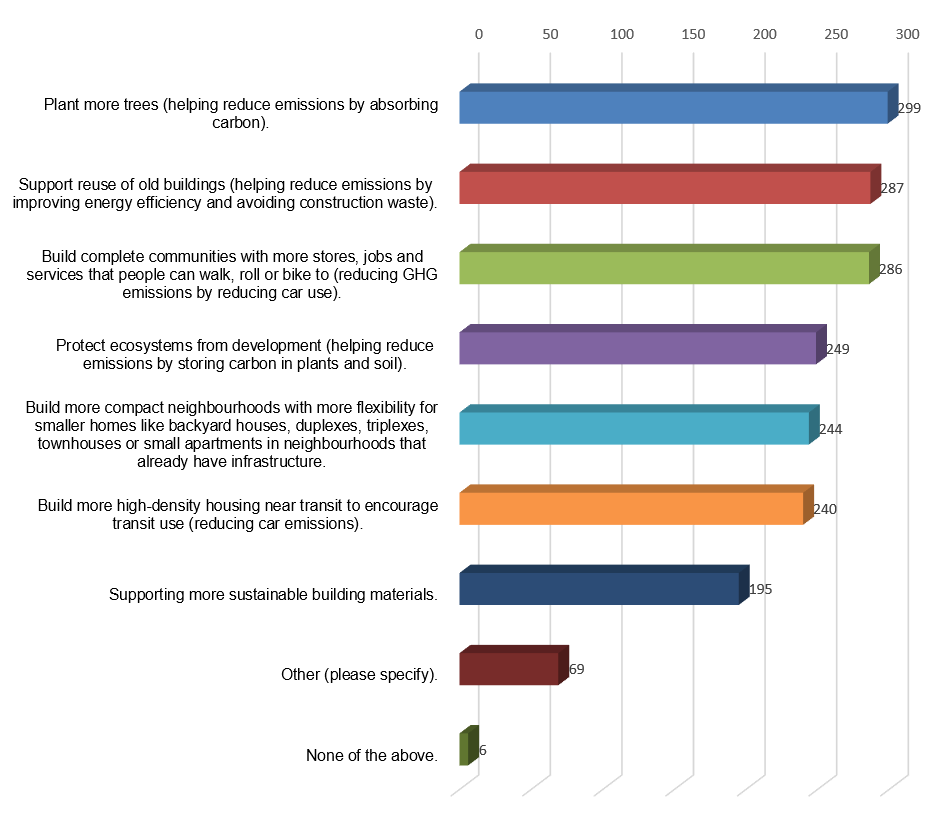
The responses to Question 16 indicate that respondents prioritize planting more trees (299 respondents), supporting the reuse of old buildings (287 respondents), and building complete communities with more stores, jobs, and services that people can walk, roll, or bike to (286 respondents) as the best ways to address climate change in the new Official Plan. Other significant priorities include protecting ecosystems from development (249 respondents), building more compact neighbourhoods with flexibility for smaller homes (244 respondents), and building more high-density housing near transit (240 respondents).
17. How important are the following features in making Kingston Transit a more viable option for you in the future? (rate each from 1 = not important to 5 = very important)
Increased service frequency (less planning required, fewer full buses).

Extended service hours (early morning/late evening).
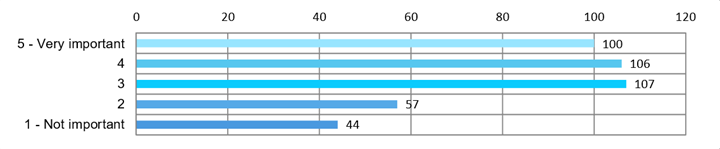
Improved reliability (confidence that you won’t be late).
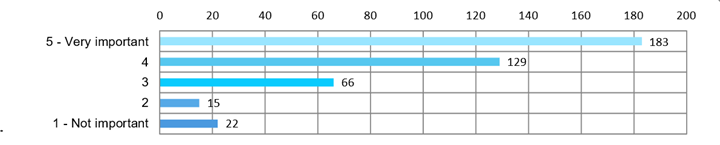
Lower fares or fare incentives (more affordable).
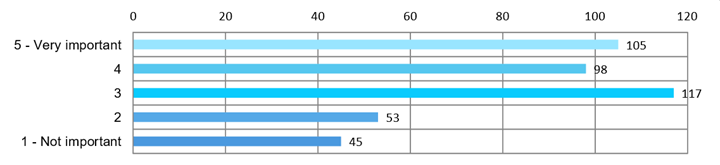
Better connections to key destinations (it goes where you want it to).
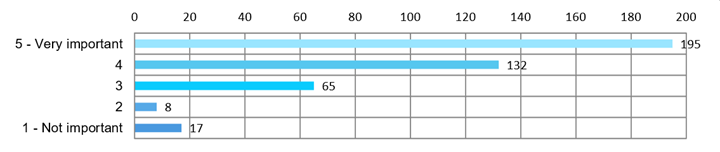
Cleaner, safer, and more comfortable transit stops and buses.
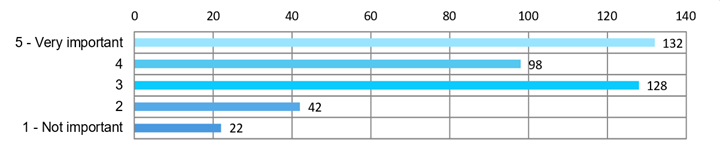
More Park and Ride locations.
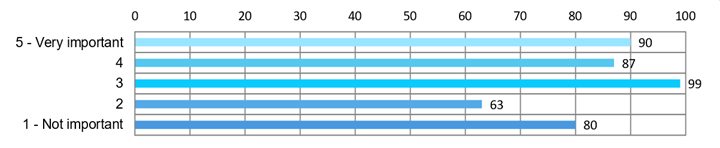
On-demand transit service connecting currently unserved areas (e.g., rural areas) to existing routes.
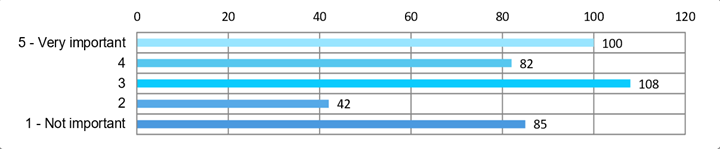
The responses to Question 17 indicate that increasing service frequency, improving reliability, and providing better connections to key destinations were rated as the most important features to make Kingston Transit a more viable option. Lower fares and incentives, extended service hours, and cleaner, safer transit stops also received relatively high importance ratings. Features like on-demand service in unserved areas and Park & Ride options received moderate importance ratings by comparison.
18. Kingston is anticipating continued significant growth, which could increase congestion and delays for drivers if not managed effectively. Which strategies do you think would be most effective in managing traffic congestion? (select up to three options).
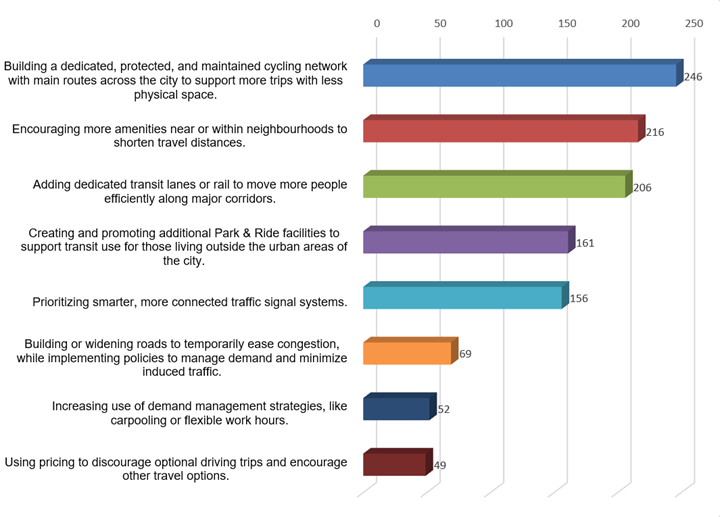
The responses to Question 18 suggest that building a protected and maintained cycling network (246 respondents), encouraging more amenities near or within neighbourhoods to shorten travel distances (216 respondents), and adding dedicated transit lanes or rail to move more people efficiently along major corridors (206 respondents) are considered the most effective strategies to manage traffic congestion. Creating additional Park & Ride facilities (161 respondents) and prioritizing smarter, more connected traffic signal systems (156 respondents) also received significant support, while road widening (69 respondents) was selected much less frequently.
19. To what extent do you agree or disagree with the following statements about Kingston’s transportation network and future priorities? (select one option for each statement: strongly agree, agree, neutral, disagree, strongly disagree or not sure)
I support reallocating available road space to support transit, cycling, and pedestrian trips to move people more efficiently while requiring less space and lowering public costs and emissions.
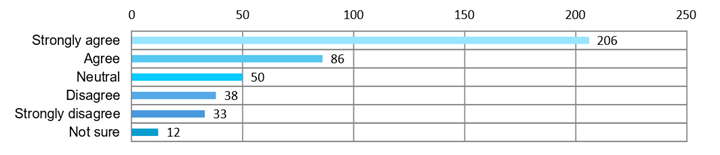
Everyone, regardless of age or ability, should have access to connected, safe, and efficient options to get around.
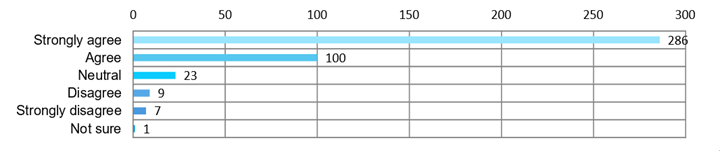
Providing alternatives like walking, cycling and transit benefits those who need to drive by reducing the number of people driving and competing for space.
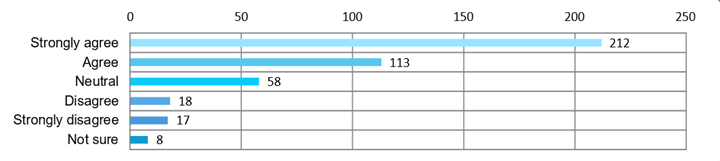
Cargo e-bikes and other emerging mobility options should be encouraged as alternatives for transporting goods (e.g., trips to the grocery store).
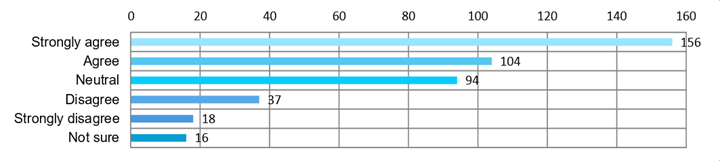
Kingston’s transportation network should be designed to reduce greenhouse gas emissions and meet climate action goals.
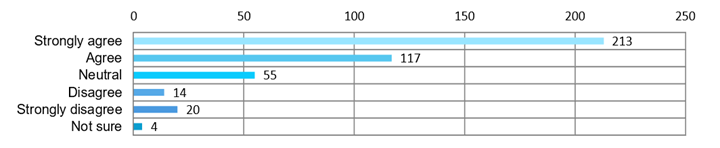
Improving active transportation options, like building protected bike lanes and safe pedestrian crossings, is essential for improving community mobility.
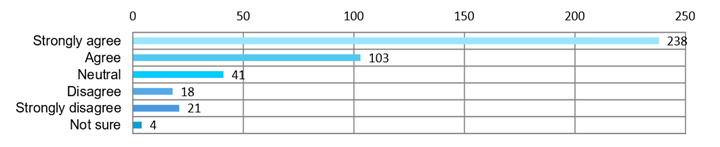
Larger commercial vehicles, such as transport trucks, should have designated routes along main roads to support efficient movement while also prioritizing the safety of vulnerable road users.
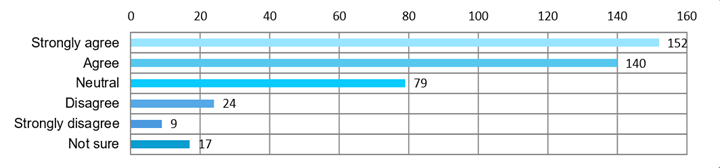
The responses to Question 19 show strongest support for the idea that everyone, regardless of age or ability, should have access to connected, safe, and efficient transportation options — with 386 out of 420 respondents (92%) either agreeing or strongly agreeing. Other highly supported statements included the importance of improving active transportation (341 respondents, 86%) and recognizing that alternatives like walking, cycling, and transit benefit drivers by reducing congestion (325 respondents, 85%). The statement with the lowest level of support was reallocating road space to support transit, cycling, and pedestrian trips, which still received majority agreement (292 respondents, 74%).
Across all statements in Question 19, an average of 75% of respondents agreed or strongly agreed with the statements presented, while 9.5% disagreed or strongly disagreed.
20. Many households in Kingston rely on more than one car to meet their transportation needs. What changes would make it easier for households to be less reliant on multiple vehicles? (select up to 3 options).
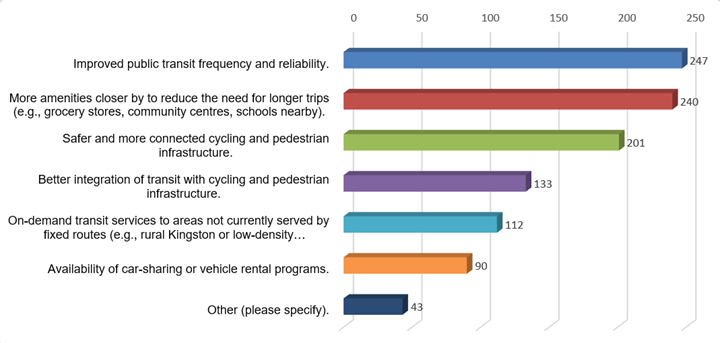
The responses to Question 20 indicate that more reliable and frequent public transit (247 respondents), more services and destinations within walking distance (240 respondents), and better cycling infrastructure and secure bike parking (201 respondents) would most help households rely less on multiple vehicles.
21. More than half of trips made by private vehicles in Kingston are under five kilometres. Excluding changes to land use policies, which of the following potential changes would most enhance transportation options for shorter trips? (check all that apply).
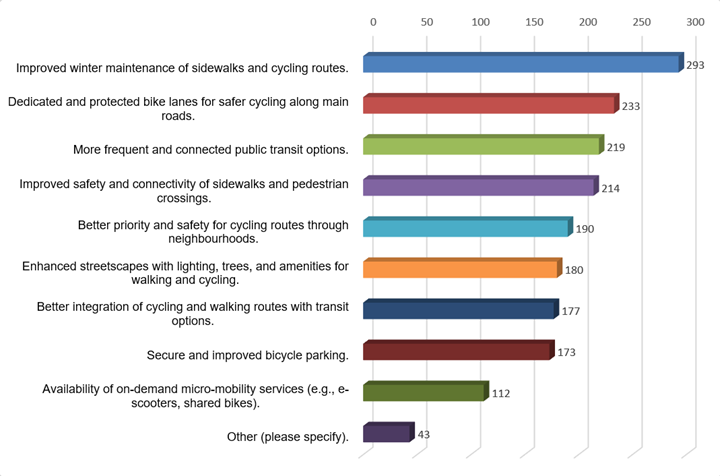
The responses to Question 21 highlight that improved winter maintenance of sidewalks and cycling routes (293 respondents), dedicated and protected bike lanes along main roads (232 respondents), and more frequent and connected public transit options (219 respondents) would do the most to support short trips under 5 km. Respondents also emphasized the importance of safer pedestrian crossings and sidewalks (214 respondents), better neighbourhood cycling routes (190 respondents), and enhanced lighting and amenities along walking and cycling routes (180 respondents).
-
YG220K Community Advisory Group Update #1
We’re kicking off this year with a quick trip back to 2024 to catch you up on what the Community Advisory Group has been up to. Comprised of over 20 members, the Community Advisory Group represents an exciting new way for the City to engage with residents on the new Official Plan and Integrated Mobility Plan. The first meeting was held on Sept. 28, 2024, and the next one is scheduled for late winter or early spring 2025.
What Happened at the First Meeting?
This initial gathering was focused on orienting advisory group members to the new Official Plan andContinue reading
We’re kicking off this year with a quick trip back to 2024 to catch you up on what the Community Advisory Group has been up to. Comprised of over 20 members, the Community Advisory Group represents an exciting new way for the City to engage with residents on the new Official Plan and Integrated Mobility Plan. The first meeting was held on Sept. 28, 2024, and the next one is scheduled for late winter or early spring 2025.
What Happened at the First Meeting?
This initial gathering was focused on orienting advisory group members to the new Official Plan and Integrated Mobility Plan projects. City of Kingston staff introduced the city’s growth estimates and discussed some of the associated opportunities and challenges facing the City over the next two and a half decades. The meeting also gave participants a chance to get to know each other and to develop working relationships.
Tim Park, Director of Planning Services, speaks to the Community Advisory Group.
During the presentation, City of Kingston staff walked advisory group members through the key aspects of city planning and transportation including:
- Designing Mobility Options for All
- Sustainability and Environmental Impact
- Zoning and Urban Intensification
- Planning Policy and Budget
- Transportation Infrastructure and Connectivity
The goal was to ensure that all participants were working from the same shared foundation of knowledge and had opportunities for questions and discussions.
Visioning Exercise
Following the presentation and discussion, participants were tasked with imagining a future short news story about planning or transportation. Each story considered the future context of Kingston, what the future scene looked like, and the type of publication (real or fictional). The stories covered a wide range of future scenarios, including building new community hubs, expansion of car share options, and opportunities for cafes and community spaces serving as creative hubs.
Want to learn more about the Community Advisory Group? Check out a more detailed summary of what we heard below.
Next steps for the group will be to reconvene in the late winter or early Spring 2025 to connect about the work being done on the first draft of the new Official Plan policies, along with transformational conversations about traffic and mobility more broadly. Stay tuned!
Thanks for reading,
- YG220K Project Team
What We Heard
This is a summary of the comments and themes we heard from group participants during the first Community Advisory Group meeting in September 2024. The first section is focused on feedback and questions from the presentation while the second section focuses on what was expressed through the visioning exercise.
Feedback Received
Throughout the meetings, participants shared comments and posed questions to the project team on topics related to urban and transportation planning. Below is a summary of the key interest points important to the Community Advisory Group.
Accessibility and Safety
- Affordability and Livability: Advocacy for affordable housing, community gardens, complete communities, and ensuring that growth meets the needs of residents.
- Accessible Maps: Request to improve map usability for individuals with visual impairments (colorblind-friendly maps) and provide maps tracking Official Plan amendments geographically.
- Transit Accessibility: Advocacy for accessibility on public transit, particularly for users of wheelchairs, strollers, and other mobility aids.
- Aging Population: Advocacy from several Community Advisory Group members for the needs of an aging population, including targeted support for seniors transitioning out of car ownership.
- Pedestrian Safety: Interest in road designs that prioritize pedestrian and cyclist safety, including the use of concrete islands and slower traffic designs. Public Transit Safety: Concern about safety on Kingston Transit, particularly for students and other vulnerable groups who rely on public transit daily.
Sustainability and Environmental Impact
- Environmental Impact: Request to consider wildlife, ecosystems, and sustainable development practices during urban expansion.
- Sustainable Services: Interest in waste management, recycling, and how a growing population will affect these systems.
- Renewable Energy: Concern over how electric vehicles might impact the city’s power grid and interest in how the City can advocate for provincial support in upgrading infrastructure.
- Transportation Targets & Active Transport: Enthusiastic support for how the City is setting new transportation mode share targets, focusing on active transportation, transit use, and reducing car dependency in alignment with long-term sustainability goals.
Zoning and Urban Intensification
- Population Density: Concern over increasing population density and its impact on urban planning, infrastructure, and services.
- Urban vs. Rural Development: Interest in the expansion of the urban boundary and how to balance intensification in existing areas with developing new ones.
- Building Heights and Zoning: Curiosity about building height regulations and zoning bylaws.
- Parking and Transportation: Interest in parking requirements, with a focus on reducing vehicle reliance and supporting sustainable transportation.
Planning, Policy and Budget
- Engaging Youth: A push for including younger voices (children and teenagers) in the urban and transportation planning processes.
- Official Plan Amendments: Interest in the number of amendments made to the current Official Plan.
- Strategic Growth: Curiosity about the balance between expanding the urban boundary and intensifying existing areas, and how phasing infrastructure affects budget considerations.
- Long-Term Vision: While current decisions align with long-term goals and Council’s strategic priorities, Community Advisory Group members emphasized the importance of environmental conservation, livability and complete communities.
- Legislation & Government Influence: Interest in the impact of provincial government decisions, such as cycling path regulations, on local municipal plans, and how the City can ensure its strategies are aligned with evolving policies while advocating for community needs.
- Data Collection: Requests for more access to City data related to transportation and housing. There were also concerns about cybersecurity as more smart technology is used in transportation.
Transportation Infrastructure and Connectivity
- Neighbourhood-level Planning: Interest in how transportation patterns and mode share differ across Kingston’s various neighbourhoods and how land use policies will shape future infrastructure projects.
- Rail & Intercity Transport: Strong enthusiasm for connecting Kingston to other cities by rail, including plans for GO train expansion and advocating for improved high-frequency rail from Toronto to Montreal.
- Transit Infrastructure Updates: Curiosity about specific road and cycling infrastructure, such as the design of intersections and bike lanes, as well as bus capacity for mobility devices and strollers.
- Car & Ride Sharing Systems: Support for the introduction of car-share programs, drawing on examples from other cities to reduce dependency on car ownership in Kingston.
- Commercial Vehicles & Freight: Interest in managing commercial vehicle traffic through neighbourhoods and prioritizing deliveries, curb space, and access in business districts.
Visioning Activity - Future Kingston News Story
Community Advisory Group members were asked to write creative stories about their visions of Kingston in the future. Below are the key themes that emerged from participants’ news stories, implying their future aspirations for the City of Kingston.
Improved Transportation and Connectivity
- Sustainable Transport: Expansion of electric public transit, bike lanes, and shared mobility services.
- Airport Expansion and Connectivity: Interest in better access to major cities like Toronto, Ottawa, and Montreal via light rail, and hopes to expand Kingston airport.
- Improved Transit Accessibility: Ideas for better bus stop technology, more frequent service, and enhanced transit user experience.
- Electric and Active Transport Initiatives: Community Advisory Group members envision electric buses to priority lanes for electric vehicles and pedestrian-friendly zones.
- Autonomous Vehicles: Future transportation via subscription-based autonomous services.
Sustainability and Green Living
- Eco-friendly Urban Design: Circular economy, sustainable community hubs, and neighbourhoods designed with green spaces.
- Low-income, Self-sustained Communities: Off-the-grid housing projects and local food production.
- Green Spaces and Pedestrian Walkways: Enhancing livability with parks, gardens, and pedestrian paths.
- Agri-commercial Development: Focus on local food production through urban agriculture.
Youth and Community Engagement
- Youth Involvement in Governance: A youth mayor and the desire for a Youth Council with equal voting power in city decisions. Inviting and Iterative
- Community Engagement: A community-centered engagement process that fosters meaningful participation by meeting people in comfortable, familiar settings and validating their input at multiple points throughout the planning process.
- Community Centers and Inclusivity: The opening of centres that serve diverse community needs, emphasizing fitness, health, and environmental sustainability.
Technological Innovation
- Smart City Technologies: AI-powered transit apps for optimizing travel, smart traffic signals, and mobile route planning tools.
- Modern Infrastructure: Improved signage, LED displays, and real-time information at bus stops.
Urban Growth and Development
- Population and Housing Growth: Rapid urbanization with new housing developments integrated with local services and student housing projects that blend with the community.
- Cultural and Creative Evolution: Kingston’s transformation into a vibrant urban centre, celebrated in its cultural spaces and artistic evolution.