Survey
Purpose
New lightweight travel options like e-bikes and, in some communities, e-scooters are becoming more popular for everyday trips. These types of “micromobility” are changing how people travel, and can offer convenient, affordable, and sustainable ways to get around.
However, not all micromobility devices are the same. The City is considering different rules for different device types and how they interact with people walking, cycling, and using transit.
To ensure people of all ages and abilities can use Kingston’s streets, paths, and trails safely and confidently, the City is developing a Micromobility Regulations Strategy with clear and consistent rules for everyone.
As the City continues to grow and build its transportation network, expanding mobility options will play an important role. This survey seeks to understand the community’s vision for how micromobility can be regulated to support safe, accessible, and sustainable travel throughout Kingston.
The survey is divided into three sections:
- Your experience with micromobility
- Municipal Regulations for Micromobility
- Provincial Pilot Programs
Depending on your response this survey will take about 10 minutes to complete.
Survey closes May 14 at 11:55 p.m.
Notice of Collection
All information received will be compiled and considered by staff for use under the purposes of this site. Information will be collected and used in accordance with the Municipal Freedom of Information and Protection of Privacy Act and other relevant privacy legislation. All comments made on this site are available to the public and may form part of public records.
The City will give written notice in accordance with the Municipal Freedom of Information and Protection of Privacy Act to affected persons before granting a request for access to a record created through this survey if it includes personal information that the City has reason to believe might constitute an unjustified invasion of personal privacy.
Learn more about the City’s accountability and transparency responsibilities on our website.
Get Involved Kingston Account
In order to take this survey you will need to be logged into your Get Involved Kingston account. If you do not have an account you can sign up for one, it’s free and takes less than five minutes. The requirement for an account protects the integrity of the survey process and allows you to receive updates on how the feedback from this survey is used. Additionally, once you have an account you can use it across Get Involved Kingston to participate in a number of other projects and provide feedback.
What is micromobility?
Micromobility is a general term used to describe a range of small, low-speed, relatively lightweight, human- or electric-powered modes of travel. Examples include:
- Bicycles (traditional, standard, folding) and cargo bikes
- E-bikes and e-cargo bikes
- Electric kick-scooters (e-scooters)
- Skateboards
- Rollerblades
- Kick scooter
Types of Infrastructure in Kingston
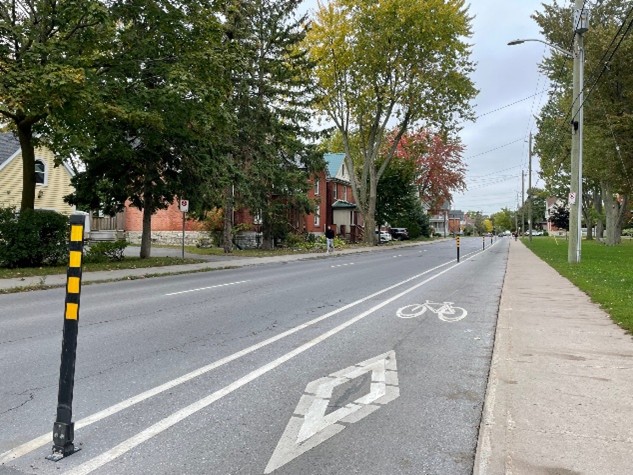
Bike lanes are a portion of the roadway that have been designated for use by cyclists. They are identified by a solid white line, pavement markings and signage. Bike lanes may also include a buffer and flexible bollards that are installed seasonally.
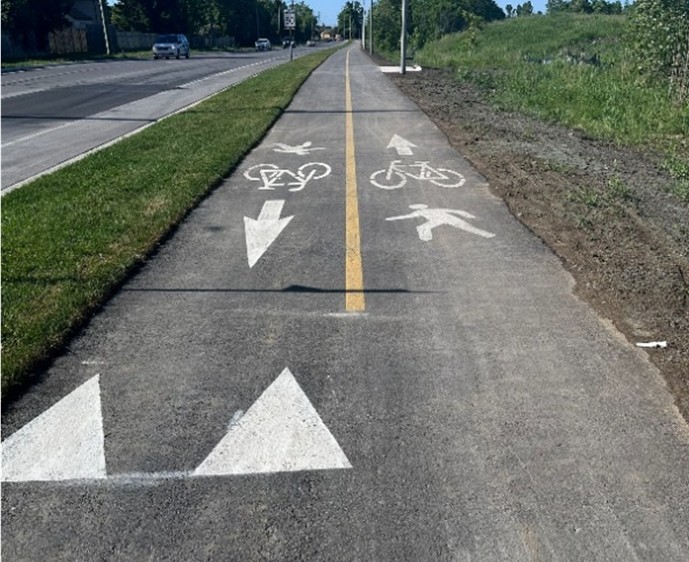
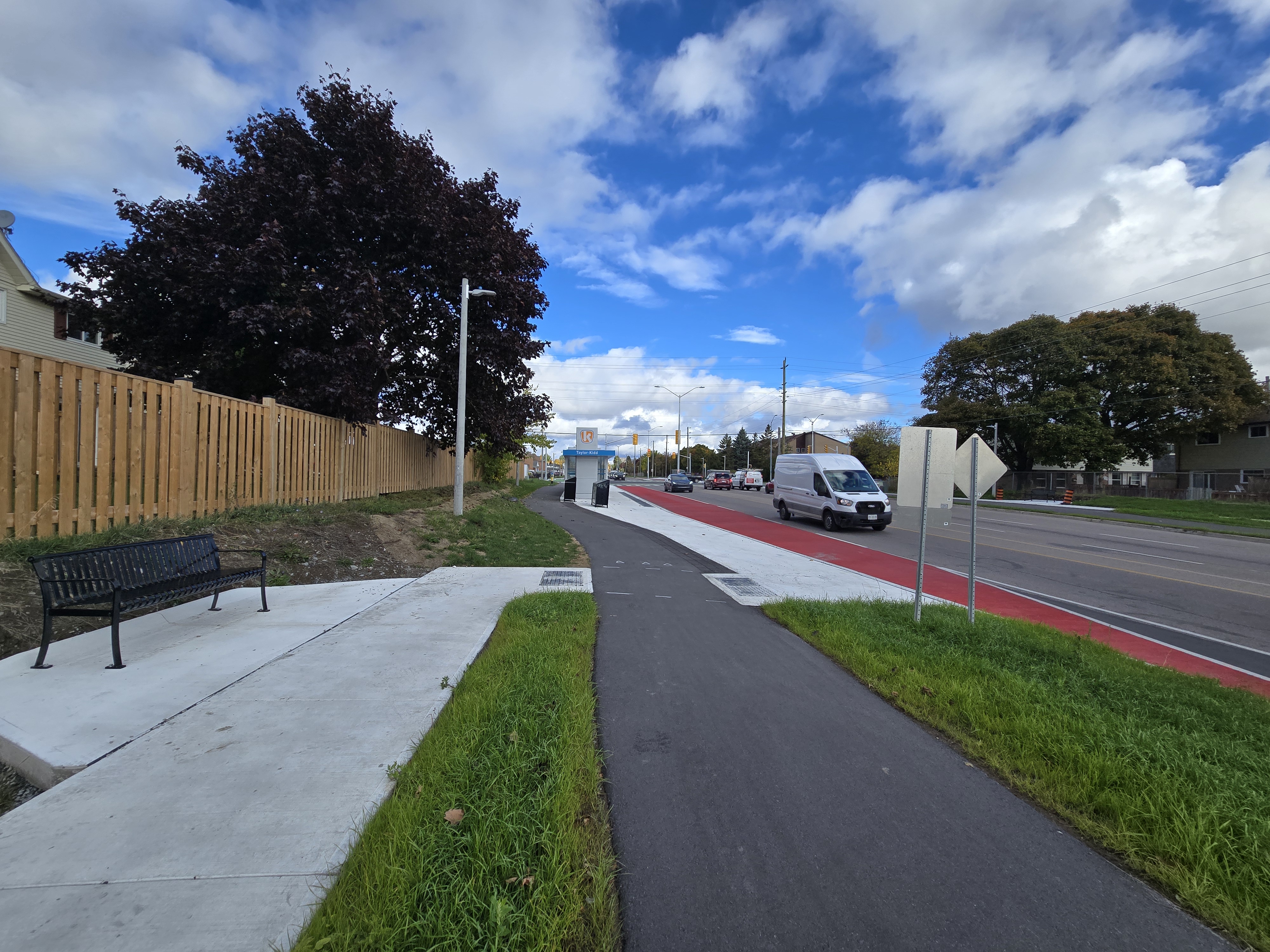
In-boulevard multi-use pathways provide a separate two-way path of travel for pedestrians and cyclists. In-boulevard multi-use pathways are located next to a road and are separated from motor vehicle traffic by a curb or boulevard.
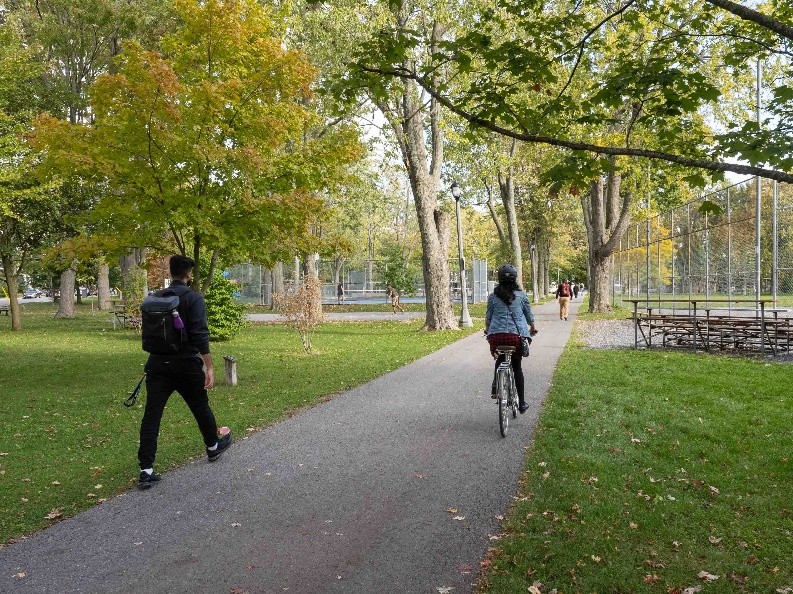
Off-road multi-use pathways, also known as off-road trails, provide a separate path of travel for pedestrians and cyclists and are typically found in natural settings like forests, parks, and wilderness areas and may be paved or gravel.
Cycle tracks are dedicated lanes or pathways for cyclists that are separated from motor vehicle traffic by barriers, curbs, or other physical elements. They often run parallel to a sidewalk or pathway and can offer one- or two-way travel for cyclists.
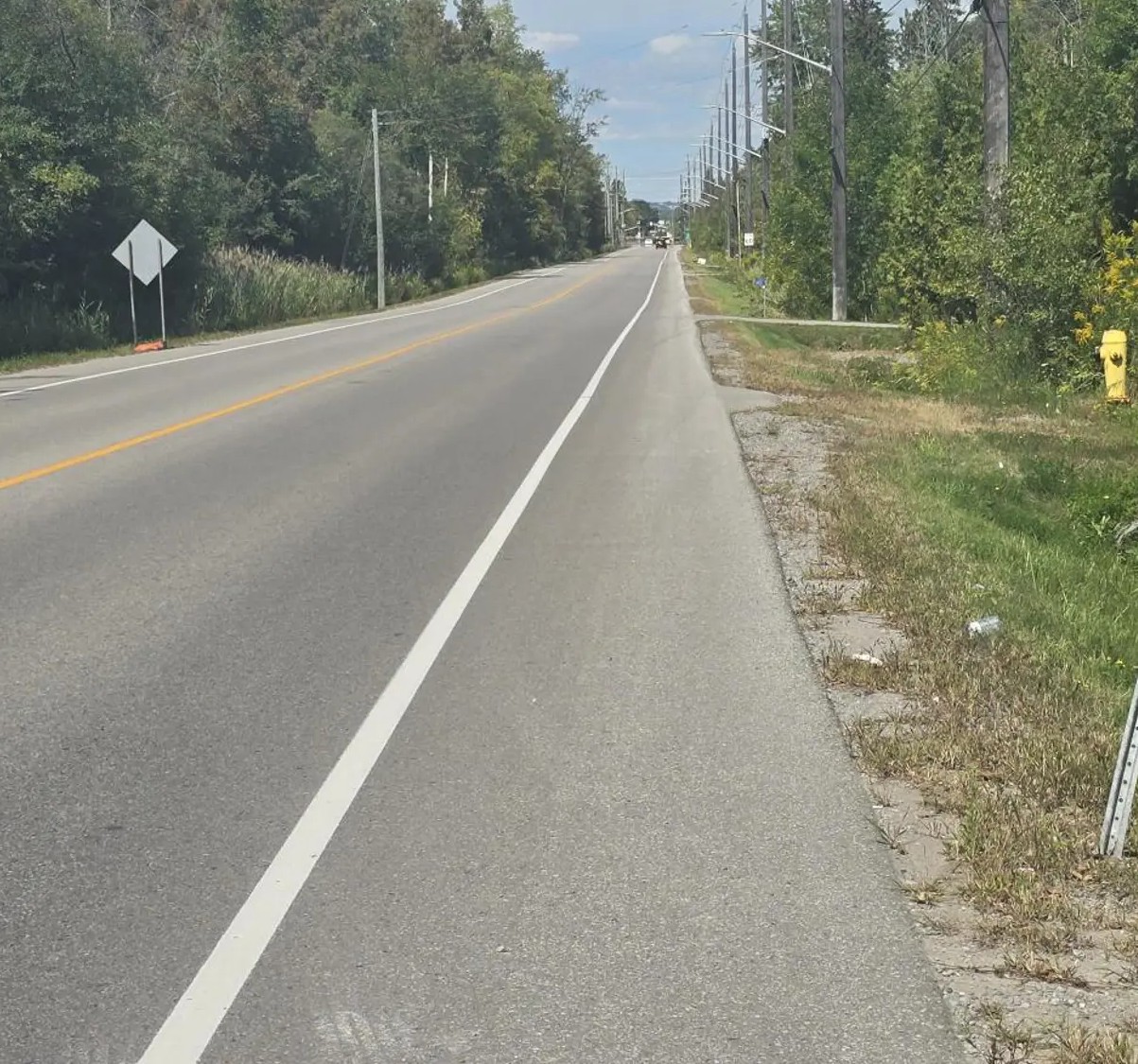
Paved shoulders are typically found on rural roads next to the motor vehicle lanes that cyclists can use. They also accommodate stopped motor vehicles and emergency uses and are shared with pedestrians. Typically, paved shoulders have a painted white line separating them from motor vehicle traffic.